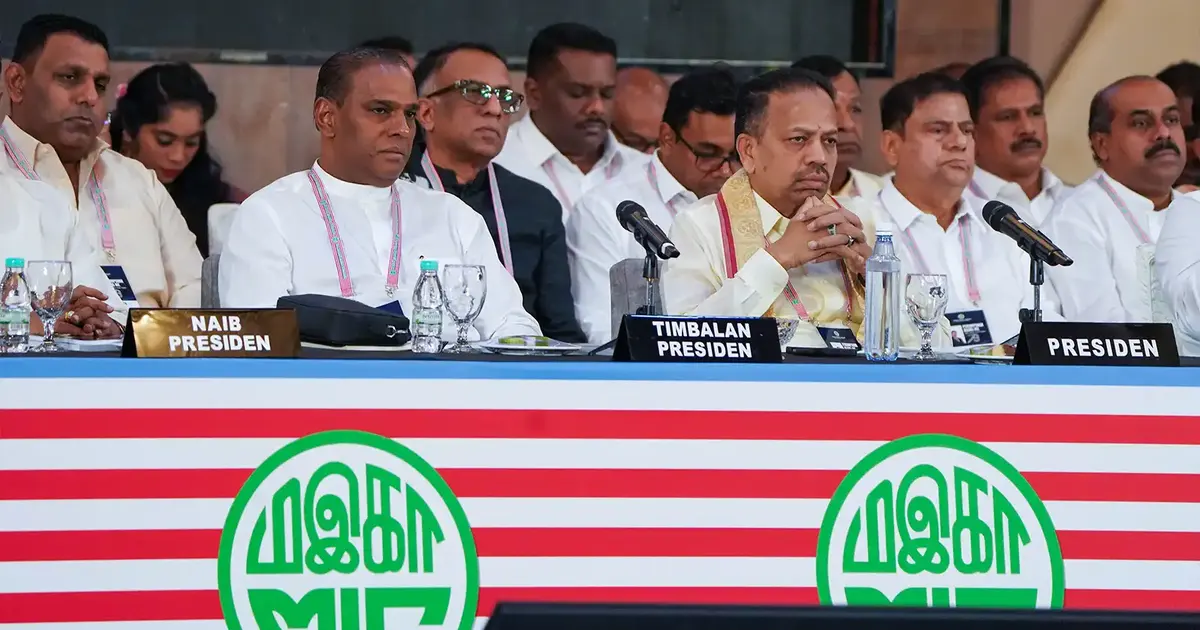
The Malaysian Indian Congress is preparing to defend its existing strongholds in the upcoming Johor state election while simultaneously relinquishing one constituency to its coalition partner Umno in what represents a broader recalibration of seat allocations within the Barisan Nasional alliance. This strategic repositioning reflects negotiations between the BN component parties as they prepare for the electoral contest, with MIC's overall participation encompassing four seats across the state despite the net reduction in its direct defence roster.
As an Indian-based party operating within Malaysia's complex multiethnic political ecosystem, MIC has historically leveraged its representation of the country's Indian minority communities to maintain a presence in state and federal legislatures. The current arrangement demonstrates how coalition politics often require compromise among partners with competing territorial and electoral interests. By ceding one seat to Umno while retaining two strongholds, MIC appears to be trading ground it may have found increasingly difficult to hold against stronger alternatives, a pragmatic calculation common in coalition negotiations across Southeast Asia.
The decision to swap seats within the BN framework underscores the party's acknowledgment that effective coalition management sometimes demands surrendering marginal positions to concentrate resources on defensible territories. Bukit Batu, mentioned as one seat within MIC's contested portfolio, represents the type of constituency where the party historically drew support from its core voter base. The mathematics of four seats under MIC's involvement, with only two being directly defended, suggests that two additional seats may be contested under different arrangements—potentially joint efforts with other BN partners or seats allocated to Umno where MIC nonetheless maintains organizational involvement.
For Malaysian readers, particularly those in Johor, this realignment carries practical implications for campaign dynamics and political representation. MIC's concentration on defending specific constituencies means the party will mobilize its political machinery, grassroots networks, and candidate selection processes around these priority areas. The surrendering of seats to Umno reflects the larger component's organizational capacity and electoral strength within the state, a reality that has shaped BN coalition mathematics for decades. Such arrangements are typically negotiated at senior party levels, considering factors including historical performance, demographic composition, and perceived winability.
The Johor electoral context provides particular significance for this arrangement. As Malaysia's southernmost state with substantial economic importance and a diverse population, Johor elections attract attention beyond regional boundaries. The seat-sharing agreement between MIC and Umno within BN demonstrates how the coalition navigates representation across Malaysia's various communities while maintaining overall coherence. Umno's willingness to accept additional seats from MIC reflects its confidence in retaining these territories, or alternatively, MIC's recognition that certain constituencies have shifted demographically or politically in ways that disadvantage the Indian-based party.
Historically, MIC has maintained parliamentary and state representation through a combination of strong performance in constituencies with substantial Tamil, Malayalee, and other Indian-origin populations, alongside coalition support from larger partners. The current arrangement in Johor does not necessarily indicate diminishing overall strength but rather strategic optimization of limited political capital. By focusing on two defensible seats rather than stretching resources across a larger portfolio, MIC can implement more intensive campaigns, provide stronger candidate support, and maintain organizational presence in areas where electoral victory remains realistic.
The broader implications for Barisan Nasional's electoral strategy in Johor involve questions about coalition viability and vote consolidation. Each BN component party brings distinct voter bases and organizational capabilities; the seat-sharing arrangement reflects assessments of which party can most effectively mobilize particular constituencies. For voters in the constituencies MIC is defending, the party's concentrated focus represents an opportunity for greater attention to local issues and campaign intensity. Conversely, in seats transferred to Umno, voters may expect Umno's political machinery to take the lead in representation and campaign activities.
Malaysia's political landscape has experienced significant shifts in recent years, with coalition dynamics becoming more fluid and component party performance more variable. The MIC-Umno seat swap in Johor reflects these evolving realities. Smaller component parties within BN must continually negotiate their role within the larger alliance, balancing institutional loyalty against electoral viability. MIC's decision to defend two seats while participating in a four-seat overall portfolio demonstrates nuanced political calculation rather than simple retreat.
For the broader Southeast Asian context, this arrangement illustrates how multiethnic democracies manage representation through coalition politics. Unlike winner-take-all systems, Malaysia's coalition-based approach requires ongoing negotiation among parties representing different communities. MIC's role as a representative of Indian interests within BN, combined with its participation in the larger Umno-dominated alliance, creates constant tension between protecting minority representation and accommodating majority-party interests. The Johor seat arrangement is one manifestation of this perpetual negotiation.
Looking ahead to the election itself, MIC's defensive posture on two seats while ceding one to Umno suggests the party expects a challenging electoral environment. Rather than attempting to expand its footprint, MIC appears focused on consolidation. This strategy aligns with broader BN positioning, which has faced electoral pressures from Pakatan Harapan and internal competition from other opposition coalitions. By clarifying seat allocations in advance, BN attempts to prevent internal fragmentation and ensure that voters understand which party to support in each constituency.
The practical consequence of this arrangement extends to candidate selection, campaign messaging, and resource allocation. MIC will likely prioritize identifying strong candidates for its two defended constituencies, individuals with deep roots in local communities and demonstrated ability to mobilize the Indian voter base effectively. Simultaneously, party leadership must manage expectations among members and supporters in the seat yielded to Umno, explaining the strategic rationale while maintaining organizational morale.
Ultimately, the MIC-Umno seat swap in Johor represents routine coalition management adapted to contemporary Malaysian electoral challenges. Rather than indicating MIC's irrelevance or imminent demise, the arrangement reflects pragmatic acceptance that electoral competition and demographic shifts require flexibility. By defending two strong seats while surrendering one to a larger partner, MIC maintains meaningful participation in Johor's political process while acknowledging the realities of coalition politics and electoral capacity.

