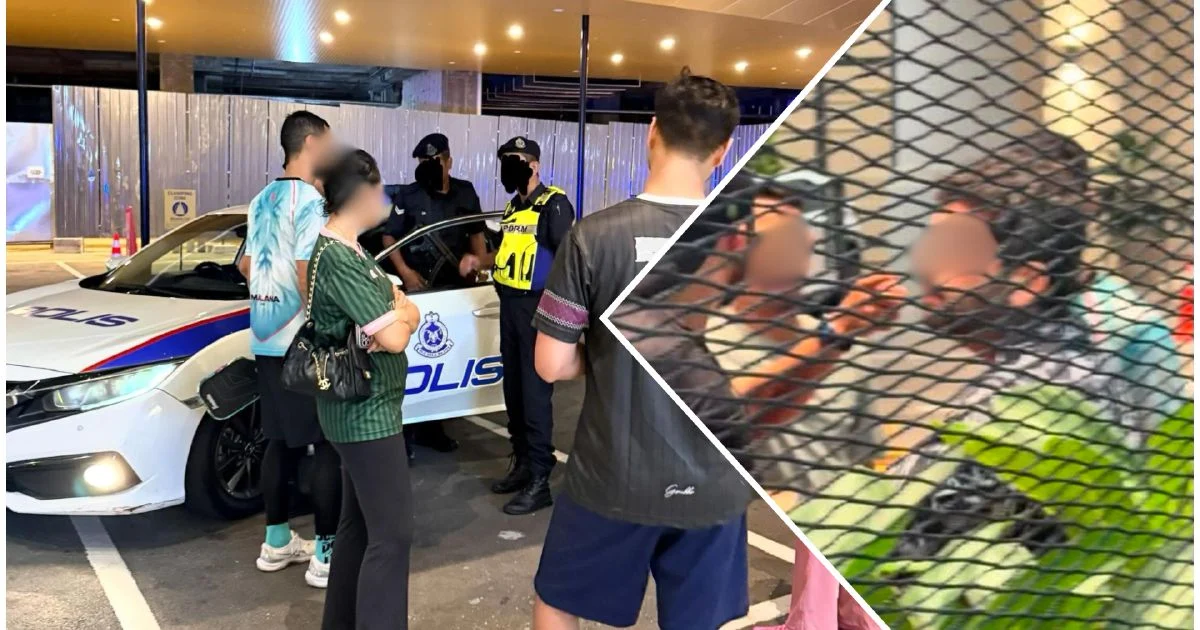
A nocturnal pickleball session near a residential condominium in Kuala Lumpur has become the latest flash point in an escalating tension between sports enthusiasts and neighbours seeking peaceful evenings, with the incident now circulating widely across social media platforms and prompting broader questions about recreational court management in urban areas.
The incident unfolded when players took to the court during late-night hours, drawing complaints from nearby residents disturbed by the sport's characteristic sharp "pek pok" sound created by paddles striking the plastic ball. What began as a straightforward noise grievance reportedly deteriorated into a heated verbal exchange and physical confrontation, ultimately attracting enough public attention to make the encounter trend across multiple social platforms.
The viral nature of the dispute highlights a growing friction point in Malaysian urban living, where the rapid popularity of pickleball has collided with the realities of densely populated residential spaces. The sport, characterised by its relatively small court size and lower noise levels compared to tennis, has nonetheless become a neighbourhood issue when played during unsociable hours. The distinctive acoustic signature of the game—often described as resembling rapid-fire popping—carries distinctly through evening air and into adjacent residential units, particularly in high-rise condominium complexes where sound travels readily between floors and units.
Operating hours for recreational facilities represent a persistent challenge for property management in Malaysia's major metropolitan areas. Many condominiums and public courts lack clearly defined regulations governing when sports can be played, creating ambiguity that breeds conflict. Some facilities operate on informal arrangements, while others maintain strict evening cutoffs that may not accommodate working professionals seeking evening recreation. The absence of standardised guidelines leaves both residents and players vulnerable to disputes, with each party feeling their legitimate interests are being disregarded.
The pickleball phenomenon itself reflects broader shifts in Malaysian recreational habits. The sport, which originated in the United States and combines elements of tennis, badminton, and table tennis, has experienced exponential growth across Southeast Asia over the past five years. Its accessibility—requiring less athletic conditioning than tennis and less court space—has attracted diverse age groups and fitness levels, democratising recreational sport in ways that traditional options have not. This popularity surge has created demand for expanded court availability, often pushing operators to extend hours to accommodate interest.
Community harmony in residential complexes fundamentally depends on unwritten social contracts regarding noise and timing. Evening hours represent a transition period where some residents are preparing for sleep while others seek to maximise their limited free time for leisure activities. The conflict between these competing rhythms becomes especially acute in pickleball's case because the sound it generates is temporally concentrated, creating brief but intense acoustic disturbances during what many consider protected quiet hours. A single match can disturb multiple households simultaneously, whereas individual activities generally affect neighbours less systematically.
Management companies and facility operators face genuine operational dilemmas. Restricting court access entirely to early evening hours reduces facility utilisation and frustrates players with inflexible work schedules. Alternatively, permitting unrestricted late-night play alienates residents and risks legal action under tenancy agreements that typically guarantee reasonable enjoyment of residential units. The optimal solution requires balancing stakeholder interests rather than privileging any single group absolutely, a nuance often lost in heated confrontations.
The emergence of such disputes in Malaysian neighbourhoods reflects inadequate pre-emptive planning by developers and facility managers. As condominiums increasingly incorporate sports amenities as marketing features, many fail to implement sound insulation, zoning restrictions, or temporal usage policies that would prevent precisely these conflicts. Learning from this incident, responsible developers should evaluate court placement relative to bedrooms, install acoustic dampening materials, and establish reasonable operating hours—ideally through resident consultation rather than unilateral management decree.
Community mediation represents the constructive path forward in such situations. Rather than escalating verbal disagreements into physical confrontations, residents and players should engage through formal channels with management, establishing mutually acceptable compromises. Some facilities have successfully implemented time-sharing arrangements where specific courts operate under evening usage restrictions while others maintain later schedules, distributing inconvenience more equitably. Educational initiatives explaining neighbours' legitimate sleep needs and players' recreational aspirations can also bridge understanding.
The viral incident serves as a cautionary tale for other Malaysian residential communities likely facing similar pressures as recreational interests diversify and urban living becomes increasingly compact. The loudness issue specific to pickleball—created by the solid paddle striking a plastic ball in rapid succession—remains manageable through soft-paddle alternatives or acoustic panels, yet these practical solutions require advance consideration during facility design rather than reactive implementation following conflict.
Beyond this particular dispute, the incident underscores the need for clearer residential governance frameworks across Malaysia's condominium sector. National standards governing recreational facility hours, noise limits, and dispute resolution procedures would reduce ad-hoc decision-making that fuels resentment. Industry associations representing both property managers and recreational users could collaborate on developing guidelines that protect both community welfare and reasonable access to leisure facilities.
Moving forward, the pickleball community and residential management must recognise that lasting solutions emerge from institutional planning rather than individual confrontations. Courts should operate within regulated hours—perhaps 6 AM to 10 PM with weekend extensions—supported by sound mitigation measures and clear resident communication. This approach acknowledges that recreational pursuits and peaceful home environments represent equally legitimate needs in shared spaces, requiring design sophistication and governance maturity that Malaysian residential developments have not universally achieved.

