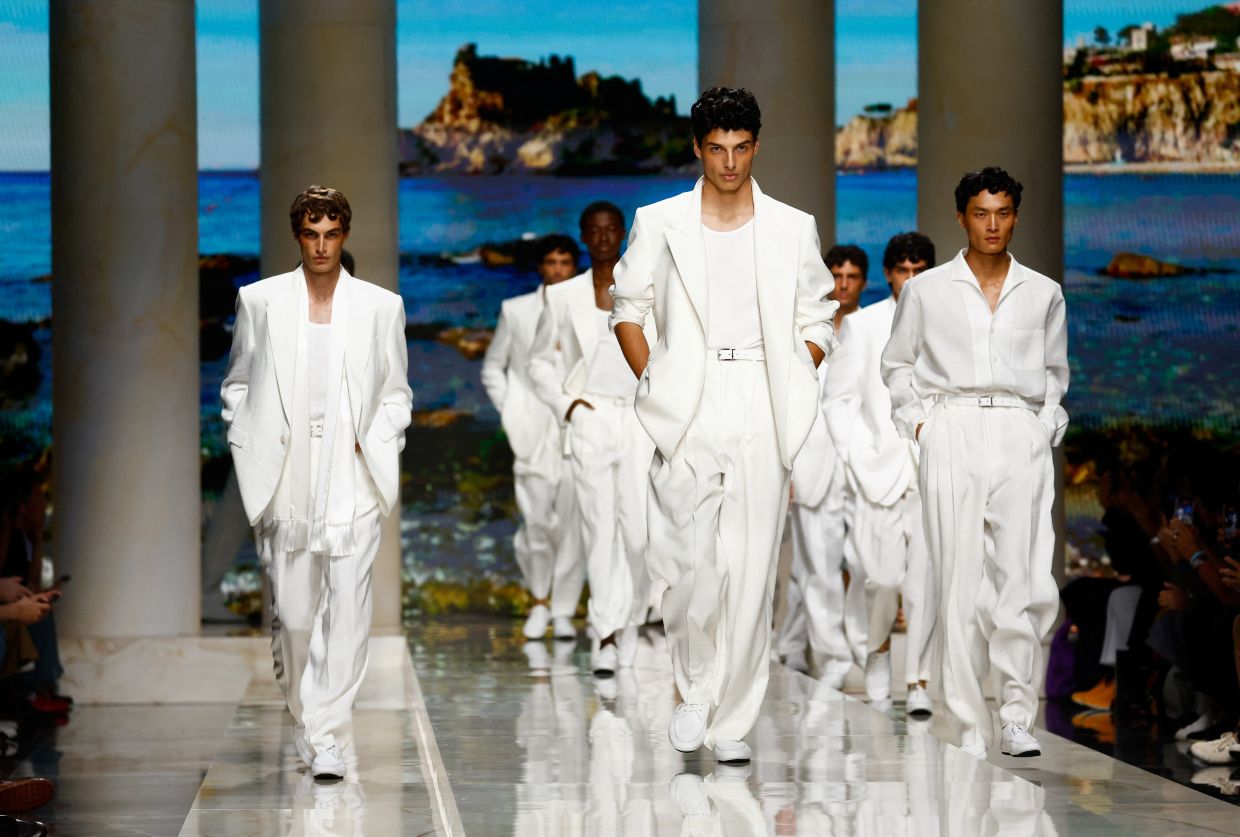
Milan's menswear designers have responded to an increasingly anxious global landscape by stripping back their aesthetic vision, prioritising streamlined silhouettes and refined simplicity for the coming season. As economic headwinds, geopolitical turbulence and oppressive heat converged at Milan Fashion Week, which concluded on June 22, the industry's creative voices largely moved away from complexity towards designs that whisper rather than shout. This measured approach represents a subtle but significant shift in how luxury fashion is approaching uncertainty, suggesting that consumers seeking stability may find solace in clothes rooted in timeless principles rather than fleeting novelty.
Prada's creative partnership between Miuccia Prada and Raf Simons epitomised this directional thinking, with the storied house championing a philosophy of reinterpretation through proportion and fabric innovation rather than radical reinvention. Their leather offerings drew conceptual inspiration from denim's democratic universality, translating the iconic five-pocket silhouette into slim-cut trousers paired with cropped jackets that functioned simultaneously as structured outerwear and casual shirting. This approach reveals a deeper strategy at play across Milan's presentations: the recognition that in uncertain times, clothing that references recognisable archetypes and familiar forms provides psychological comfort whilst elevating them through craftsmanship and material quality.
Yet the season's central tension remained unresolved—how to reconcile fashion's premium materials with the unforgiving Milanese climate. Leather, traditionally associated with cooler seasons, dominated multiple collections, prompting observers to note that some creations might require air-conditioned sanctuaries or cooler geographic refuges to wear comfortably. Designers addressed this paradox through technical innovation, employing woven and perforated techniques that rendered leather more breathable without sacrificing its luxurious tactility. This represents a pragmatic evolution in luxury production, where sustainability and wearability are increasingly valued alongside aesthetic prestige.
After years of the oversized silhouettes that defined contemporary menswear, Milan's collections signalled a decisive return to body-conscious tailoring. The fitted suit emerged as the consensus uniform for the well-dressed man, though designers faced the significant challenge of making this formally structured garment viable for rising global temperatures. The widespread solution involved strategic ventilation—dress shirts worn unbuttoned, rendered transparent, or eliminated entirely—creating a visual language that balanced the gravitas of tailoring with undeniable concessions to climate. This hybrid approach allows men to maintain formal presentation whilst surrendering to environmental necessity.
Dolce & Gabbana pursued this strategy most provocatively through microshorts that exposed the musculature of models' legs, while competing visions featured exposed torsos beneath structured jackets. These bolder interpretations suggest that formality itself is being redefined, with less fabric and more skin potentially coexisting with tailored construction. The shift acknowledges a contemporary reality: that menswear's traditional codes are sufficiently established to tolerate incremental rule-breaking without undermining their essential authority. For Malaysian audiences accustomed to tropical climates, these innovations carry particular relevance, potentially indicating how global luxury menswear will evolve to address the region's perpetual heat.
Tailoring's centrality to Milan menswear remained unchallenged, but its expression transformed considerably. Designers systematically softened construction techniques, opened necklines beyond conventional boundaries, and experimented with fabric compositions and structural innovations that prioritised airflow without abandoning formality's essential qualities. The result represents tailoring for a warming planet—garments that maintain sophistication whilst acknowledging climate reality. This measured engineering reflects a maturation in fashion's relationship with function, where aesthetic and practical considerations are integrated rather than positioned as opposing forces.
American designer Thom Browne, operating under Zegna ownership, marked his return to Milan after a sixteen-year absence with layered suiting that drew deliberately on summer-friendly seersucker and pleated constructions historically associated with men's skirts. His historical references and material choices demonstrated how designers can reference fashion heritage whilst updating it for contemporary needs. This approach resonates particularly for Southeast Asian menswear consumers, where seersucker and similar breathable fabrics have proven enduring popularity and could potentially offer a bridge between Western luxury codes and regional climate practicality.
Not every designer embraced restraint's philosophy. Philipp Plein presented crystal-encrusted denim ensembles requiring days of meticulous handwork, whilst Dolce & Gabbana enthusiastically incorporated beaded embellishments evoking coral formations. These collections unapologetically embraced maximalism and ornamentation, suggesting that luxury menswear will accommodate both minimalist austerity and decorative exuberance. This bifurcation reflects broader fashion market segmentation, where different consumer demographics seek opposing aesthetic experiences, and both approaches retain commercial validity.
A compressed Milan calendar created unexpected opportunities for emerging designers to gain visibility alongside established luxury houses. Copenhagen-based Martin Quad debuted with unconventional tailoring techniques that attracted significant industry attention, whilst Domenico Orefice presented co-ed collections emphasising leather and textured woven materials. Japanese designer Shinya Kozuka's label Shinyakozuka made its Milan debut with among the season's most poetic interpretations—bare-chested models draped in billowing sheer coats in teal paired with loose white trousers. These emerging voices inject creative vitality into the market, suggesting that menswear's future remains open to experimental reinterpretation even as established designers consolidate around shared principles of simplicity and refined functionality. For regional fashion markets, these rising international names potentially represent more accessible entry points into contemporary luxury design aesthetics.
The broader message emanating from Milan represents a measured maturation in menswear thinking. The suit remains fashion's fundamental formal garment, but its execution must now acknowledge planetary realities, economic uncertainty and changing consumer expectations around practicality. Rather than abandoning luxury's essential components, designers have recalibrated its expression through proportional refinement, material innovation and strategic ventilation. This evolution suggests that post-pandemic menswear has integrated lessons about wearability and functionality into its DNA, creating a more resilient aesthetic philosophy than the purely decorative or trend-driven approaches of previous eras.

