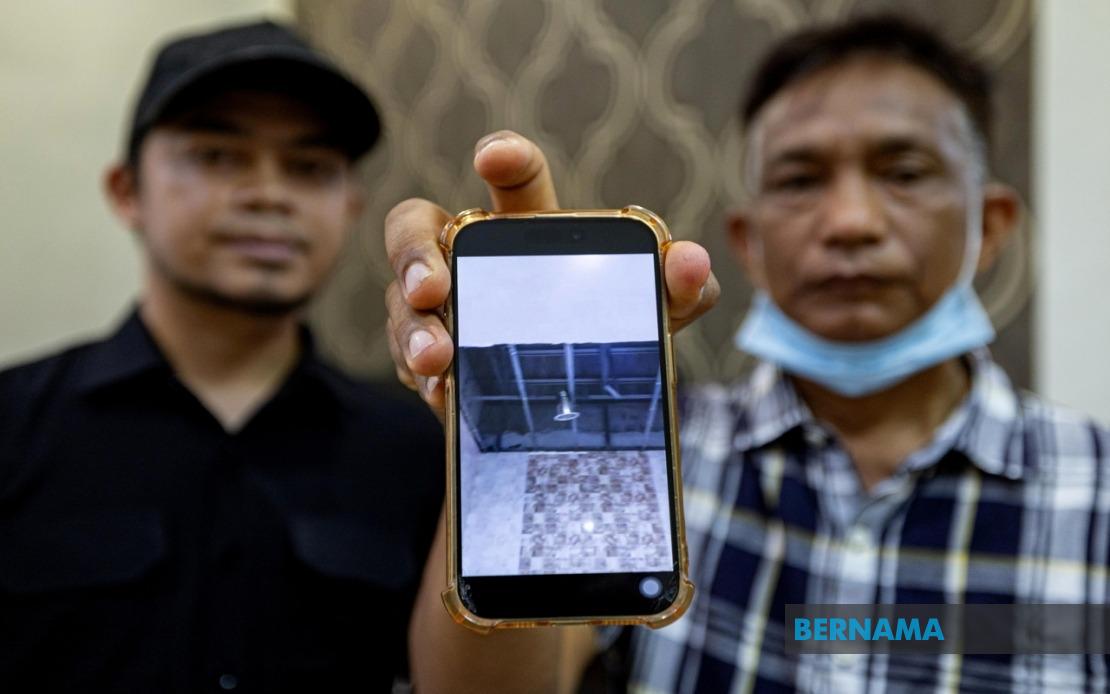
More than thirty households in the Rancangan Penempatan Tersusun (RPT) Batu 10 settlement near Ulu Chepor in Ipoh have come forward with grievances that mineral extraction operations in their vicinity have inflicted substantial damage to their properties and sparked serious safety and health worries among the community. The affected families, representing a fraction of approximately five hundred households living in the locality, contend that the industrial activities have been the direct cause of visible deterioration to their homes over an extended period.
The sources of damage identified by residents centre on two main mechanisms of disturbance. First, the seismic activity generated by extraction operations—particularly the movement of heavy vehicles and equipment through the area—has allegedly triggered structural cracking in residential properties. Second, fine particulate matter suspended in the air from extraction and transportation processes has created persistent air quality problems that penetrate homes and accumulate on surfaces. These complaints reflect the growing tension between resource extraction industries and residential communities across Malaysia, a pattern seen in various mining regions where proximity to operations creates friction.
Harun Aziz, a sixty-three-year-old retiree who has resided in the area for six years, provided one of the more detailed accounts of the disruptions his household experiences. He explained that visible cracks have begun appearing across the interior and exterior walls of his house, a development he directly correlates with the vibration episodes that accompany extraction work. The timing of these disturbances follows a predictable pattern, occurring primarily during morning and evening hours when most extraction activity takes place. Beyond the structural concerns, Harun highlighted the persistent dust nuisance, describing how mineral transport vehicles moving through the settlement generate clouds of fine sediment that settle across windows, external surfaces, and vehicles parked nearby.
The dust infiltration problem extends indoors whenever residents open doors or windows for ventilation. Harun expressed particular concern about the cumulative health implications, noting that children, elderly residents, and those with respiratory conditions like asthma face elevated exposure to airborne particulates. The absence of adequate environmental controls or dust suppression measures has transformed daily living into an ongoing negotiation with industrial spillover. Adding to these grievances, Harun alleged that extraction operations occasionally breach their permitted operational hours, continuing into evening and weekend periods when such activities should have ceased.
Another resident, Zulkifli Md Salleh, aged sixty-nine, articulated a different but equally troubling impact centred on water dynamics and ground stability. Since establishing his residence in the area in 2011, he has witnessed dramatic environmental changes that he attributes to extraction-related disturbances in the surrounding landscape. A small watercourse that originally measured approximately 0.6 metres in width has progressively expanded to nearly three metres across while simultaneously deepening, creating severe erosion hazards adjacent to his property boundary. This hydrological transformation has already caused the structural failure of his boundary fence.
Zulkifli documented his attempts to manage the escalating problem, explaining that in 2016 he undertook capital expenditure of approximately RM15,000 to construct an L-shaped retaining wall designed to arrest the water encroachment threatening his residence. However, this defensive infrastructure has itself succumbed to the intensified water pressure and erosion forces. By the present year, the worsening conditions have damaged the retaining structure and precipitated the collapse of his boundary wall. He theorises that the unusually forceful water flow, particularly during periods of heavy precipitation, originates from a retention pond situated at a higher elevation within the extraction site, suggesting that water management practices at the industrial facility may be contributing to off-site hydrological problems.
The residents' frustration is compounded by their perception that institutional channels for redress have proven ineffective. Multiple complaints have been formally directed to relevant government agencies and authorities, yet the community claims these submissions have not yielded satisfactory resolutions or meaningful corrective action. This gap between resident complaints and governmental response reflects broader challenges in environmental enforcement and community protection in resource-extraction zones across Malaysia, where affected populations often struggle to secure accountability from industrial operators or regulatory bodies.
Official commentary on the matter comes from Nizarulikram Abdul Rahim, director of the Perak Department of Mineral and Geoscience (JMG), who presented a markedly different characterisation of the extraction methods employed in the area. According to the JMG director, chemical explosives are explicitly prohibited for mineral extraction activities at this location. He noted that the most recent authorization request for blasting-related work connected to a development initiative in the vicinity was lodged with JMG in 2023 for a three-month authorisation period, and the applicant has not subsequently sought any extension of this permission, indicating that any explosive-based operations would have concluded by now.
Instead, Nizarulikram described the current extraction methodology as relying exclusively on mechanical technologies that operate without chemical explosives, pressurised gas systems, or detonation. The process employs a fully hydraulic mechanical apparatus powered by a compact portable diesel engine to fracture and separate rock formations through physical force rather than chemical reaction. For larger boulder fragments requiring further size reduction, the operator utilises only a secondary rock breaker mechanism to subdivide material. Both mechanical approaches function silently relative to explosive blasting and operate within narrower vibration parameters than traditional extraction methods would generate.
The discrepancy between resident experience and official departmental characterisation creates a central interpretive puzzle for observers evaluating the situation. If mechanical extraction methods without explosives are indeed the primary technology in use, the vibrations and audible disturbances described by residents might originate from heavy equipment movement, vehicle traffic, or other secondary operational aspects rather than detonation events. Conversely, residents' consistency in reporting blast-like vibrations and temporal clustering of disturbances around morning and evening hours suggests either that operations extend beyond the officially disclosed scope or that the mechanical methods themselves generate more substantial environmental impact than departmental statements acknowledge.
For Malaysian communities and policymakers monitoring this situation, the Ipoh case exemplifies the tension between resource extraction economics and residential protection that increasingly characterises development in states with significant mineral endowments. The absence of clear, independent monitoring mechanisms and the limited apparent recourse available to affected residents highlight gaps in environmental governance and community consultation frameworks. As Malaysia continues developing its resource base and densifying settlement patterns, establishing more robust protocols for impact assessment, operational oversight, and community compensation mechanisms will become increasingly essential to preventing similar disputes and maintaining social cohesion in resource-affected areas.