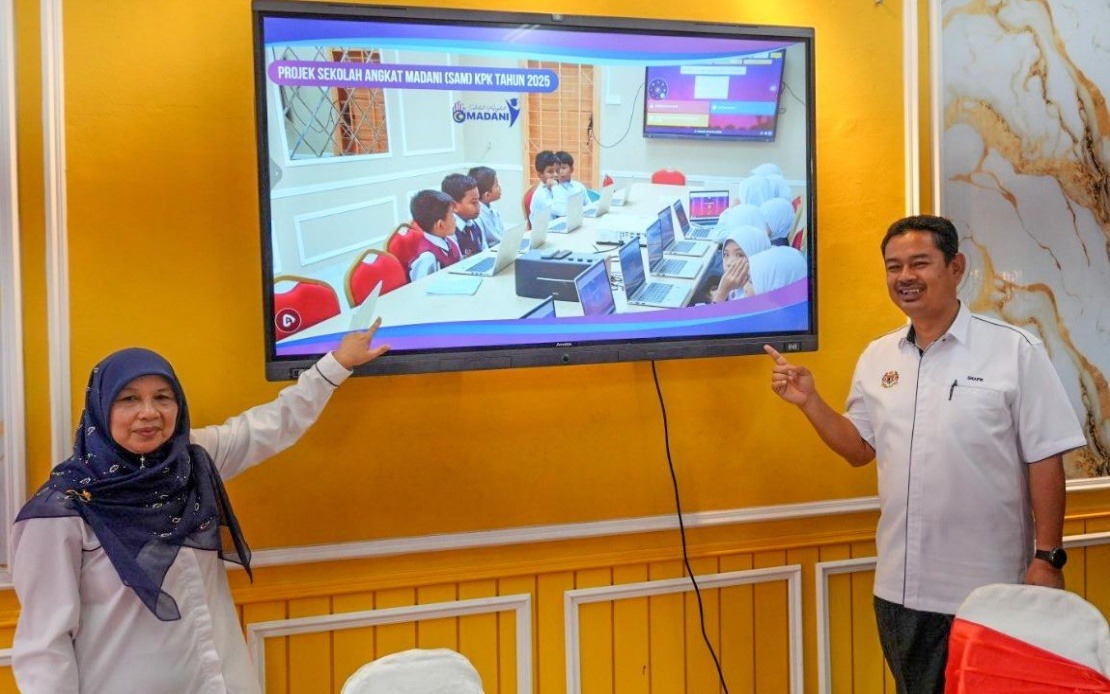
The Ministry of Plantation and Commodities (KPK) has committed RM100,000 to revitalise Sekolah Kebangsaan Bendang Kering in Kuala Kangsar, marking a significant investment in rural educational infrastructure under its institutional adoption framework. The funds were formally handed over at a ceremony on June 19, presided over by Shafie Taib, the ministry's deputy secretary-general for Strategic Planning and Management, signalling high-level government commitment to bridging infrastructure disparities between urban and rural educational institutions.
The initiative represents a strategic pivot towards addressing longstanding inequities in Malaysia's education landscape. Rural schools frequently operate with ageing facilities and limited resources, creating a two-tier system that disadvantages students in less developed regions. By directing substantial capital towards physical upgrading, the government acknowledges that learning environments profoundly influence student motivation, retention, and academic outcomes. The allocation underscores recognition that rural communities deserve parity in educational infrastructure investment.
The Malaysian Rubber Board (LGM) serves as the implementation partner, channelling expertise and administrative capacity to ensure effective deployment of resources. This institutional collaboration demonstrates how government agencies can pool resources and specialised knowledge to amplify impact. Rather than working in silos, the partnership enables the KPK to leverage LGM's operational experience while maintaining oversight of educational objectives. Such inter-agency coordination models offer replicable templates for future development initiatives across Malaysia's education sector.
Physical infrastructure improvements form the cornerstone of the investment strategy. The funds have financed comprehensive upgrades to the assembly area, main hall, dedicated reading corners, and preschool facilities—spaces that anchor school life beyond the classroom. These renovations signal to students and teachers alike that their learning environment matters, potentially improving morale and engagement. Air conditioning units address Malaysia's tropical climate challenges that can impede concentration during prolonged study sessions. Educational signage and refurbished classroom furniture create a contemporary, professional atmosphere conducive to serious academic work.
Technology integration constitutes a critical dimension of the modernisation effort. Interactive smartboards have been installed to transform pedagogical approaches from passive to active learning methodologies. This technological infrastructure enables teachers to employ multimedia resources, facilitate collaborative problem-solving, and adapt instruction to diverse learner needs. For students in rural areas who may lack home computer access, school-based digital literacy becomes essential preparation for tertiary education and competitive employment markets. The investment acknowledges that technological fluency increasingly defines educational adequacy in the twenty-first century.
Beyond physical improvements, the adoption programme encompasses holistic human capital development initiatives. An integrated academic support scheme targeting Malay, English, Science, and Mathematics provides focused intervention in foundational subjects where students frequently encounter difficulties. This disciplinary concentration reflects evidence-based prioritisation, recognising that proficiency in these subjects unlocks progression in advanced academic streams and technical fields. Incentive structures rewarding academic excellence galvanise student motivation and competitive spirit, particularly among cohorts previously discouraged by inadequate facilities.
Character and leadership development programming extends the educational mission beyond conventional academic credentials. The Student Leadership Motivation Camp and Student Talent Development Camp cultivate non-cognitive competencies increasingly valued by employers and essential for democratic participation. Rural students often lack exposure to formal leadership training and talent discovery mechanisms available in better-resourced urban settings. These initiatives democratise access to developmental opportunities, enabling promising young people from modest backgrounds to recognise and cultivate potential they might otherwise overlook.
The programme's strategic focus on rural educational equity addresses broader national development imperatives. Malaysia's aspiration to achieve high-income nation status depends upon unleashing talent across all geographic regions and socioeconomic strata. Concentrating investment in urban centres creates talent drain as capable rural youth migrate cityward, depriving smaller communities of human capital needed for local development. By improving rural schools' competitive positioning, the KPK indirectly supports regional economic diversification and more balanced spatial development.
The SK Bendang Kering selection reflects deliberate targeting of communities requiring intervention. Kuala Kangsar's agricultural heritage and rural character position it beyond Malaysia's primary urban agglomerations, yet its schools merit investment to ensure younger generations access quality education comparable to their urban counterparts. The adoption framework essentially formalises institutional responsibility for specific schools, creating accountability relationships that might otherwise lack mechanisms for follow-up evaluation and sustainability.
This initiative exemplifies how sector-specific ministries can extend influence beyond commodity production into broader developmental contributions. The KPK's move demonstrates that successful governance requires agencies to transcend narrow mandates and engage systemically with national priorities. Education represents foundational investment yielding compound returns across decades, suggesting that the ministry's reorientation towards human capital development reflects sophisticated long-term thinking aligned with Malaysia's economic transformation agenda.
For Southeast Asian observers, this model offers instructive lessons regarding rural-urban educational equity. Many regional nations grapple with similar disparities, lacking systematic mechanisms to channel resources towards disadvantaged communities. Malaysia's institutional adoption approach provides a replicable framework through which government agencies can translate surplus budgetary capacity into targeted interventions addressing specific community needs. Success at SK Bendang Kering could catalyse expansion, demonstrating feasibility and generating evidence supporting wider programme scaling.
Looking forward, the sustainability dimension remains critical. Infrastructure investments prove durable only when accompanied by ongoing operational support, teacher professional development, and programme monitoring. The KPK's continued commitment beyond initial capital expenditure will determine whether SK Bendang Kering achieves transformative outcomes or whether improvements gradually deteriorate through insufficient maintenance. Establishing institutional mechanisms ensuring long-term accountability relationships between adopting agencies and adopted schools represents crucial scaffolding for programme success.

