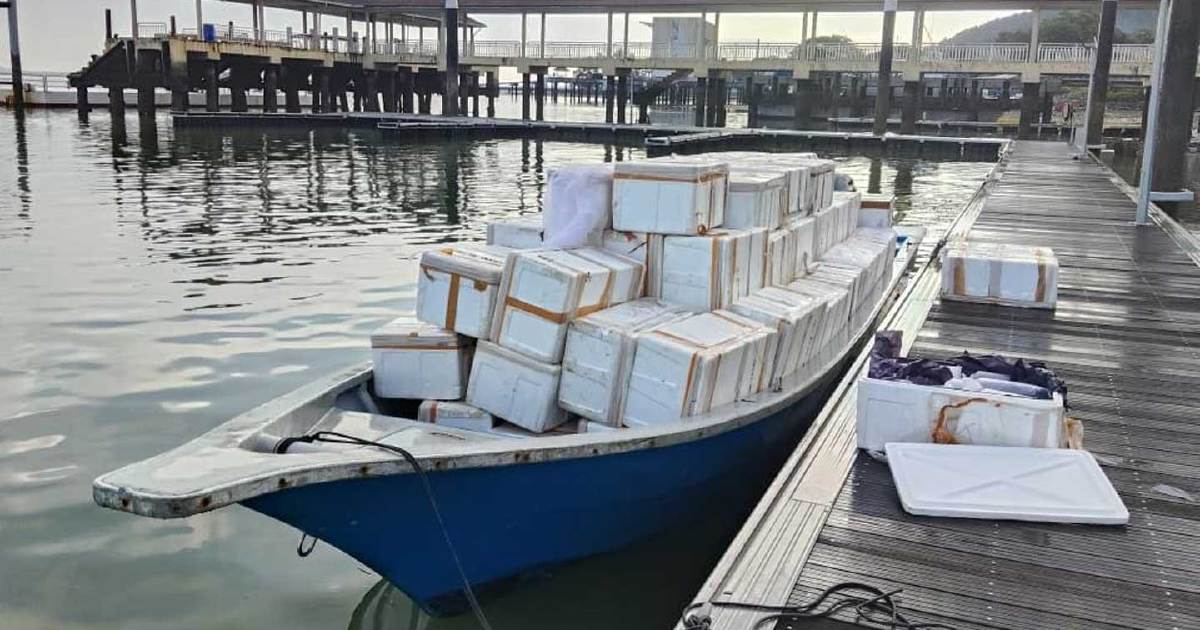
In a significant maritime enforcement operation, the Malaysian Maritime Enforcement Agency (MMEA) has disrupted what authorities describe as a major seafood smuggling attempt, intercepting juvenile lobsters valued at RM2.7 million that were destined for Singapore. The contraband was discovered during a dawn raid at Tanjung Belungkor jetty in the Kota Tinggi district, underscoring the persistent challenge of illegal wildlife trafficking through Malaysian waters and the continued vulnerability of high-value marine resources to criminal networks operating across the Straits of Johor.
The operation represents a carefully coordinated enforcement action against the lucrative but illicit trade in soft-shelled crustaceans, which remain in high demand across Southeast Asian markets despite growing international concern about overfishing and resource depletion. The timing of the interception—executed in the early hours to maximise the element of surprise—suggests sophisticated intelligence gathering capabilities within the MMEA, pointing to an increasingly strategic approach to combating organised smuggling syndicates that exploit Malaysia's extensive maritime territory and proximity to Singapore's wealthy consumer markets.
Baby lobster trafficking has emerged as a particularly problematic dimension of seafood smuggling in the region, as juvenile specimens command premium prices in Asian markets where they are viewed as delicacies and symbols of prosperity. The scale of this single seizure—involving animals collectively valued at RM2.7 million—illuminates the commercial incentive driving such operations and explains the willingness of criminal organisations to invest in sophisticated smuggling infrastructure and logistics despite enforcement risks.
Tanjung Belungkor's strategic location in Johor, positioned directly across from Singapore's western coast, makes it an attractive transit point for smuggling operations. The jetty's accessibility and the volume of legitimate maritime traffic in the area provides cover for illicit activities, creating a persistent headache for enforcement authorities who must balance thorough inspections against the operational demands of a busy shipping corridor serving both nations' commercial interests.
The discovery carries significant implications for Singapore's consumer market and supply chains, as the city-state's seafood import sector has long been a magnet for contraband goods sourced from Malaysia and other neighbouring countries. Criminal networks exploit the porous nature of transnational maritime boundaries and the complexity of enforcement coordination across jurisdictional lines, though this latest operation demonstrates the MMEA's capacity to identify and intercept shipments before they cross the border.
From a conservation standpoint, the seizure underscores alarming trends in wild-capture fisheries across Southeast Asia, where juvenile specimens are increasingly targeted by commercial operators seeking to maximise yield despite ecological consequences. The removal of breeding-age animals from marine populations compounds natural mortality pressures and threatens long-term sustainability, yet remains economically rational for operators operating outside formal regulatory frameworks or with weak local enforcement.
The MMEA's successful operation reflects broader institutional capacity-building within Malaysia's maritime security apparatus, which has invested significantly in surveillance technology, inter-agency coordination, and intelligence networks designed to target high-value smuggling operations. These enforcement mechanisms have gradually shifted from reactive responses to proactive interdiction, suggesting evolving professional standards within the agency and improved cooperation with partner organisations within and beyond Malaysia's borders.
The incident also highlights the role of Singapore as a destination market in fuelling illegal extraction from Malaysia's marine resources. The differential pricing between Malaysian source markets and Singapore's retail sectors creates powerful economic incentives driving smuggling operations, with criminal entrepreneurs capturing substantial margins by circumventing official tariffs, licensing requirements, and regulatory oversight that legitimate importers must navigate.
Maritime smuggling networks operating in the Johor Strait represent a sophisticated operational ecosystem involving procurement specialists, logistics coordinators, transportation providers, and downstream distributors coordinated through encrypted communication channels and informal trust networks. Disrupting such networks requires sustained enforcement pressure across multiple chokepoints and cooperation with intelligence agencies capable of mapping organisational structures and financial flows, capabilities that remain unevenly distributed across Southeast Asian law enforcement institutions.
The RM2.7 million valuation assigned to the seized lobsters reflects current market premiums rather than resource replacement costs, yet even this commercial figure underestimates the long-term biological and economic value of preserving breeding populations capable of sustaining future harvests. Policymakers across the region increasingly recognise that tackling seafood smuggling requires integrated approaches combining maritime enforcement, demand-side interventions targeting consumer markets, international cooperation frameworks, and support for alternative livelihoods for fishing communities vulnerable to recruitment into smuggling operations.
Looking forward, this interception serves as both a success story for Malaysia's enforcement capabilities and a reminder of the persistent challenge posed by transnational organised crime targeting natural resources. The MMEA's operational effectiveness depends on sustained institutional investment, strategic intelligence integration, and willingness to pursue complex cases despite resource constraints, factors that will prove decisive in determining whether similar operations can be detected and disrupted with sufficient frequency to meaningfully impact the profitability and viability of smuggling networks.

