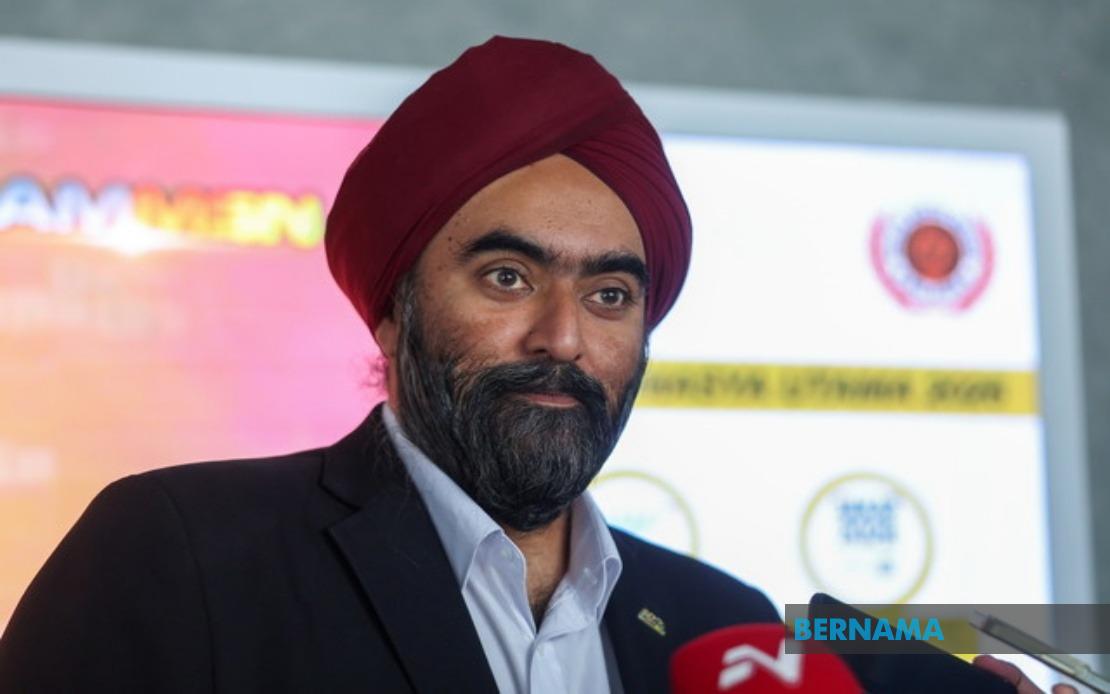
Malaysia's cycling development landscape faces a critical test as the Malaysian National Cycling Federation pushes for immediate intervention to unblock a stalled talent pathway. At the launch of Le Tour de Langkawi 2026 in Putrajaya on Tuesday, MNCF president Datuk Amarjit Singh Gill signalled that top-level executives from both the federation and Yayasan Sime Darby must convene urgently to break the deadlock that forced the postponement of the YSD Track Cycling and BMX Series 2026.
The series represents a cornerstone initiative for developing emerging Malaysian cyclists in track and BMX disciplines, pathways that feed directly into elite competition and Olympic qualification pipelines. Its suspension therefore carries implications beyond a single event cancellation, threatening continuity in athlete development during a critical window. The federation's willingness to pursue immediate dialogue suggests both sides recognise the broader stakes involved in resolving what Gill characterised as fundamentally resolvable issues.
Yayasan Sime Darby announced the postponement citing technical difficulties rooted in federation operations, language that typically masks governance disagreements or procedural misalignments rather than purely logistical hurdles. Gill's measured response—accepting the technical framing while insisting the underlying problems remain straightforward—indicates a diplomatic approach aimed at depressurising what may be a relationship strain between the two institutions.
The MNCF president's emphasis on mutual respect and equal partnership status suggests the federation perceives itself as having been marginalised in decision-making or that operational demands were imposed without adequate consultation. In Malaysian sports governance, such frictions often arise from unclear demarcation of authority, resource allocation disputes, or divergent strategic priorities. Corporate sponsors like Yayasan Sime Darby frequently expect administrative efficiency and brand protection; federations, conversely, prioritise athlete development and competitive scheduling.
Gill's insistence that the matter is "not a complicated one" carries subtle messaging directed at both YSD management and Malaysian sports stakeholders. By framing the impasse as resolvable through goodwill rather than structural reform, the federation leader creates political space for both parties to negotiate without appearing to capitulate. This approach acknowledges YSD's critical role—the foundation has emerged as cycling's most substantial domestic sponsor in recent years—while asserting federation prerogatives in sport administration.
The timing matters considerably. Postponing a track and BMX series in 2026 disrupts athlete preparation cycles and potentially derails talent identification at developmental stages where momentum proves difficult to recapture. Young cyclists identified through such programmes often progress to national team selection within 18 to 36 months; extended breaks create recruitment gaps and allow competitors from other Southeast Asian nations with uninterrupted development pathways to forge ahead in regional rankings.
Yayasan Sime Darby's withdrawal of active engagement, even temporarily, reflects broader trends in Malaysian corporate sports sponsorship. While conglomerate foundations historically sustained cycling through boom-and-bust cycles, cost consciousness and shifting corporate priorities increasingly pressure sponsors to demand administrative excellence and measurable returns. This dynamic places federations in the position of having to satisfy dual requirements—serving athletes while maintaining sponsor relationships—often without proportional resources or administrative capacity.
The broader context involves Malaysia's cycling ambitions within Southeast Asian competition and Olympic qualification pathways. Track cycling and BMX disciplines are increasingly contested at regional Games and international championships; a two-year development gap between 2024 and 2026 could measurably reduce Malaysia's competitive standing in these events. Nations like Thailand and Vietnam have invested systematically in similar talent pipelines, creating competitive benchmarks that Malaysian cyclists must match to retain regional relevance.
Gill's framing of the federation as always willing to meet and accommodate YSD's requirements reflects the asymmetrical power dynamic inherent in sponsor-dependent sports bodies. Federations depend on corporate funding to sustain operations; sponsors, particularly large foundations with multiple investment portfolios, can redirect capital with relative ease. This structural reality means federation leaders must navigate negotiations carefully, neither appearing subservient nor antagonistic toward vital funding sources.
The resolution of this dispute will test Malaysia's governance structures within sports administration. If the federation and foundation reach accommodation through executive dialogue, it validates consensus-building between institutional stakeholders. Conversely, prolonged deadlock signals deeper structural issues in how Malaysian sports bodies coordinate with their financial sponsors, potentially affecting other federations facing similar tensions. The cycling community will watch closely whether the promised high-level talks materialise and produce concrete timelines for restoring the series.
Moving forward, the crisis opens opportunity for clarifying roles and expectations. Clear memoranda of understanding that specify administrative responsibilities, decision-making authority, and escalation procedures could prevent similar breakdowns. Such frameworks, increasingly common in international sports partnerships, would strengthen Malaysian cycling governance while reassuring sponsors that their investments operate within predictable institutional arrangements. The test now lies in whether both parties prioritise the sport's development sufficiently to pursue structured resolution.

