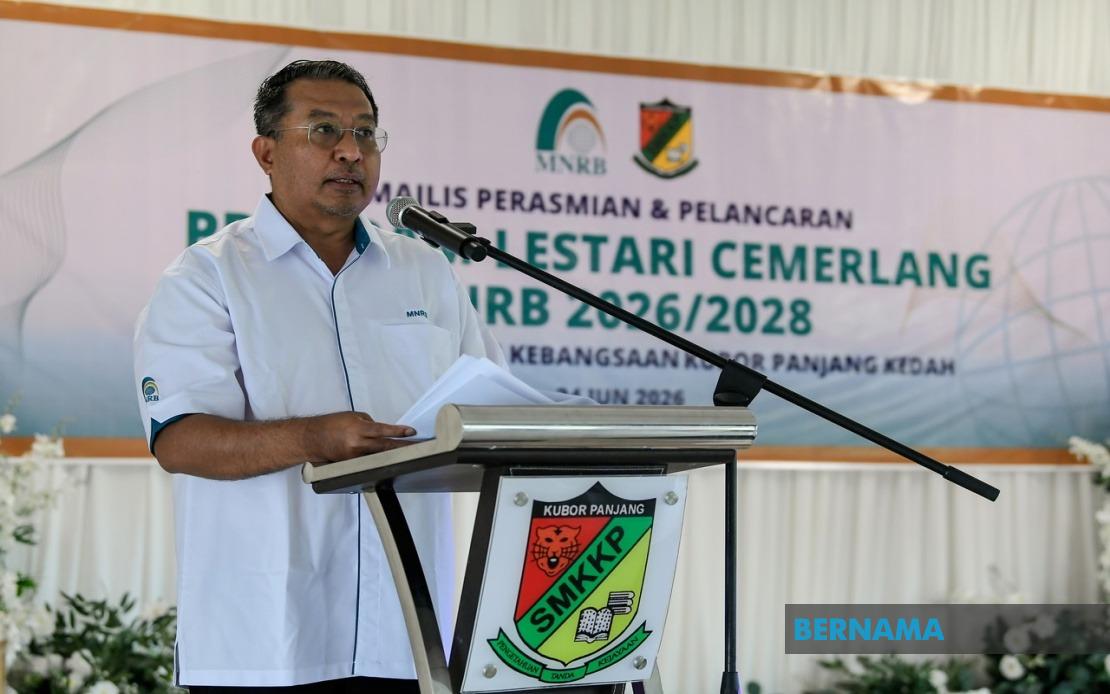
MNRB Holdings Berhad, an investment holding company, is deepening its commitment to Malaysian education by channelling nearly RM600,000 through its Lestari Cemerlang Programme, which now encompasses six schools across the country. The latest school to join the initiative is Sekolah Menengah Kebangsaan Kubor Panjang in Pendang, Kedah, selected as the sixth beneficiary following previous partnerships established in Perak, Pahang, Negeri Sembilan, Melaka, and Selangor. The programme reflects an ongoing corporate social responsibility strategy that extends beyond traditional philanthropic gestures to address systemic educational challenges, particularly in underserved communities.
Datuk Rudy Rodzila Che Lamin, MNRB interim president and group chief executive officer, emphasised that the adopted school initiative traces its roots to 2011, representing over a decade of sustained investment in educational infrastructure and student outcomes. The programme's longevity signals MNRB's recognition that meaningful impact requires persistent engagement rather than one-off donations. By maintaining consistent partnerships with selected institutions, the company has developed deep understanding of each school's specific challenges and opportunities, allowing interventions to be tailored rather than generic.
The philosophy underpinning the Lestari Cemerlang initiative encompasses three interconnected pillars: academic performance, character development, and institutional excellence. This holistic approach acknowledges that student success depends on factors extending beyond classroom instruction. Rural schools, which frequently struggle with resource constraints and limited access to specialised programmes, receive particular attention within the initiative. MNRB's targeting of these communities reflects awareness that educational inequality in Malaysia remains concentrated in peripheral regions, where infrastructure deficits and talent migration create compounding disadvantages for young people.
The concrete interventions implemented across participating schools demonstrate the programme's practical orientation. Extra tuition classes for Form Five students address the critical pre-examination period when academic pressure intensifies and gap-filling becomes essential. Motivational camps and student development programmes tackle psychological and social dimensions of educational success, recognising that academic achievement requires confidence, resilience, and vision for future pathways. Physical infrastructure improvements, including upgraded learning facilities, complement pedagogical support. MNRB's sponsorship of sports jerseys and school greening initiatives further signal commitment to holistic student development, acknowledging that sports and environmental engagement contribute to character formation and school pride.
Particularly innovative is MNRB's establishment of Smart e-Learning Rooms equipped with interactive television and internet connectivity. This investment directly addresses Malaysia's digital divide, ensuring that rural students access technology-enabled learning resources increasingly essential in modern education systems. The facility creates space for interactive, multimedia-based instruction that traditional classrooms cannot replicate, potentially transforming teaching methodologies across multiple subjects. As schools nationwide navigate post-pandemic recovery and educational digitalisation, such infrastructure becomes foundational rather than supplementary.
Beyond individual school support, MNRB operates a parallel scholarship initiative known as Tabung Biasiswa MNRB, which targets high-achieving students from adopted schools pursuing higher education in fields aligned with the company's business interests: insurance, takaful, and finance. At SMK Kubor Panjang, five top-performing students have been selected as scholarship recipients, extending support through diploma, bachelor's, and master's levels. This multi-tiered approach acknowledges that financial barriers frequently interrupt promising academic trajectories, particularly for students from modest socioeconomic backgrounds.
The scholarship programme's demonstrated effectiveness provides measurable evidence of impact. Among fourteen students from previously adopted schools who have received sponsorship support, eight subsequently secured employment within MNRB Group upon completing their tertiary education. This employment outcome suggests that the scholarship initiative functions simultaneously as skills development pipeline and talent recruitment mechanism, aligning corporate interest with student welfare. The relatively high conversion rate from scholarship to MNRB employment indicates the company has successfully identified high-potential candidates whose educational experiences have prepared them for professional roles within the organisation.
For Malaysian readers and policymakers, the MNRB initiative illustrates how corporate social responsibility can address education system gaps, particularly in rural contexts where government resources remain stretched. The programme's longevity and scaling from initial schools to six institutions demonstrate that sustained corporate engagement yields results, contrasting with episodic charitable efforts. By combining infrastructure investment, academic support, and career pathways, MNRB models comprehensive approach that recognises educational development as requiring simultaneous attention to physical resources, pedagogical support, and opportunity creation.
The programme's expansion carries implications for corporate-education partnerships across Southeast Asia. As the region confronts educational inequality and skills gaps, examples of sustained corporate investment in rural schools become increasingly valuable. MNRB's experience suggests that companies can strategically advance social objectives while simultaneously developing talent pipelines aligned with business requirements. The Smart e-Learning Rooms particularly warrant attention from other corporations considering education investments, as digital infrastructure addresses critical deficiencies while creating demonstrable, replicable solutions.
Kedah State Education Department's engagement in the SMK Kubor Panjang launch, reflected in deputy director Ishak Awang's participation, indicates governmental recognition of corporate partnership value. Such collaboration creates space for innovation and resource allocation that government programmes alone struggle to achieve. Expanding such partnerships, with appropriate regulatory frameworks ensuring equitable benefit distribution, could amplify education system responses to rural disadvantage. For school administrators, MNRB's model demonstrates that external partnerships, when structured thoughtfully, enhance institutional capacity without compromising autonomy or teaching philosophy.

