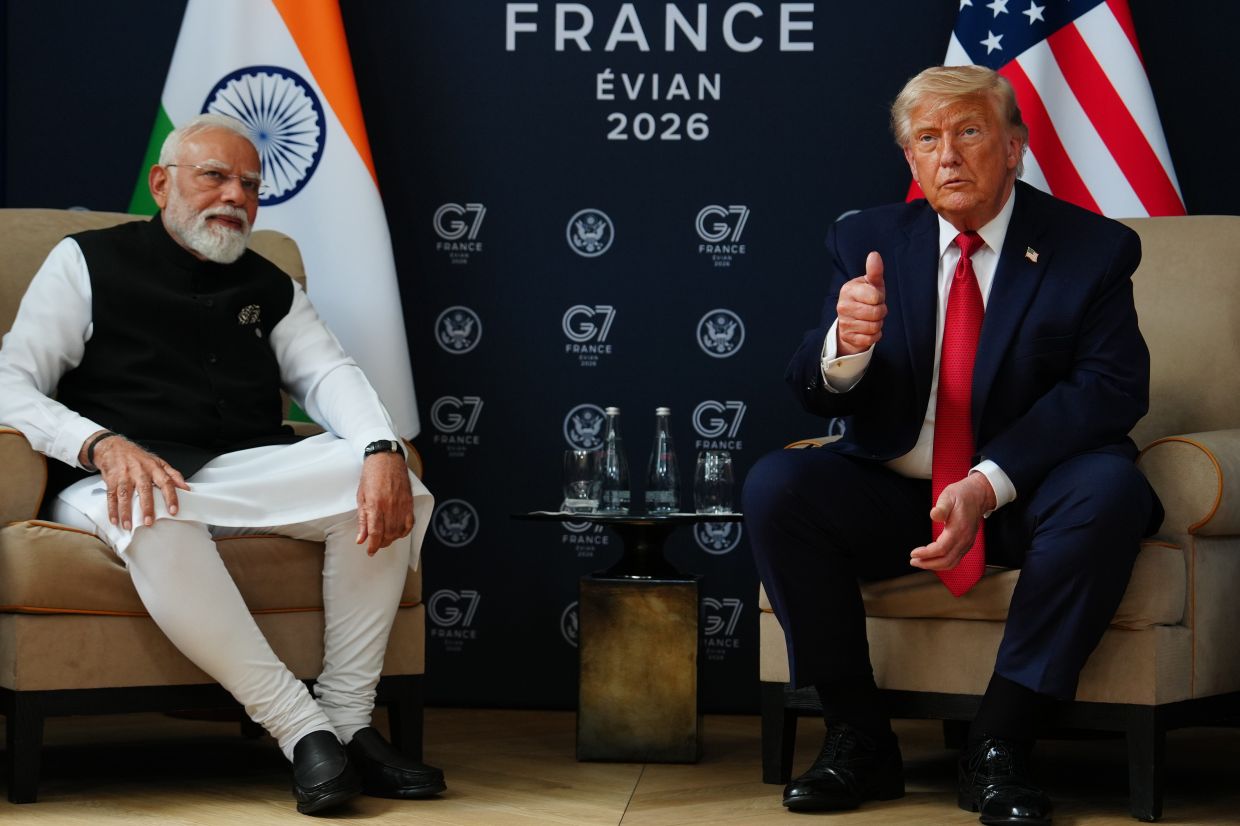
Indian Prime Minister Narendra Modi emerged from his meeting with US President Donald Trump at the G7 summit in Evian, France, with encouraging news for both nations' trade agendas. Speaking through an official statement released Thursday, Modi characterised the discussions as yielding "significant progress" in long-running bilateral trade negotiations that have become central to reshaping economic ties between Washington and New Delhi. The face-to-face encounter, their first since February 2025 in Washington, underscored the priority both capitals place on reaching a comprehensive trade framework amid broader strategic competition in Asia and geopolitical uncertainty globally.
Trump's own remarks to reporters painted an optimistic picture of where talks stand, stating the two nations are "very close" to a deal. His characteristic commentary praised Modi as "a very tough negotiator, one of the toughest, actually," suggesting he views the Indian leader as a formidable counterpart willing to defend national economic interests fiercely. This framing matters for domestic audiences in both countries: in India, it signals Modi's government is not being pushed around by Washington, while in America it suggests Trump has found an equally hard-nosed deal-maker who respects strength and principle over sentiment.
The formal readout from India's foreign ministry highlighted that both leaders had "noted with particular satisfaction" the substantive movement on what they term an interim Bilateral Trade Agreement. Rather than letting momentum dissipate after the meeting, Modi and Trump issued clear instructions to their respective officials to accelerate work towards finalising what both nations describe as a "commercially meaningful agreement at the earliest." This language signals determination to move beyond preliminary understandings and into binding commitments that will actually alter trade flows and tariff structures between the world's largest and fifth-largest economies.
US Trade Representative Jamieson Greer's planned visit to India the following week represents the practical machinery behind these high-level declarations. Such technical-level engagements, often less visible than summit meetings, frequently determine whether political will translates into actual agreements. Greer's mission indicates the negotiating teams have specific issues to resolve and that the American side believes a breakthrough is genuinely within reach rather than months away.
The context of these negotiations reveals why both sides consider reaching a deal strategically vital. Washington and New Delhi have publicly committed to doubling bilateral trade to US$500 billion by 2030, a target that would fundamentally reshape economic integration between the two democracies. For India, such expansion would provide alternative markets and manufacturing partnerships to reduce dependence on China and strengthen technology transfer opportunities. For America, deeper ties with India represent crucial economic and strategic positioning in the Indo-Pacific region as competition with Beijing intensifies.
The road to this point, however, has been rocky. An initial understanding reached in February provided a foundation, but subsequent developments complicated progress. When the US Supreme Court struck down Trump's sweeping tariff measures, the administration responded by launching formal investigations into unfair trade practices against multiple countries, including India, while imposing a blanket 10 percent tariff on all imports. Such moves appeared to contradict the trade negotiation momentum, raising questions about whether the administration's tariff strategy would undermine specific bilateral deals being pursued simultaneously.
India's Commerce Minister Piyush Goyal offered a crucial update in early June, declaring the two nations were "about 99 per cent" done negotiating the first tranche of a trade agreement. While such percentages must be interpreted cautiously—final negotiations often prove surprisingly difficult—Goyal's assessment suggested the remaining differences, though not trivial, were manageable and could be bridged with focused effort. This claim provided the foundation for Modi's subsequent optimism when meeting Trump at the G7.
Beyond economics, Modi raised urgent security and humanitarian concerns during his discussion with Trump. He pressed the US president to ensure the safety of Indian seafarers operating in waters affected by regional conflicts, particularly following the killing of three Indian sailors in a US strike on a commercial vessel off Oman on June 10. This incident illustrated how global tensions, especially around the Middle East, intersect with maritime commerce and put Indian lives at risk. Modi sought American assurances that implementation of the Iran-US deal aimed at de-escalating Middle Eastern conflict would include protections for neutral vessels and their crews.
India's acute vulnerability to Middle Eastern instability extends beyond individual incidents. The nation has been severely affected by supply chain disruptions caused by regional tensions, with Iran's closure of the Strait of Hormuz—a critical waterway for global oil and gas transport—directly throttling energy supplies critical to Indian economic growth. These constraints have rippled through India's economy, affecting everything from fuel availability to fertiliser production and food security.
Modi used his G7 platform to emphasise that the developing world, particularly the Global South, faces prolonged consequences from ongoing Middle Eastern turmoil. He warned that "the disruptions in fuel, fertiliser and food supply chains caused by the crisis... will continue to impact the Global South for a considerable period." This framing positioned India not merely as a bilateral negotiating partner with America but as a voice for broader developing-world interests, emphasising how geopolitical instability in one region creates cascading economic damage across continents. For Malaysia and other Southeast Asian nations similarly dependent on Persian Gulf energy and regional stability, Modi's warnings resonated deeply and underscored shared interests in de-escalation and open sea lanes.
The convergence of trade negotiations with security and humanitarian concerns reflects how modern diplomacy between major powers intertwines economic, strategic, and humanitarian dimensions. Modi's ability to advance multiple agendas simultaneously—securing trade progress while raising seafarer safety and advocating for Global South perspectives—demonstrated sophisticated statecraft. The US$500 billion bilateral trade target, meanwhile, remains achievable if current momentum holds, with the real test arriving in coming weeks as technical teams work through remaining details and prepare drafting of final agreement language that both capitals can endorse with confidence.