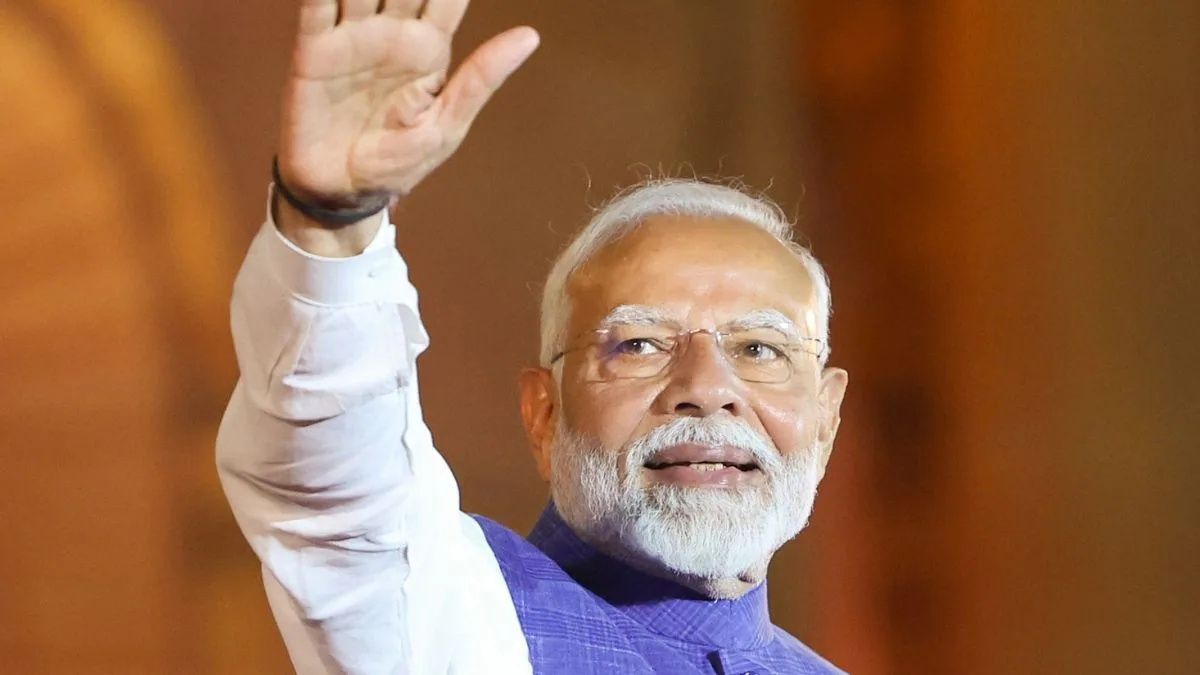
Prime Minister Narendra Modi will helm the national observance of the 12th International Day of Yoga from Kolkata's historic Red Road on June 21, reinforcing his long-standing commitment to the philosophy of "Healthy Body, Healthy Mind." The early-morning event on Red Road, one of Kolkata's most iconic public spaces, will feature extensive mass demonstrations of the Common Yoga Protocol with thousands of participants, ranging from top government dignitaries to ordinary citizens joining the nationwide movement.
The selection of Kolkata as the venue for India's primary celebration holds considerable political significance. The timing arrives in the wake of the Bharatiya Janata Party's decisive victory in the recent West Bengal Assembly elections, decisively displacing the Trinamool Congress from state power. Senior BJP officials have signalled that the Modi government intends to prioritise the state's development trajectory in the coming years, with one party leader asserting that rapid infrastructure advancement will follow the shift in governance, reversing what the leadership characterises as the region's prolonged period of inadequate management.
Red Road itself carries symbolic weight beyond its function as a physical venue. The sprawling thoroughfare represents the convergence of Kolkata's civic traditions, military heritage, and progressive environmental initiatives, making it an apt location for a mass wellness gathering that transcends ordinary health promotion. The choice to stage the International Day of Yoga at this historically resonant location underscores the government's intent to embed wellness culture within India's cultural and civic consciousness, positioning yoga not merely as physical exercise but as integral to the nation's identity and values.
The scale of participation this year reflects unprecedented engagement with the yoga movement across Indian society. The Ministry of Ayush has registered approximately 600,000 organisations on its Yoga Sangam Portal, a milestone that demonstrates the extent to which institutions, community groups, and civil society have embraced the initiative. These registered entities will mobilise participants at their respective locations to practice yoga simultaneously with the Prime Minister, creating a networked national experience rather than a centralised event confined to Kolkata.
Globally, the celebrations extend far beyond India's borders, with around 2,500 organised events taking place worldwide and participation coordinated through 211 Indian diplomatic missions abroad. This expansion reflects India's strategic positioning of yoga as a soft power instrument, promoting the nation's cultural heritage while advancing public health objectives on the international stage. For Southeast Asian nations, including Malaysia, the proliferation of yoga events underscores India's deepening engagement with wellness trends that resonate across the region, where yoga has become increasingly mainstream in urban centres and wellness-conscious communities.
The 12th International Day of Yoga operates under the theme "Yoga for Healthy Ageing," a concept articulated by Union Minister Prataprao Jadhav as addressing a critical demographic challenge facing both developed and developing nations. As global life expectancy extends, the real imperative lies in ensuring that additional years translate into actively engaged, independent, and meaningful lives rather than merely prolonged existence. Yoga, according to the ministry, provides a comprehensive pathway toward healthy ageing by simultaneously strengthening physical resilience, nurturing mental well-being, and enhancing overall quality of life—a holistic approach increasingly valued in health systems grappling with ageing populations.
The Ministry of Culture has integrated India's broader wellness movement with cultural preservation by organising yoga programmes at 100 iconic locations throughout the country. This initiative deliberately intertwines India's classical heritage with contemporary health practices, signalling that yoga represents continuity between ancient wisdom and modern wellness demands. For Indian diaspora communities and international practitioners, this cultural framing reinforces yoga's legitimacy as an evidence-informed wellness practice rooted in centuries of refinement.
Prior to the main Sunday event, Kolkata has witnessed heightened civic engagement through initiatives such as "Daud Se Dhyan 2026 – From Movement to Stillness," organised under the Swachhata Se Swagat Programme. This preliminary mobilisation combined yoga with cleanliness advocacy and civic responsibility messaging, embedding wellness within a broader development framework that encompasses environmental stewardship and community well-being. The sequencing of activities demonstrates governmental strategy in building momentum toward the main celebration while reinforcing multiple policy objectives simultaneously.
The West Bengal government has mandated participation in the celebrations among all government employees, directing them to engage at their respective workplaces, residential areas, or designated venues including Red Road and Milan Mela grounds. This top-down organisational approach ensures visible public participation while utilising state machinery to amplify turnout expectations. Such directives, while common in Indian governance structures, underscore the political importance attached to the event's apparent success and the projection of mass enthusiasm.
For Malaysia and Southeast Asian observers, the International Day of Yoga's expanded scope reflects India's strategic pivot toward cultural diplomacy within the region. As yoga practices proliferate in Malaysian urban centres, particularly among middle-class professionals and wellness enthusiasts, India's government-sponsored promotion of yoga through global events and institutional registration drives represents a calculated effort to position India as the authoritative source of authentic yoga knowledge and practice. This soft power dimension complements economic and diplomatic initiatives, creating multiple vectors through which Indian cultural influence extends into regional contexts.
The unprecedented registration figures on the Yoga Sangam Portal—surpassing 600,000 organisations—signal that yoga's integration into mainstream institutional life has achieved critical mass in India. Schools, corporations, fitness centres, and community organisations now incorporate yoga as standard wellness practice, creating sustained infrastructure for participation beyond annual celebrations. This institutional embedding ensures that International Day of Yoga serves not as isolated spectacle but as anchor moment within an expanding ecosystem of yogic practice and wellness promotion throughout Indian society.
The convergence of political consolidation, cultural preservation, health promotion, and international soft power within a single event illustrates the multifaceted dimensions of the yoga movement as contemporary India practices it. For Malaysia's health and wellness sectors, observing how India leverages cultural traditions through modern institutional frameworks offers instructive lessons in positioning indigenous practices within contemporary health systems. The scale and coordination evident in this year's International Day of Yoga celebrations demonstrate how traditional knowledge systems can be systematised, scaled, and integrated into national health strategies, a model with potential relevance across Southeast Asia as nations seek to balance biomedical approaches with culturally rooted wellness traditions.

