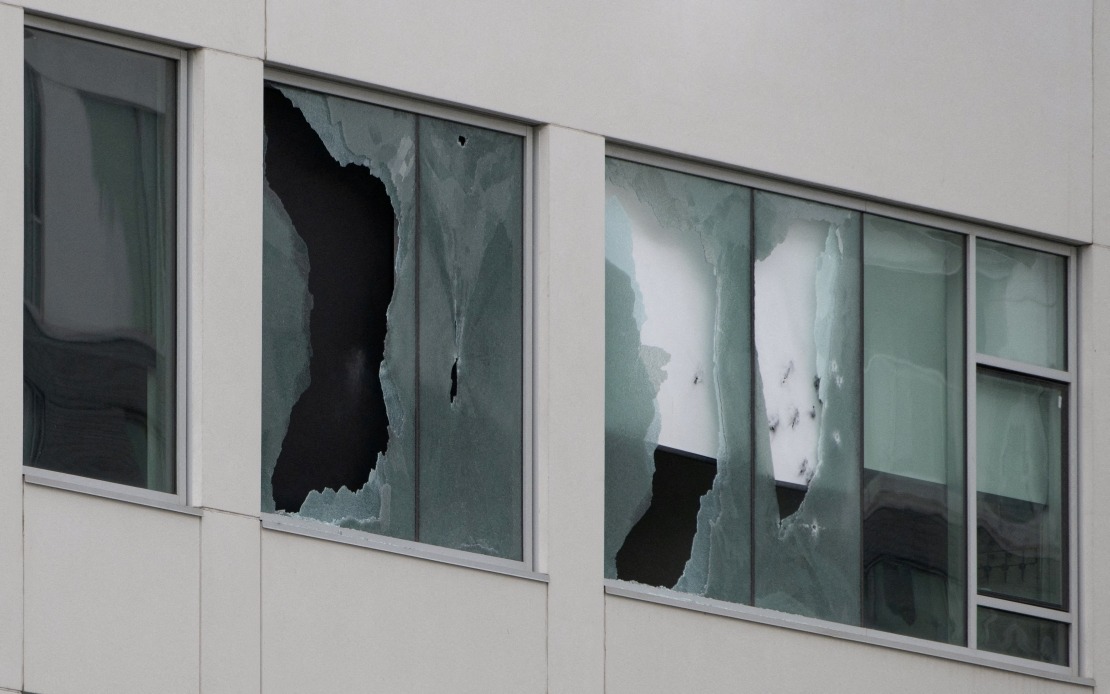
A deadly shooting in the Canadian city of Montreal has left three people dead, including a police officer responding to the incident, in what authorities are treating as an isolated criminal act rather than an ideologically motivated attack. The incident unfolded in the Côte-des-Neiges neighbourhood on Monday, prompting an immediate lockdown of the area and urgent warnings to residents to shelter in place. Montreal police confirmed the deaths through social media, expressing profound sadness over the loss of their officer, while investigators worked to piece together the circumstances surrounding the violence that also claimed a civilian's life and resulted in the death of the suspected gunman.
The sequence of events began when armed officers arrived at the scene and came under fire, according to Montreal police chief Fady Dagher, who briefed reporters on the unfolding situation. Officers returned fire, and the suspect was subsequently neutralised at the scene. The rapid police response prevented further casualties, though two individuals sustained injuries in the crossfire. One of the wounded was a police officer whose condition stabilised and no longer posed life-threatening concerns by the time authorities provided updates to media outlets, while a second injured person remained under medical care.
In the immediate aftermath, law enforcement authorities moved swiftly to secure the perimeter and reassure the public that the threat had been contained. Police issued stark warnings of an armed and dangerous individual and instructed residents throughout the affected neighbourhood to remain indoors and secure their properties. The Canadian Broadcasting Corporation reported that emergency alerts directed people to lock doors and await further instruction, creating a tense atmosphere in what is normally a residential area of the sprawling metropolitan region. The emergency alert system was eventually lifted once officials confirmed that no additional suspects remained at large and the situation had been brought under control.
Crucially, investigators have determined that terrorism played no role in the attack, ruling out links to organised extremist organisations or coordinated ideological campaigns. The police department's assessment pointed instead toward an individual act of violence carried out by a single perpetrator with no broader network or support structure. This conclusion carries significant implications for how authorities will approach the investigation and what preventive measures might be considered going forward. The confirmation that the shooter acted in isolation also provided some reassurance to residents fearful of potential follow-up attacks or coordinated violence, though it did not diminish the tragedy of the lives lost.
However, emerging details uncovered during the investigation have raised questions about the suspect's potential ideological leanings. Multiple media outlets, including Canadian broadcasters, reported that investigators discovered what appeared to be a manifesto written by the attacker containing language consistent with the incel movement, an online subculture characterised by extreme misogyny and anti-feminist ideology. The incel community, whose name derives from "involuntary celibates," has been linked to several violent incidents across North America in recent years, with members promoting traditional gender hierarchies and viewing women with considerable hostility.
The discovery of such materials marks a significant element of the investigation, as it potentially illuminates the shooter's motivations and psychological state leading up to the attack. Incel ideology has increasingly attracted scrutiny from law enforcement and academic researchers examining radicalisation pathways online. The movement's decentralised nature and heavy presence on internet forums and social media platforms create challenges for prevention efforts, as individuals can be exposed to these narratives without formal recruitment or membership structures. The suspected connection in this Montreal case adds to a growing catalogue of violent incidents that authorities have tentatively linked to incel ideology or similar misogynistic online movements.
Security authorities in Canada have not yet formally confirmed the details about the manifesto or its connection to incel ideology, emphasising that investigations remain ongoing and preliminary findings require verification. Official statements have been cautious, reflecting standard investigative protocol that avoids premature conclusions before evidence has been thoroughly examined and authenticated. This methodical approach contrasts with rapid media reporting based on sources and initial indications, highlighting the gap between preliminary information and conclusive forensic and investigative findings.
The incident has prompted reflection within Montreal and across Canada regarding public safety, mental health support, and the growing challenge of online radicalisation. Police services in the country have faced increasing scrutiny regarding their capacity to identify and intervene with individuals radicalised through online forums before they commit acts of violence. The balance between monitoring concerning online activity and protecting civil liberties remains contentious, with civil liberties advocates cautioning against excessive surveillance while law enforcement argues that early identification of dangerous individuals could prevent tragedies.
For Malaysian and Southeast Asian observers, the incident underscores the transnational nature of online extremist movements and the vulnerability of young people across the region to ideological narratives originating in Western online spaces. While incel ideology has not achieved the prominence in Malaysia and neighbouring countries that it has in North America, the global interconnectedness of internet culture means exposure to these narratives is possible for Malaysian youth. Local authorities and community groups may wish to monitor whether such ideologies gain traction within regional online communities and to develop appropriate educational and preventive responses.
The Montreal shooting also reflects broader concerns about gun violence in Canada, a country with stricter firearm regulations than the United States but nonetheless confronted with periodic mass casualty incidents. The circumstances of how the suspect obtained weapons remain part of the ongoing investigation. Understanding the procurement methods and security lapses that allowed an individual suspected of harbouring violent ideologies to access firearms may inform policy discussions in Canada and other jurisdictions grappling with similar challenges.
The loss of the Montreal police officer represents another addition to the roster of law enforcement personnel killed in the line of duty in Canada and underscores the genuine dangers that police face when responding to armed and violent situations. The incident will likely renew discussions within police services about training, tactics, and officer safety protocols when engaging with armed suspects. Departments across the country will examine the Montreal police response to extract lessons applicable to their own contexts and preparedness levels.
As the investigation progresses, authorities will continue examining the suspect's background, digital footprint, and interactions within online communities to construct a comprehensive understanding of the path to violence. This work will inform not only the immediate investigative closure but also broader prevention strategies aimed at identifying individuals at risk of radicalisation through online exposure to extremist and misogynistic ideologies. The findings may contribute to evolving best practices in law enforcement prevention and intervention approaches being developed across North American police services.

