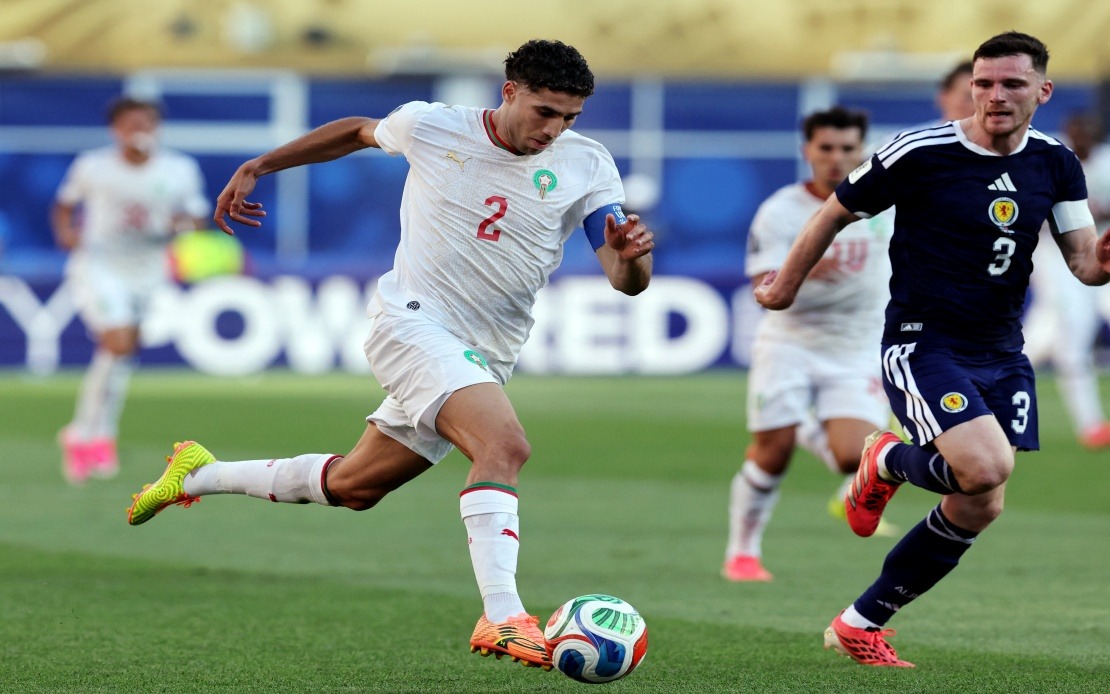
Morocco's football program faced an awkward moment at the World Cup when supporters voiced their disapproval of captain Achraf Hakimi during the squad announcement ahead of Friday's 1-0 victory over Scotland in Foxborough, Massachusetts. The jeers intensified each time the Paris Saint-Germain defender touched the ball—a significant distraction on what should have been a moment of national pride. The uncomfortable reception stemmed from a French court decision announced the same day, in which a Versailles appeal court determined that Hakimi must face trial on charges of rape involving a 24-year-old woman allegedly assaulted at his residence in 2023.
Despite the controversy swirling around his captain, Morocco coach Mohamed Ouahbi chose to sidestep the legal proceedings and instead emphasised the player's professionalism and contribution to the team's performance. Speaking after the match, Ouahbi indicated that the squad had deliberately avoided discussing the court announcement with Hakimi, believing that compartmentalising the sporting and personal dimensions of the situation was the most appropriate course of action. His comments reflected a pragmatic decision to keep the focus on Morocco's competitive ambitions at the tournament rather than allowing external circumstances to dominate the narrative surrounding the national team.
Ouahbi's backing of Hakimi centred on the defender's on-field performance rather than engaging with the legal situation. He characterised Hakimi's display as commanding and assured, noting that the player had demonstrated composure and technical excellence despite the hostile reception from sections of the crowd. The coach suggested that Hakimi's mindset remained unaffected by the events unfolding off the pitch, pointing to his relaxed demeanour and effective play as evidence that he could maintain professional standards whilst navigating personal turmoil. For Malaysian and Southeast Asian audiences, this scenario illustrates the tensions that can emerge when high-profile athletes face legal challenges whilst representing their nations on sport's biggest stages.
The decision by teammates not to engage publicly with the rape allegations revealed a deliberate strategy within the Morocco squad to create a protective barrier around Hakimi. This collective approach, endorsed by coaching staff, prioritised maintaining team cohesion and avoiding commentary that might amplify the controversy or distract from the World Cup campaign. In Southeast Asia, where football clubs often face similar situations, such unified silence reflects common institutional responses to athlete misconduct allegations—an approach that prioritises sporting objectives over broader accountability discussions.
Hakimi's own statement following the court ruling suggested an eagerness to address the charges directly. Through social media, the defender declared that he would finally have an opportunity to present his defence, implying a sense of vindication or relief that the trial process would now proceed. His assertion of innocence, coupled with the appeal court's decision to proceed with the case, set the stage for what would likely be a protracted legal battle running parallel to his sporting career—a situation that could fundamentally impact not only his professional reputation but also his psychological well-being and performance consistency.
Ouahbi's framing of Hakimi as potentially the world's premier right-back represented an attempt to reposition the narrative around the player's identity and value. By anchoring discussion within footballing merit rather than legal jeopardy, the coach essentially invoked sport's traditional argument that athletic excellence should transcend personal circumstances. This rhetorical strategy, whilst common in professional sports, raises persistent questions about proportionality, accountability, and the responsibilities that sporting institutions bear towards broader social standards—issues particularly relevant in Malaysia and the region where public discourse around athlete conduct continues to evolve.
The timing of the court decision—mere hours before Morocco's match—intensified the challenge facing the national team's leadership. Managing both the immediate sporting demands of a World Cup fixture and the reputational implications of the announcement required careful navigation. The crowd's reaction demonstrated that public perception could not be entirely controlled through institutional messaging, despite coaching staff and teammate solidarity. For Malaysian football stakeholders and administrators, this situation underscores how external legal proceedings can rapidly infiltrate the sporting domain and create unpredictable circumstances that challenge team management strategies.
Hakimi's previous appeal against an investigating judge's earlier decision indicated that the legal process had already consumed considerable time and effort. The progression from investigation through to trial represented a significant emotional and professional investment, with implications extending beyond the footballer himself to encompass his club, national team, and broader personal relationships. For a player at the apex of his career, balancing elite-level football with serious legal charges represents an extraordinary psychological burden that few athletes have successfully managed whilst maintaining peak performance.
The Morocco team's ability to secure victory despite the distraction surrounding their captain suggested a degree of professional resilience and compartmentalisation. Whether Hakimi could sustain such performance throughout a protracted trial, however, remained uncertain. The World Cup provided a specific temporal focus that might shield him from daily legal developments, but subsequent club seasons and international fixtures would inevitably intersect with trial proceedings. Malaysian clubs and athletes facing similar scenarios should note how institutional support, tactical focus, and deliberate information management can help maintain immediate sporting performance, though long-term psychological impacts remain difficult to predict or control entirely.

