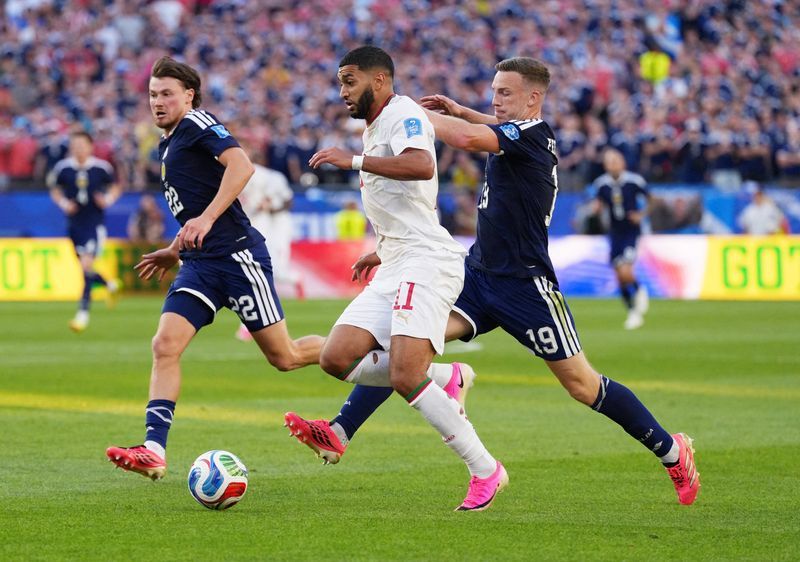
In a commanding display at Foxborough, Massachusetts on Friday, Morocco asserted their credentials as genuine World Cup contenders by dismantling Scotland with a 1-0 triumph that showcased attacking efficiency and relentless defensive pressure. The decisive moment came almost instantaneously when Ismael Saibari converted in the 71st second—the quickest goal of this tournament—to give the North Africans a commanding grip on Group C with one fixture remaining. The victory propels Morocco to four points and top spot in the standings, while Scotland, despite securing three points from their opening two matches, remain in a precarious position heading into their final encounter.
Scotland arrived in Massachusetts riding high after a historic 1-0 victory over Haiti in their opening match, marking their first World Cup success in three and a half decades. However, the Scots discovered that early tournament momentum counts for little when facing opponents executing their gameplan with such precision and intensity. Morocco's system was built around dominating possession, suffocating Scotland's midfield, and launching rapid transitions that repeatedly caught the defending Scottish backline fatally exposed. The hosts struggled from kickoff, unable to establish any rhythm or territorial control as the Moroccans systematically dismantled their shape through sustained pressing and intelligent movement off the ball.
Saibari's breakthrough goal illustrated the gulf in execution between the two teams. As central defender Grant Hanley pushed forward prematurely, Brahim Diaz threaded a pass behind the Scottish defensive line, allowing the Moroccan midfielder to accelerate into the space and finish with a powerful effort beyond goalkeeper Angus Gunn. The clinical nature of the strike underscored Morocco's capacity to punish defensive vulnerabilities, a characteristic that has become the hallmark of their resurgence since their unexpected run to the semi-finals in Qatar four years ago. Saibari himself has emerged as a key figure, having previously netted in Morocco's opening-match draw against Brazil and reportedly securing a transfer to Bayern Munich following successful medical tests.
What distinguished this performance was not merely the goal itself but the suffocating control Morocco maintained throughout. The Scottish side managed virtually no shots of substance until deep into the first-half stoppage time, a stark illustration of their inability to construct attacking patterns against Morocco's organised pressing. Meanwhile, the Moroccans created numerous opportunities to extend their advantage, with Azzedine Ounahi orchestrating moves down the left flank and Bilal El Khannouss forcing Gunn into a solid save following another incisive team movement. Saibari himself struck the post with a deflected effort in the second period, evidence that Scotland's goalkeeper was becoming increasingly busy despite his team's general ineffectiveness in possession.
Saibari's achievement carries historical significance within the African context. His goals in consecutive World Cup appearances place him among elite company—only Egypt's Mohamed Salah had previously managed the feat among African players at this tournament. The distinction reflects both Morocco's deeper squad strength and the maturation of elite footballing talent across the continent. The 25-year-old midfielder represents the calibre of player now emerging from North Africa and the broader region, commanding moves to Europe's premier leagues and delivering performances on football's grandest stage with composure that belies his relative youth in international competition.
The Moroccan squad composition tells its own story about the programme's trajectory. Ounahi had controversially declared the previous day that his team was targeting the final, remarks that might ordinarily invite derision when uttered by representatives of a nation without a World Cup final appearance. Yet the quality on display against Scotland suggested the ambition was not baseless. The Moroccans controlled territory, dictated tempo, and converted their superiority into tangible result with minimal waste. Notably, captain Achraf Hakimi featured despite the distraction of facing a rape trial and enduring booing from Scottish supporters—a testament to both his mental fortitude and Morocco's ability to compartmentalise external pressures.
Scotland's predicament now centres on their final group assignment against five-time champions Brazil, a fixture that represents their avenue to progression. With three points accumulated, Steve Clarke's side would likely guarantee qualification by avoiding defeat against the Brazilians, though the task appears daunting given Brazil's pedigree and their own failure to generate attacking momentum when facing organised opposition. The Scots must rediscover their precision in front of goal and their capacity to execute transitions, elements conspicuously absent during the Moroccan encounter. The alternative path involves Haiti delivering an unexpected result against Morocco, an outcome that would require Scottish victories in their final fixture—an uncertain proposition at best.
Morocco's remaining fixture against Haiti represents a significant opportunity to secure progress from Group C with potentially a match to spare. Haiti, despite their opening loss to Scotland, offer a more vulnerable proposition than Brazil, and the Moroccans' demonstrated offensive capacity suggests they should be capable of adding to their goal tally. The North Africans possess genuine momentum and the psychological advantage of an opponent they have already defeated. Progression would vindicate the technical and tactical overhaul that transformed Morocco into continental powers and semi-final participants in recent tournament cycles.
The broader implications for the tournament suggest that traditional football hierarchies continue to shift subtly. Morocco's authoritative performance against a Scotland side that entered the match with recent competitive success demonstrates that consistency in developing national team infrastructure produces dividends even when facing traditionally stronger opponents. For Malaysian and Southeast Asian football observers, the Moroccan model offers instructive lessons about investing in youth development systems, maintaining tactical coherence across managerial transitions, and building squad depth that allows flexibility in selection without sacrificing competitive balance. As the tournament progresses, Morocco's Group C dominance may yet prove an early indicator of which nations possess the structural foundations necessary to challenge global football's established order.

