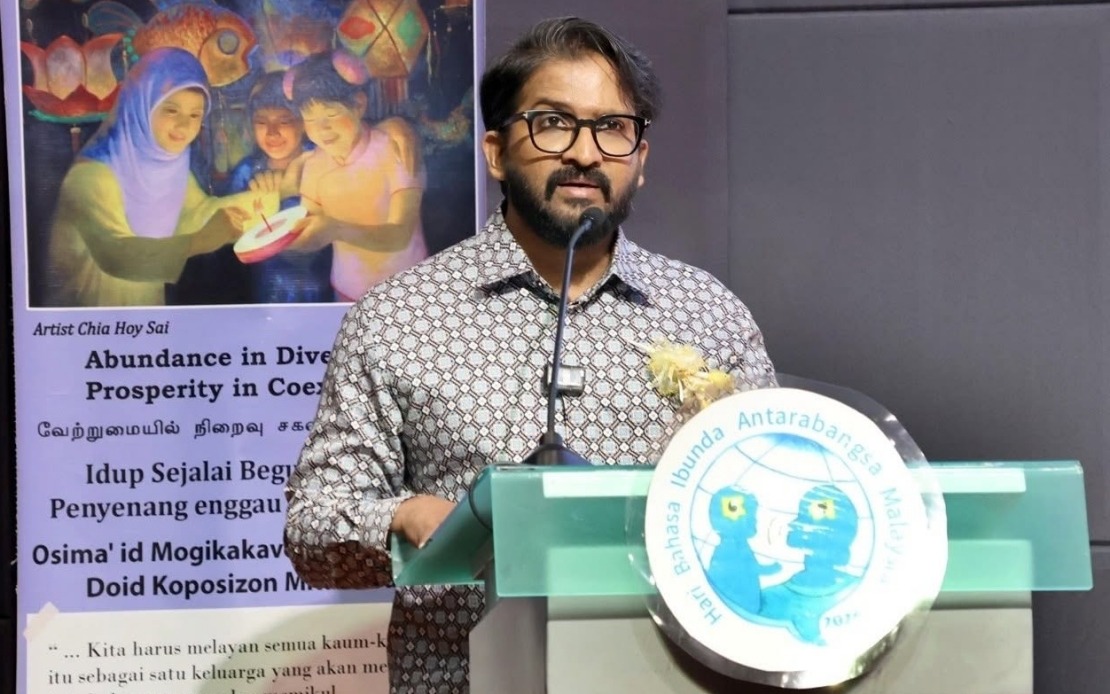
Deputy National Unity Minister R. Yuneswaran has made a compelling case for elevating mother-tongue education across Malaysia, framing linguistic competency not as a barrier to national cohesion but as a foundation for understanding that can defuse tensions surrounding sensitive topics on social media. Speaking on June 21, Yuneswaran identified the persistent eruption of race, religion and royalty (3R) disputes online as symptomatic of deeper fractures in intercommunal knowledge and appreciation, suggesting that ignorance of one another's linguistic and cultural backgrounds fuels conflict rather than fostering the mutual respect required for a unified nation.
The deputy minister's intervention arrives at a moment when Malaysian society faces sustained challenges in navigating sensitive communal subjects. Rather than restricting dialogue on these topics—an approach that has sometimes been attempted through regulatory measures—Yuneswaran proposes a preventive educational strategy grounded in linguistic inclusivity. His argument rests on the observation that languages function as more than mere communication tools; they encode centuries of cultural memory, values systems, and historical narratives that shape how communities understand themselves and relate to others.
Malaysia's linguistic landscape reflects extraordinary diversity, with approximately 130 distinct languages spoken across the peninsula and East Malaysia. This multiplicity, Yuneswaran contends, should be regarded as a national asset worthy of cultivation rather than a potential source of fragmentation. The deputy minister's stance challenges assumptions that privileging mother-tongue instruction might dilute attachment to Bahasa Malaysia or fragment the national project. Instead, he argues for a complementary approach in which proficiency in ancestral languages actually strengthens overall multilingual capacity and deepens individual rootedness in the cultural contexts that define Malaysian identity.
Drawing on his own background—having studied in both Chinese and national school streams as an Indian Malaysian—Yuneswaran provides personal testimony to the compatibility of mother-tongue learning with facility in the national language and international languages. This biographical detail carries particular weight in the Malaysian context, where educational pathways and linguistic choice remain genuinely contentious issues. His assertion that proficiency in one's mother tongue does not impede learning Bahasa Malaysia or other languages directly addresses anxieties held by some policymakers and community leaders who view mother-tongue education as potentially competitive with national language acquisition.
The deputy minister situates his linguistic proposal within the broader mandate of the 13th Malaysia Plan, which assigns the National Unity Ministry responsibility for advancing nation-building through frameworks emphasizing understanding, mutual respect, and active engagement across communal boundaries. This institutional framing suggests that language education represents not a sentimental gesture toward cultural preservation but a strategic instrument aligned with measurable policy objectives. The government has explicitly tasked the unity ministry with strengthening the social fabric, and Yuneswaran's intervention indicates that linguistic competency features prominently in this institutional vision.
The timing of Yuneswaran's remarks reflects ongoing concerns about polarization on Malaysian social media platforms. Daily occurrences of 3R controversies—from disputes over religious sensitivities to heated discussions about constitutional provisions affecting different communities—demonstrate how digital spaces can rapidly amplify tensions that might otherwise remain localized or manageable. The deputy minister's diagnosis suggests that these conflicts are not inevitable products of Malaysia's diversity but rather consequences of insufficient understanding. By inference, educational investment in mother-tongue proficiency could gradually reduce the emotional charge and misunderstanding that frequently characterizes online exchanges.
Yuneswaran's emphasis on the relationship between language and identity addresses a dimension of Malaysian public discourse that often remains implicit. Understanding one's own cultural heritage through the medium of one's mother tongue—whether Mandarin, Tamil, Iban, Kadazan or another language—creates what scholars term linguistic consciousness, an awareness of how language shapes thought and perception. When combined with exposure to the languages and historical narratives of other Malaysian communities, such consciousness could theoretically generate more empathetic and nuanced engagement across communal lines, reducing the tendency toward crude stereotyping that frequently accompanies 3R discussions online.
The proposal also carries implications for Malaysia's position within broader Southeast Asian and global contexts. The region contains numerous multilingual societies grappling with similar tensions, and Malaysia's experience—including whatever policy innovations emerge from this emphasis on mother-tongue education—may inform regional approaches to managing diversity. Furthermore, as international competition for talent intensifies, the capacity to maintain linguistic heritage while simultaneously acquiring facility in national and international languages positions Malaysian graduates advantageously in global labor markets.
Critical questions remain about implementation. Strengthening mother-tongue education requires sustained investment in teacher training, curriculum development, and materials production across dozens of languages. Resource constraints, particularly in less widely-spoken languages, present genuine obstacles. Moreover, the relationship between linguistic knowledge and intercommunal understanding, while intuitively appealing, remains contingent on broader social conditions and may require complementary initiatives in curriculum development that explicitly foreground comparative cultural understanding and historical literacy.
Yuneswaran's framing also implicitly acknowledges limitations of enforcement-based approaches to managing 3R sensitivities. Rather than relying primarily on legal prohibitions or content moderation, his proposal invests in human development and cultural competency as preventive mechanisms. This represents a philosophical shift toward building constructive capacity for dialogue rather than simply constraining problematic speech—an approach potentially more sustainable over the long term, though necessarily slower in producing measurable results.
The deputy minister concludes by asserting that language constitutes a unifying force, with unity itself strengthening Malaysia. This formulation inverts the conventional sequence, suggesting that linguistic understanding and appreciation precede national solidarity rather than flowing from it. If policymakers and educators take this analysis seriously, it would justify significant reallocation of resources toward mother-tongue instruction, teacher development in these languages, and pedagogical approaches explicitly designed to generate cross-cultural linguistic awareness among young Malaysians navigating an increasingly polarized online environment.

