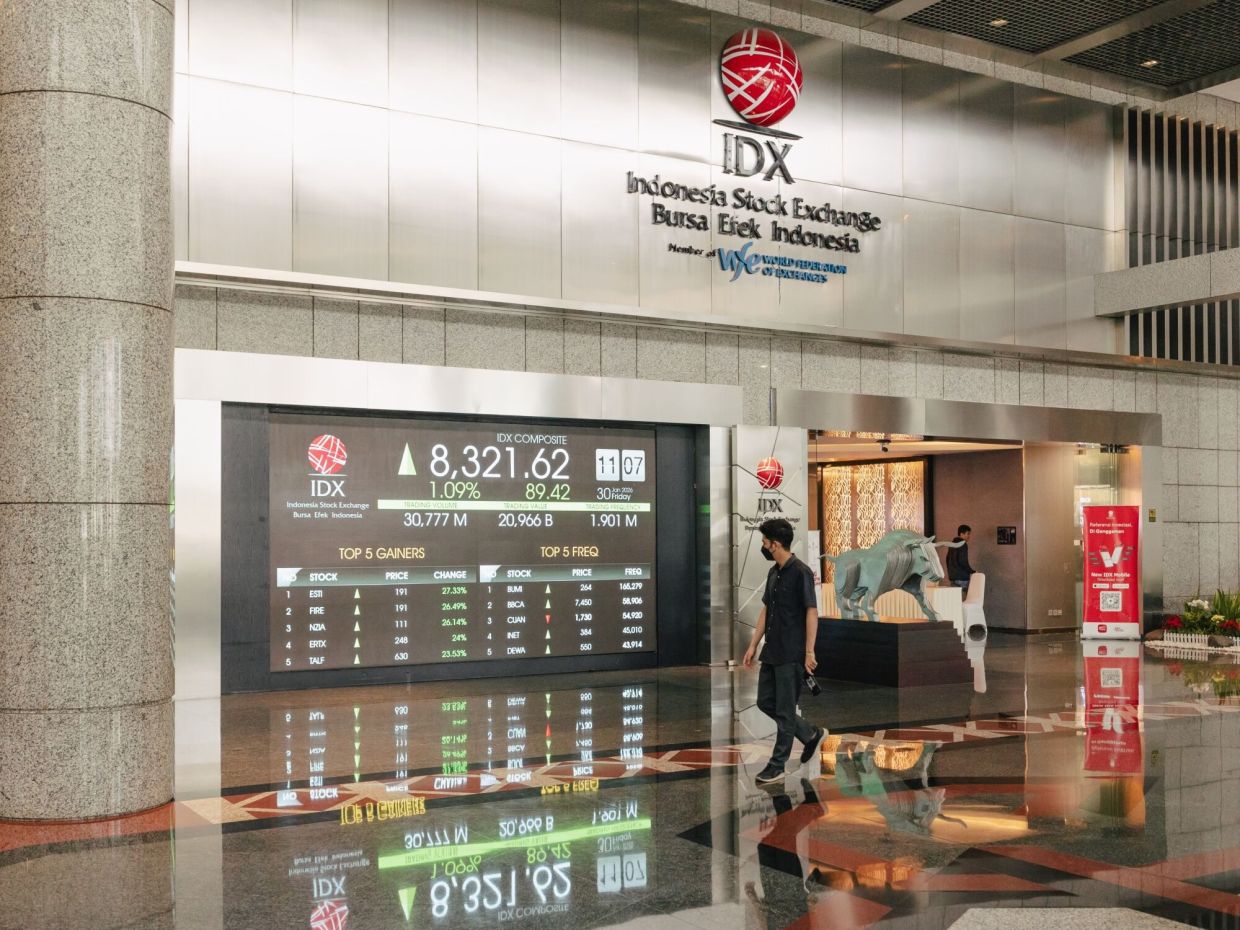
Indonesia's financial markets face mounting pressure from a major global index provider that has intensified scrutiny over the investment climate in Southeast Asia's largest economy. MSCI, which manages trillions in assets through its widely-tracked indexes, released a damning accessibility review on Thursday that identified significant weaknesses in how shareholding information flows to investors and how trading is conducted on the market. The assessment comes at a critical juncture, with MSCI set to announce next week whether it will strip Indonesia of its emerging market status—a classification that has stood for more than two decades—and relegating it instead to frontier market tier, a move that analysts warn could unleash a wave of forced selling totalling as much as $13 billion.
The index provider's concerns centre on the opacity surrounding who actually owns shares in Indonesian companies and whether trading patterns suggest coordinated behaviour rather than genuine market-driven price discovery. MSCI specifically downgraded Indonesia's information flow criterion to negative status, meaning the provider is no longer satisfied that investors have clear visibility into the true distribution of freely tradeable shares, known as free float. This deterioration strikes at the heart of how global asset managers evaluate whether a market is transparent and fair enough for billions of dollars in institutional capital. When large funds cannot accurately assess how much of a company's shares are genuinely available for purchase—as opposed to being locked up by controlling shareholders or the state—it becomes nearly impossible to build accurate models of investment value and risk.
Yet some market participants offered a more measured interpretation of MSCI's findings. Mohit Mirpuri, a fund manager at SGMC Capital in Singapore, noted that only one accessibility measure had actually deteriorated in the latest review, and that Indonesia continued to perform respectably against regional competitors including South Korea, China and India across several important criteria. This observation suggests that MSCI's concerns, while serious, may not represent a wholesale collapse of market infrastructure. Mirpuri maintained that his base case scenario still envisions Indonesia retaining its emerging market classification, indicating that not all professional investors have accepted a downgrade as inevitable. Such nuance matters because market sentiment can swing sharply on interpretation of bureaucratic signals, and overblown headlines could amplify unnecessary pessimism.
Indonesia's authorities have not remained passive in the face of mounting international criticism. In January, when MSCI first signalled potential downgrade risk, regulators responded with sweeping reform measures intended to demonstrate commitment to transparency. The minimum free float requirement for newly listed companies was doubled to 15 percent, a substantial increase aimed at preventing excessive concentration of ownership. More dramatically, both the chief executive of the Indonesia Stock Exchange and the head of the Financial Services Authority resigned on the same day in January, a coordinated departure that underscored the severity with which leadership treated the crisis. These were not minor technical adjustments but fundamental reshuffling at the institutional level.
The reform push has not prevented further deterioration in market confidence. In May, MSCI removed six companies from its indexes, most of them connected to prominent business tycoons with significant market influence. That announcement triggered another sharp sell-off in Indonesian equities, demonstrating the cascading impact of each negative signal from the index provider. The sequence of events reveals how closely integrated Indonesia's capital markets have become with global index-tracking systems. What MSCI decides matters not primarily because of its analytical insight, but because enormous pools of passive capital automatically move in response to its classification changes. A downgrade would force these tracking funds to liquidate holdings, creating a self-reinforcing cycle of selling pressure independent of underlying economic fundamentals.
The broader economic and political context has intensified investor anxiety beyond what market accessibility issues alone might explain. President Prabowo Subianto's administration has pursued populist economic measures that have spooked international investors, while fiscal concerns have prompted rating agencies to reassess Indonesia's creditworthiness. Moody's and Fitch both cut their debt rating outlooks for Indonesia to negative status earlier this year, citing reduced confidence in policymaking. The Indonesian rupiah has weakened to record lows, forcing the central bank into successive interest rate increases in recent weeks just to stabilize the currency. These currency and credit stress indicators signal deeper economic fragility that extends well beyond transparency questions.
MSCI's review also highlighted a structural weakness that cannot be quickly remedied: Indonesia lacks an efficient offshore currency market, while the onshore foreign exchange market faces significant constraints. This limitation means that international investors struggle to efficiently hedge currency exposure when investing in or withdrawing from Indonesia, adding another layer of friction and risk to participation in Indonesian markets. For comparison, major emerging markets typically offer deep offshore derivatives markets where investors can manage currency risk cheaply and easily. Indonesia's absence of this infrastructure represents a competitive disadvantage that cannot be fixed through regulatory announcements alone.
The economic damage has become starkly visible in market performance. Jakarta's benchmark stock index has plummeted 29 percent since the start of 2025, making it the worst-performing major stock market globally. Foreign investors have liquidated roughly $3.65 billion of Indonesian equities so far this year, a stunning reversal from the period when Indonesia was considered a darling among emerging market investors. This capital flight reflects not just MSCI-driven mechanical selling but genuine loss of confidence in the investment opportunity. When international asset allocators begin reducing exposure to a market, momentum tends to accelerate downward as each seller's action validates the decision to sell for those contemplating similar moves.
The stakes extend beyond Indonesia itself to regional market dynamics. How MSCI treats Indonesia will influence investor thinking about other Southeast Asian markets that share some governance and transparency challenges. A downgrade of Indonesia, the region's economic heavyweight, could trigger broader reassessment of emerging market risk in Southeast Asia and possibly the wider emerging markets complex. Malaysian investors with exposure to Indonesian assets, and Malaysian companies competing with Indonesian counterparts for foreign capital, should monitor next week's MSCI verdict closely. The decision will reverberate across regional capital allocation decisions for years to come.