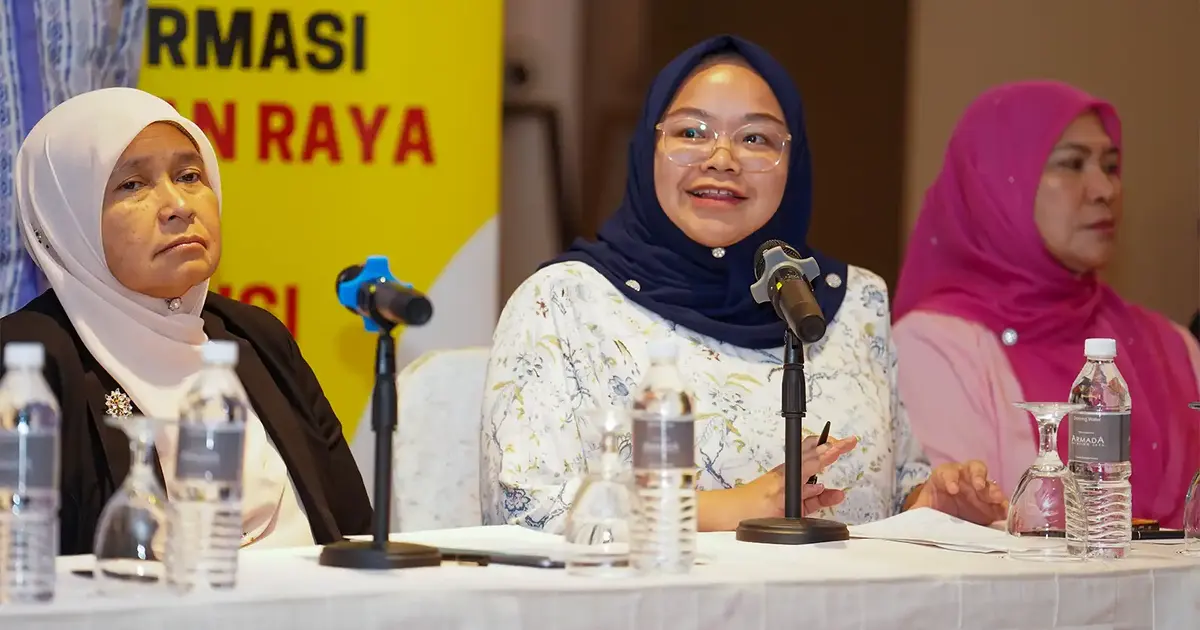
The Muda party has signalled willingness to maintain positive working relations with Bersatu in Johor even as uncertainty looms over whether the two political organisations will formalise an electoral pact. Party president Amira Aisya Abdul Aziz indicated that while informal channels remain open and relations are constructive, any formal collaboration would require Bersatu to demonstrate alignment with Muda's progressive political agenda—a condition that has not yet been satisfied.
The distinction Muda is drawing between cordial relations and binding electoral partnerships reflects the complexity of coalition-building in contemporary Malaysian politics, where ideological coherence has become increasingly central to party positioning. Rather than pursuing electoral mathematics alone, Muda's leadership is signalling that it will not compromise its policy platform for short-term electoral gains, even when potential allies control meaningful voter blocs. This approach represents a departure from traditional Malaysian political practice, where pragmatic seat-sharing arrangements often override ideological considerations.
Johor represents strategically significant electoral terrain where both parties hold ambitions. The state's political volatility following the 2022 general election created opportunities for newer political forces to establish footholds, and both Muda and Bersatu have invested heavily in grassroots organisation there. However, the two organisations operate from substantially different political foundations. Bersatu's origins in the dominant political establishment and its evolving coalition strategies contrast sharply with Muda's positioning as a reformist newcomer focused on youth mobilisation and progressive governance.
Amira Aisya's statement appears calibrated to maintain diplomatic channels while preserving Muda's independence and ideological distinctiveness. By publicly conditioning any electoral alliance on progressive policy alignment, Muda's leadership is simultaneously signalling to potential supporters that the party will not sacrifice its reformist credentials for electoral convenience. This messaging is particularly important given Muda's need to consolidate a voter base that views principled political positioning as central to the party's appeal.
The question of what constitutes progressive policy alignment remains deliberately undefined, providing negotiating space if serious discussions advance. Areas of potential convergence could include democratic governance reforms, institutional transparency, economic redistributive measures, and anti-corruption commitments. However, divergences on federalism, traditional institution roles, and social conservatism could prove more contentious depending on how Bersatu seeks to position itself in upcoming electoral cycles.
Johor's political landscape has become increasingly fragmented, with multiple parties competing for voter attention and state-level influence. The Johor Darul Takzim Umno faction, PKR, DAP, and PAS all maintain significant presence, making any Muda-Bersatu collaboration merely one factor in a complex electoral equation rather than a determining alliance. Neither party commands sufficient independent strength to dominate state politics without broader coalition architecture, yet forcing any alliance merely for electoral convenience risks alienating core supporters who view political principle as non-negotiable.
The timing of Amira Aisya's comments may also reflect internal party calculations regarding the next general election cycle. National electoral dynamics will substantially shape Johor political alignments, as state-level considerations often subordinate themselves to federal campaign imperatives. Muda's national leadership structure and policy positions could shift between now and the next electoral contest, potentially altering the organisation's willingness to partner with specific organisations or coalitions.
Bersatu, meanwhile, faces its own strategic decisions about coalition direction and policy positioning. The party's trajectory from founding through subsequent electoral contests has demonstrated flexibility in partnership arrangements, but its institutional interests may not automatically align with progressive policy advancement as Muda frames it. Understanding Bersatu's interpretation of policy convergence will prove essential to determining whether serious alliance negotiations materialise or whether the two parties remain cordial but unaligned Johor competitors.
For Malaysian observers tracking coalition development and political realignment, Muda's conditional approach illuminates broader trends in domestic politics. The emergence of parties willing to prioritise ideological consistency over raw electoral calculus suggests that voter preferences increasingly reward authenticity and principle-based positioning. This shift creates both opportunities for reformist-minded political forces and challenges for established parties seeking to maintain broad, heterogeneous coalitions.
Amira Aisya's remarks also underscore persistent uncertainty about Malaysia's emerging political configurations as new players navigate relationships with established organisations. The Muda-Bersatu dynamic in Johor exemplifies the complexity of building functional political coalitions in an environment where traditional factional politics coexist with newer identity-based and ideology-driven political movements. Whether these forces ultimately find operational common ground or establish themselves as distinct political currents will significantly influence Malaysian electoral competition over the coming years.
The path forward likely depends on whether substantive policy discussions occur between the two parties' technical committees and leadership structures. Public statements matter less than private negotiations in determining whether electoral cooperation materialises. For now, Muda's positioning allows it to maintain relationships while preserving flexibility—a calculated position that reflects political maturity from a younger political organisation navigating complex coalition dynamics in Malaysian politics.

