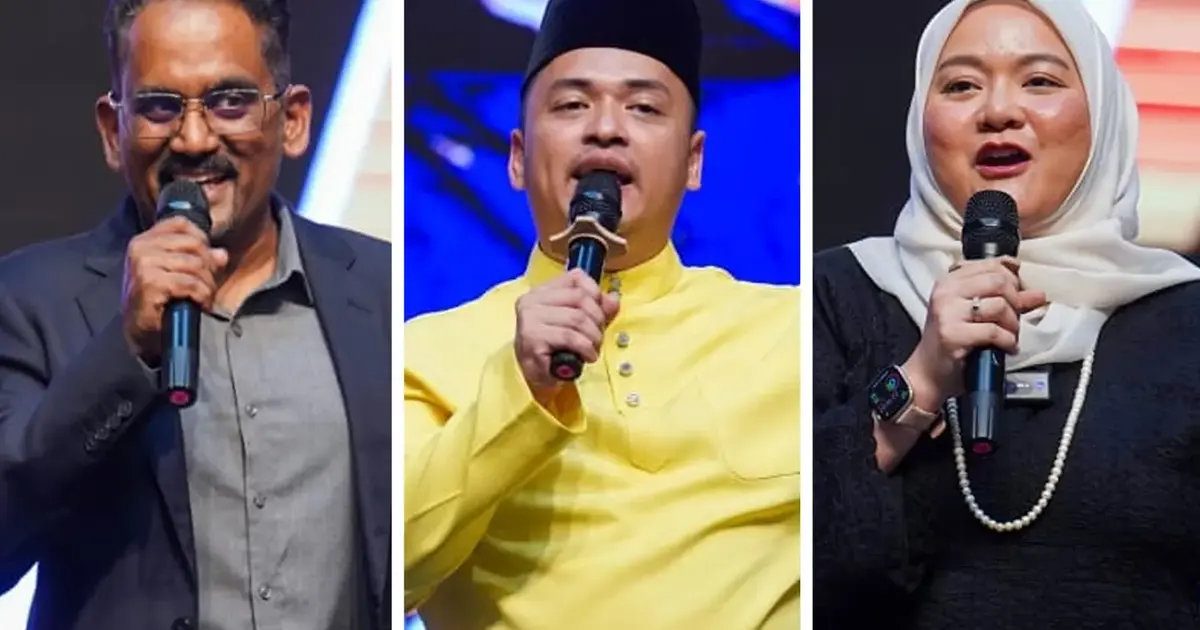
The youth-focused political party Muda has announced a third cohort of candidates vying for seats in the upcoming Johor state elections, broadening its footprint across the peninsula's southern-most peninsula state. The three newly declared hopefuls represent a deliberate strategy to field candidates with demonstrated grassroots credentials rather than established political machinery, signalling the party's commitment to drawing fresh voices into the electoral arena.
All three individuals stepping forward are contesting at the state legislative level for the first time, a characteristic that distinguishes them from seasoned political operatives who frequently shuttle between contests. Their political baptism comes as Muda continues to consolidate its presence in Johor, a state traditionally dominated by the Barisan Nasional coalition and more recently the Perikatan Nasional alliance. By recruiting first-time candidates, the party appears to be prioritising authentic community representation over the revolving-door politics that often characterises Malaysian state elections.
The inclusion of a 53-year-old candidate reflects Muda's broader appeal spanning multiple age demographics, despite the party's predominant association with younger voters and millennials. This generational diversity within the candidate roster could appeal to swing voters in mixed constituencies who seek alternatives to the established two-bloc competition between the traditional ruling coalition and Pakatan Harapan. Age diversity in candidate selection often signals a party's confidence in its messaging and policy platform across different voter cohorts.
Each of the three individuals has cultivated considerable community involvement, a factor that party selectors clearly weighted heavily during their evaluation process. In Malaysian electoral politics, candidates with documented histories of grassroots engagement—whether through religious institutions, welfare associations, business chambers, or neighbourhood associations—frequently translate such networks into tangible electoral support. These relationships often prove more decisive in state-level contests than in federal elections, where national narratives and party machinery command greater sway.
Muda's deployment of community-oriented candidates aligns with the party's broader positioning as an alternative to the establishment. Since its formation in 2020, the party has attempted to carve out political space for voters fatigued by conventional political dynamics. By emphasizing candidates with constituency-level roots rather than parachuting established figures into winnable seats, Muda reinforces its counter-narrative against what it characterises as entrenched political patronage networks. This strategy carries particular resonance in Johor, where local governance dynamics and community structures retain substantial influence over electoral outcomes.
The timing of these announcements matters significantly within Malaysia's electoral calendar and Johor's political timeline. State elections in Johor typically attract scrutiny as a bellwether for national sentiment, given the state's size, electoral influence, and economic importance. Any strong performance by Muda in Johor would amplify the party's relevance in future national contests and potentially reshape coalition calculations among opposition parties preparing for eventual federal elections. Conversely, modest results could prompt internal reassessment of the party's electoral viability beyond its core supporter base.
Muda's expansion of its Johor candidate slate reflects simultaneous efforts by the party to build organisational capacity across multiple constituencies. Malaysian elections at the state level typically demand sustained campaigning across numerous constituencies, each with distinct demographic compositions and incumbent political dynamics. Recruiting candidates with established local presence reduces the organisational burden on central party structures and distributes campaign management across multiple local networks. This decentralised approach has proven effective for challenger parties attempting to overcome resource disadvantages relative to governing coalitions.
The party's focus on first-time candidates also carries strategic implications regarding party discipline and flexibility. New entrants to electoral politics typically demonstrate greater willingness to embrace party direction than veteran politicians accustomed to exercising considerable autonomy. This dynamic could prove advantageous for Muda's leadership in maintaining coherent messaging and coalition discipline should the party achieve legislative representation in Johor. Conversely, inexperience among candidates could expose vulnerabilities if local issues spiral into crises requiring sophisticated political navigation.
Community engagement credentials among these candidates suggest Muda's selection process prioritised demonstrated commitment to constituency-level issues over high-profile media presence or previous party affiliations. This approach differs notably from strategies employed by established parties, which often leverage sitting assemblymen or federal politicians as candidates. Whether such community-grounded candidacies translate into competitive electoral performance remains an open question, particularly in constituencies where incumbents benefit from government machinery and resource advantages. Johor remains a significant testing ground for whether Muda's alternative political model can gain traction beyond its strongholds.
The announcement of these additional candidates demonstrates continued momentum in Muda's organisational development and candidate recruitment processes. As the party consolidates its candidate slates across different states and preparations intensify for electoral contests, the composition and calibre of its nominee pool will substantially influence perceptions of the party's seriousness and competitive viability. For Malaysian voters evaluating alternatives to traditional political structures, the characteristics and track records of such candidates often provide more meaningful indicators of a party's genuine commitment to change than rhetorical messaging or policy announcements.

