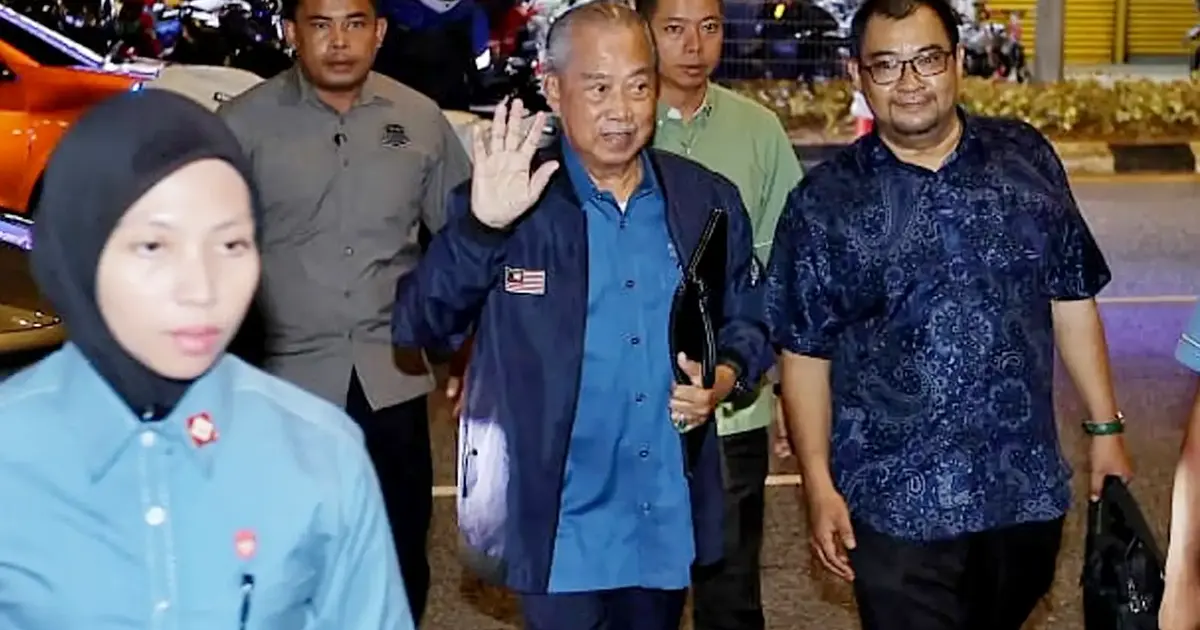
Muhyiddin Yassin and senior figures within Bersatu assembled for an unscheduled emergency gathering on Thursday evening, signalling mounting tension within the Perikatan Nasional (PN) coalition as the political landscape shifts rapidly across Malaysia. The hastily arranged session brought together the party's top brass to deliberate on a matter of existential importance: the party's future direction and relevance following the Islamic party's dramatic departure from their three-party alliance.
The timing of this convocation underscores the gravity of the situation facing the opposition bloc. PAS's decision to sever formal ties with Bersatu represents a fundamental rupture in the coalition's structure, dismantling what had previously been positioned as a viable alternative to the ruling Pakatan Harapan government. This development forces Bersatu, which emerged from a fractious split within the United Malays National Organisation (UMNO) during Muhyiddin's tenure as prime minister, to recalibrate its political strategy at a crucial juncture.
The party's predicament reflects broader fragmentation within Malaysia's opposition landscape. Since the government's formation, PN has positioned itself as a third political force, distinct from both the ruling coalition and its traditional rival, UMNO. However, internal contradictions and differing ideological priorities among member parties have continually strained the alliance. PAS, as the leading Islamist party in the coalition, has long maintained its own political ambitions and organisational imperatives that sometimes diverge sharply from Bersatu's interests and strategic calculations.
For Bersatu specifically, the implications are multifaceted and potentially severe. The party faces questions about its viability as a standalone political entity and its electoral prospects in future parliamentary contests. Founded primarily as a vehicle for Muhyiddin's political ambitions following his estrangement from UMNO, Bersatu has struggled to establish genuine grassroots support independent of its leadership structure. The loss of a significant coalition partner diminishes its negotiating leverage in any future political realignments and complicates its claim to represent a meaningful alternative government.
The emergency session provided an opportunity for party leadership to assess immediate challenges and determine tactical responses to PAS's departure. Central to these deliberations would have been questions regarding Bersatu's relationship with Perikatan Nasional itself, whether the coalition continues to function as a meaningful political entity, and what options remain available for the party going forward. These include potential repositioning within the opposition framework, negotiations with other political actors, or even exploratory discussions with the ruling coalition should circumstances warrant such moves.
This crisis also illuminates the precarious nature of Malaysian coalition politics, where parties often prioritise narrow factional interests over broader ideological or organisational coherence. PAS's exit appears driven by calculations about maximising its own electoral prospects and political influence, rather than any fundamental incompatibility that was previously unrecognised. Such volatility creates an environment of perpetual uncertainty for coalition members and undermines long-term political planning or institution-building.
For Malaysian voters and observers, the episode demonstrates the fragility of opposition unity. Throughout Southeast Asia and globally, political coalitions frequently struggle to maintain cohesion when facing powerful ruling parties. Malaysia's experience illustrates how personal rivalries, divergent organisational interests, and competing visions for the nation's future can fragment even ostensibly unified political fronts. This fragmentation, in turn, strengthens the incumbent government's position by preventing opposition forces from presenting a coherent, credible alternative.
The broader implications extend to Malaysia's democratic health and governance architecture. A functioning democracy typically requires multiple viable political coalitions capable of offering genuine policy alternatives and maintaining accountability over those in power. When opposition blocs repeatedly fracture, the ruling party enjoys de facto dominance unchecked by meaningful competition. The current situation within Perikatan Nasional thus raises questions about whether Malaysia's political system can sustain the alternation of power necessary for healthy democratic contestation.
Bersatu's response to this crisis will likely reverberate through opposition politics for months ahead. The party could attempt to rebuild PN with remaining members and new partners, pursue a merger or closer alignment with another opposition party, or attempt some form of accommodation with the government. Each path carries distinct risks and opportunities, and leadership decisions made during these emergency sessions will substantially shape Bersatu's political trajectory. Muhyiddin and his colleagues face difficult strategic choices with limited margin for error, as the party confronts questions about its fundamental relevance in Malaysian politics beyond serving as a vessel for its founders' personal political ambitions.

