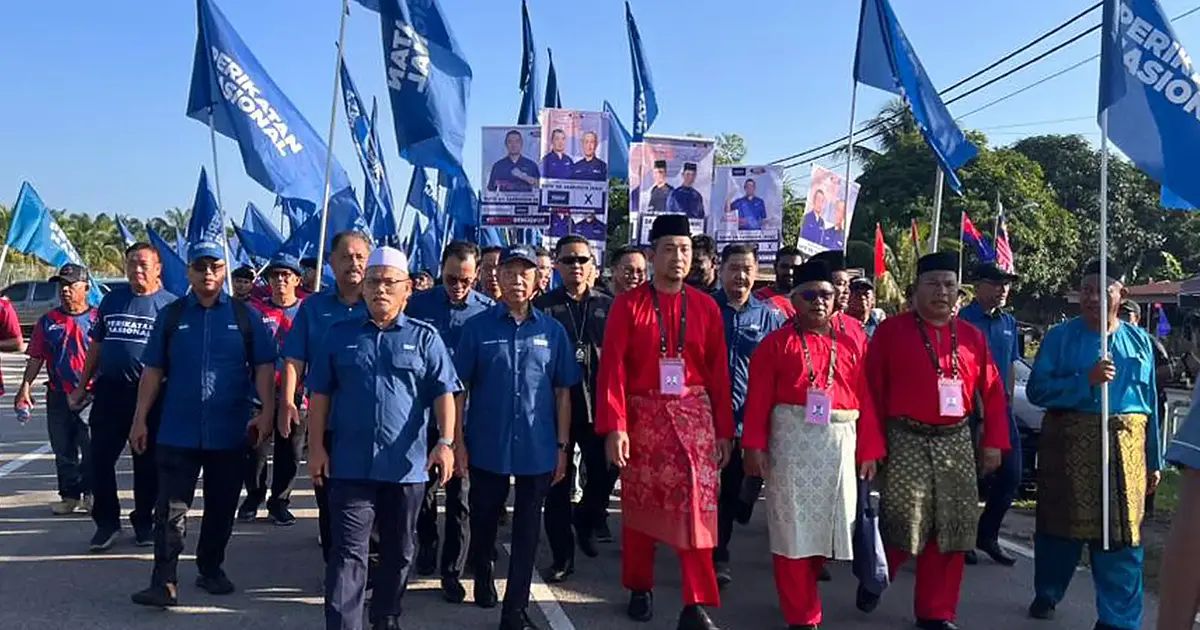
Perikatan Nasional chairman Muhyiddin Yassin threw his weight behind the coalition's Bukit Kepong campaign on Wednesday, leading a substantial turnout of party faithful in a clear demonstration of unity across the opposition bloc. The appearance underscored the coalition's commitment to securing the constituency through its Bersatu representative, Dr Sahruddin Jamal, who is contesting for a third consecutive term in the state assembly.
Dr Sahruddin's candidacy represents continuity in the Bukit Kepong seat, where the two-term assemblyman has previously secured voter confidence. His renewed bid carries implications beyond the single constituency, reflecting broader efforts by Perikatan Nasional to consolidate electoral support ahead of what promises to be a closely contested race. The turnout of supporters accompanying Muhyiddin's campaign visit signals the coalition's determination to retain the seat despite an increasingly fragmented opposition landscape.
Muhyiddin's personal involvement in the ground campaign carries symbolic weight within Perikatan's organisational structure. As chairman of the opposition alliance, his presence serves multiple purposes: validating the local candidate's credentials, energising grassroots cadres, and projecting confidence in the coalition's electoral prospects. Such high-profile leadership engagement typically precedes intensive campaign phases, suggesting a sustained push for voter mobilisation in the coming weeks.
The composition of supporters accompanying Muhyiddin reflects the cross-party dynamics within Perikatan Nasional. While Bersatu carries primary responsibility for the Bukit Kepong seat, the coalition arrangement typically encourages members from partner organisations to participate in campaign activities, reinforcing the message of unified opposition against the incumbent government. This collaborative model has become standard practice in Malaysian opposition politics, enabling smaller parties to amplify their reach through coordinated action.
Bukit Kepong's electoral significance extends beyond its individual contest. As one of several state seats contested in upcoming elections, the constituency's outcome will contribute to the overall narrative regarding opposition momentum and government vulnerability. Recent political shifts have reshaped electoral calculations, with voter behaviour becoming increasingly unpredictable and traditional strongholds no longer guaranteed safe seats.
Dr Sahruddin's track record as a two-term representative provides him with institutional advantages: established relationships with constituents, demonstrated legislative experience, and existing party infrastructure. However, these assets face erosion from factors including economic discontent, shifting demographic preferences, and anti-incumbency sentiment that can emerge even against opposition representatives during elections featuring multiple contests simultaneously.
The scale of the campaign event—hundreds of supporters—reflects resource allocation decisions within Perikatan's hierarchy. Mobilising such numbers requires logistical coordination, transportation arrangements, and organisational effort that signal serious competitive intentions. This investment suggests the coalition views Bukit Kepong as strategically important, whether for numerical gain or defensive consolidation against rival challengers.
Muhyiddin's chairmanship of Perikatan Nasional has positioned him as the primary spokesperson for opposition positions, though his leadership has faced periodic internal challenges and coalition strain. His active participation in local campaign activities demonstrates an effort to maintain grassroots connection and reinforce his authority within the broader opposition ecosystem. Such engagement helps counter narratives of disconnect between senior leadership and constituent concerns.
The Bukit Kepong campaign also reflects broader positioning within Malaysia's evolving political economy. Perikatan Nasional has sought to differentiate itself through policy platforms addressing cost-of-living pressures, governance reforms, and state-level development agendas. Campaign visits by senior leaders provide opportunities to articulate these messages directly to voters while simultaneously rallying party members whose enthusiasm directly impacts ground-level campaign effectiveness.
For Malaysian political observers, such campaign activities offer insight into opposition confidence levels and strategic priorities. The decision to allocate high-level leadership presence to Bukit Kepong suggests coalition strategists anticipate either a competitive contest requiring maximum support or a secure seat warranting visible leadership endorsement to build momentum across adjacent constituencies. Either interpretation carries implications for how opposition resources are distributed across multiple electoral battlegrounds.
The intersection of local and national political dynamics becomes apparent in such campaign events. While Dr Sahruddin's contest centres on state assembly representation, his campaign benefits from—and contributes to—larger narratives about opposition viability and government legitimacy. Voters increasingly evaluate local candidates within broader contexts concerning national governance, executive accountability, and parliamentary dynamics.
Building forward, the intensity of Perikatan's engagement in Bukit Kepong will likely persist until polling day. Muhyiddin's participation suggests the coalition intends sustained high-profile involvement rather than sporadic appearances, indicating strategic importance attached to the outcome. For Dr Sahruddin, securing Muhyiddin's prominent backing enhances his standing within Perikatan's internal hierarchy while providing electoral boost through association with senior leadership credibility.

