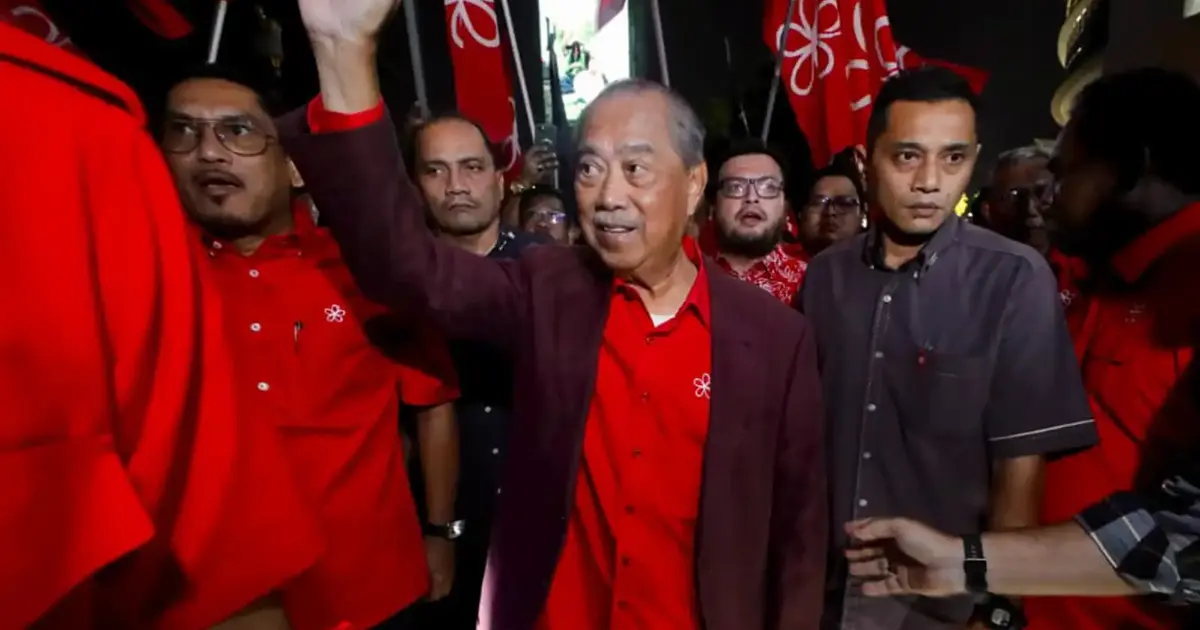
The show of strength by Muhyiddin Yassin's supporters underscores deep factional tensions within Bersatu as the party prepares to navigate critical political decisions at a high-level meeting. With over 200 party members assembling to back the former Prime Minister, the gathering signals the intensity of internal divisions that continue to shape Malaysia's political landscape and challenge the stability of coalition partnerships in the country's federal structure.
The timing of this rally carries significant weight in Malaysian politics, coming just before Bersatu convenes for discussions that will chart the party's direction across multiple fronts. The upcoming meeting represents a crossroads moment for the party, which has experienced considerable turbulence since Muhyiddin's tenure as Prime Minister ended and subsequent leadership transitions created rifts within the organisation.
Among the substantive matters expected to dominate the agenda is the party's strategy for managing simultaneous state electoral contests in Johor and Negeri Sembilan. These elections hold particular importance given that Johor remains Malaysia's second-largest state economy and a significant political prize, while Negeri Sembilan's alignment could influence broader coalitional mathematics at the national level. How Bersatu positions itself in these contests will determine whether the party can strengthen its regional influence or faces further marginalisation in state-level politics.
Equally critical to the internal discussion will be the trajectory of Bersatu's relationship with PAS, a partnership that has become increasingly consequential in Malaysian coalition politics. The two parties have worked together in recent years, yet their ideological differences and competing regional interests have occasionally created friction. The question of how tightly bound Bersatu should remain to PAS—or whether the relationship should evolve—appears to be a point of genuine disagreement within party ranks, with different factions advocating divergent approaches to this alliance.
Muhyiddin's ability to assemble such a substantial contingent of supporters suggests he retains considerable organisational capacity and grassroots loyalty despite previous setbacks. This grassroots mobilisation may be designed to demonstrate his continued relevance within the party and to influence deliberations at the forthcoming meeting from a position of perceived strength. The optics of such a gathering can shape internal perceptions of which party leaders command genuine party support versus those operating primarily through institutional positions.
The rally also reflects broader patterns within Malaysian political parties, where senior figures often seek to consolidate their standing through public displays of supporter enthusiasm before consequential meetings. These events serve multiple functions: they energise the base, signal bloc voting strength to party leadership, and communicate messages to competing factions about the costs of marginalising particular leaders or constituencies. In this context, Muhyiddin's supporters gathering in significant numbers sends unmistakable signals about his capacity to mobilise and his determination to maintain influence over party direction.
For Malaysian and Southeast Asian observers, the internal machinations within Bersatu merit close attention because the party occupies a pivotal position in national coalition dynamics. Bersatu emerged from the 2022 political realignment as a kingmaker of sorts, capable of either strengthening or destabilising whichever federal coalition it aligns with. Internal instability within Bersatu thus carries consequences well beyond the party's own organisation, potentially rippling through Malaysia's broader political equilibrium and affecting policy stability at the federal level.
The state elections in Johor and Negeri Sembilan will serve as barometers of Bersatu's electoral viability and organisational coherence. If the party performs poorly in these contests, it could signal weakness that diminishes its negotiating position in future national political arrangements. Conversely, strong performances could validate particular strategic choices and enhance whichever faction can credibly claim credit for electoral success.
The Johor election assumes particular salience given the state's economic prominence and historical significance as a Barisan Nasional stronghold. Any Bersatu gains in Johor would represent genuine territorial expansion for the party and could reshape state-level politics. Negeri Sembilan, though smaller, occupies a strategic position in the peninsula's central region and could tip the balance in how multiple states align politically, creating cascading effects across Malaysia's federal system.
The forthcoming party meeting will likely reveal whether Bersatu can achieve consensus on these critical questions or whether internal divisions will hamper its ability to execute coherent strategies in these elections and in managing the PAS relationship. A fragmented approach to either issue could prove costly, potentially allowing rival coalitions to capitalise on Bersatu's internal disarray and win seats the party might otherwise have contested effectively.
Muhyiddin's mobilisation of supporters before this meeting should be interpreted within this broader context of party consolidation and factional positioning. The gathering represents both a show of strength and an investment in determining how the party's future direction gets decided. For Malaysian observers tracking coalition stability and political developments, the outcomes of the upcoming Bersatu meeting and subsequent state electoral performances will offer important insights into whether the party can maintain internal cohesion and political relevance in an increasingly competitive Malaysian political environment.

