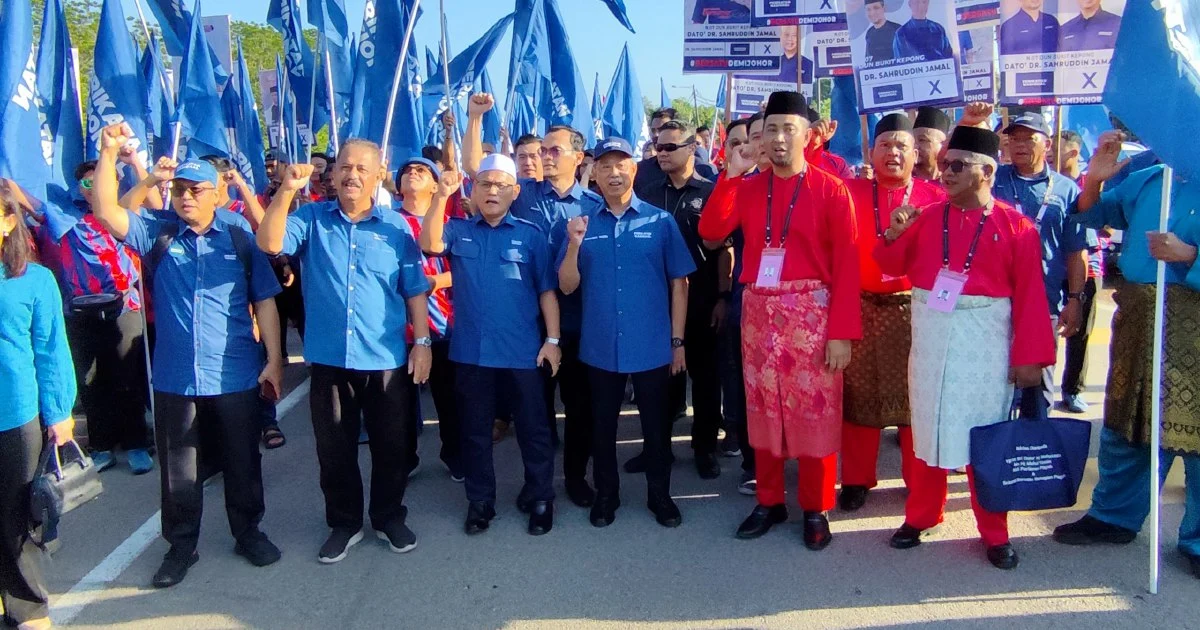
The Johor state election campaign entered a more visible phase as Bersatu president Tan Sri Muhyiddin Yassin arrived at the nomination centre in Pagoh at 8.45 am to personally accompany Sahruddin, the party's candidate contesting the Bukit Kepong state seat. The move underscores the strategic importance Bersatu places on the constituency and signals an early effort to mobilise party machinery ahead of the scheduled nomination process.
Muhyiddin's decision to attend the nomination filing personally reflects the party's determination to assert its relevance in Johor's competitive political landscape. Bersatu, which has undergone significant restructuring in recent years, views the Johor election as a crucial opportunity to demonstrate electoral viability and rebuild support in its traditional strongholds. By positioning himself alongside Sahruddin at the nomination centre, the Bersatu president sends a clear message to party members and voters about the campaign's importance.
The Bukit Kepong constituency holds particular significance within Johor's political dynamics. As a state seat with a diverse voter base, success in this area could provide momentum for Bersatu's broader electoral strategy in the state. The early arrival and personal accompaniment by party leadership suggests the candidate has been carefully selected and groomed for the contest, indicating confidence in Sahruddin's ability to represent party interests.
Johor's political environment remains fluid, with multiple coalitions vying for voter support. The state has historically been influenced by both UMNO-led Barisan Nasional and opposition coalitions, making each contest high-stakes. Bersatu's participation in these contests reflects its ongoing efforts to carve out political space independent of its former allies while seeking to forge strategic partnerships where viable.
The nomination process marks a formal beginning to campaign activities and represents a critical juncture where candidates officially register their candidacy and demonstrate organisational readiness. Muhyiddin's attendance sends implicit confidence signals to potential swing voters and party members about Sahruddin's standing within party hierarchy and his campaign's resourcefulness.
Bersatu's approach to the Johor election reflects broader strategic considerations within Malaysian politics. The party has positioned itself as an alternative voice within Malay-Muslim politics, attempting to capture dissatisfied voters from traditional parties. Success in state elections, particularly in a major state like Johor, could significantly enhance the party's national political profile and demonstrate electoral competitiveness beyond its base.
For Sahruddin, having Muhyiddin's personal support at the nomination stage provides substantial credibility and visibility. New candidates often benefit from senior leadership endorsement, as it signals party investment in their success and can attract media attention and volunteer support. The symbolic value of such appearances extends beyond the immediate electoral district to broader party messaging.
Johor's voting patterns have shown increasing volatility in recent electoral cycles, suggesting that traditional support structures cannot be taken for granted. Parties must actively campaign and demonstrate responsiveness to local issues to maintain voter confidence. Bersatu's early activation of its machinery through leadership presence indicates awareness of this competitive environment and determination to contest seriously.
The Pagoh location itself carries significance as a major town within Johor's Muar district. This area represents a diverse electoral zone with mixed urban-rural characteristics, making it representative of swing-voting patterns increasingly common in Malaysian elections. Successful performance in such constituencies can provide crucial mandates for state governments.
Bersatu's electoral strategy in Johor forms part of the party's broader national positioning as Malaysia's political landscape continues to evolve. State-level contests serve as testing grounds for campaign techniques, candidate quality, and coalition strategies that may influence national-level calculations. Performance in Johor will be closely watched by political observers assessing the party's trajectory.
The nomination phase typically generates intense activity as candidates and their supporters mobilise for the formal registration process. Muhyiddin's early appearance at the Pagoh Sports Complex suggests Bersatu intends to project energy and organisational competence throughout the campaign period. Such visible leadership engagement can influence media coverage and voter perceptions of candidate viability.
For Malaysian voters, particularly those in constituencies like Bukit Kepong, the coming weeks will present opportunities to assess candidates and campaign promises. The presence of senior party leaders during campaign activities often provides insights into which constituencies parties consider strategically important and where they anticipate competitive contests.

