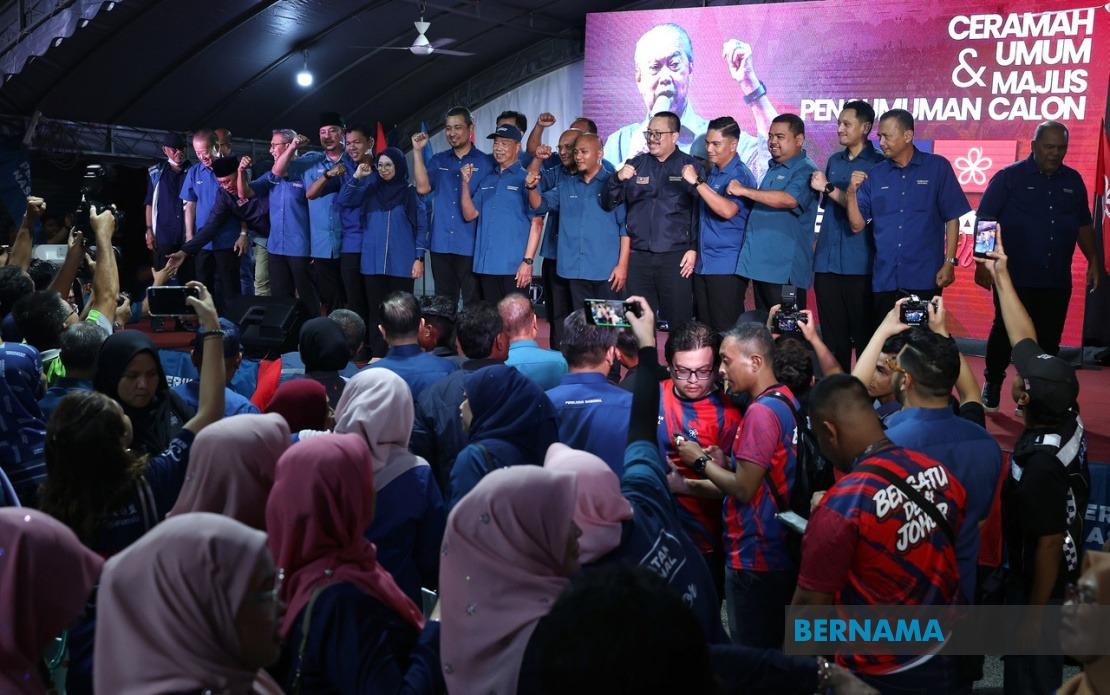
Tan Sri Muhyiddin Yassin, president of Parti Pribumi Bersatu Malaysia, formally unveiled the party's full complement of 16 candidates competing in the forthcoming Johor State Election at an event held at the Pagoh Parliamentary Service Centre in Taman Pagoh Jaya. The announcement came at a combined candidates presentation and public ceramah, signalling Bersatu's readiness to contest across all state seats in the assembly poll.
The timing of Bersatu's candidate rollout reflects the compressed campaign schedule ahead. The Election Commission has designated June 27 as nomination day, allowing candidates just two days following the announcement to file their official papers and undergo vetting procedures. This tight timeframe underscores the importance of parties having their slates prepared well in advance, ensuring smooth administrative processing during what is traditionally a hectic nomination period.
Voting in the Johor State Election is scheduled for July 11, nearly three weeks after nomination closes. This interval gives campaigning parties adequate time to mobilize grassroots support, conduct house-to-house visits, and hold ceramahs across their respective constituencies. The gap between nomination and polling day is standard practice, permitting candidates and election monitors sufficient preparation time.
The dissolution of the Johor State Assembly on June 1 triggered the electoral process, setting in motion constitutional requirements that culminated in the Election Commission's announcement of polling dates. By fielding 16 candidates across all seats, Bersatu signals an ambitious commitment to contest the entire legislature rather than adopting a selective approach. This full-slate strategy typically reflects confidence in organizational capacity and resource allocation across multiple constituencies simultaneously.
For Malaysian political observers, Bersatu's comprehensive candidacy list holds particular significance given the party's historical trajectory. Established in 2016, Bersatu has navigated coalition shifts and internal dynamics to position itself as a consequential political force. The party's decision to field candidates in all Johor seats demonstrates its intent to secure a substantial mandate and meaningful representation in a state that has traditionally been politically significant within the federation's power dynamics.
Johor's political complexion has long reflected broader Malaysian electoral trends. The state's 56 state assembly seats represent a competitive battleground where coalition positioning, candidate quality, and local issue resonance determine outcomes. Bersatu's entry into this arena adds another dimension to what is already a multifactorial electoral competition involving multiple coalitions and independent formations vying for voter approval.
The specific candidate fielded for the N8 Bukit Pasir seat, Mohd Idzharruddin Mohd Nasirruddin, exemplifies how parties construct their electoral rosters by matching candidates to constituencies. Such placement decisions typically factor in local connections, community standing, and perceived electability within that particular district. Bukit Pasir, located in Muar district, carries its own voter demographics and political history that inform candidate selection strategies.
Bersatu's approach to the Johor election operates within a broader coalition framework that has evolved substantially since the 2022 general election. The party's positioning within or outside governing coalitions shapes both its campaign messaging and resource availability. Understanding Bersatu's coalition status during this Johor campaign is essential for assessing its electoral prospects and potential post-election influence on state government formation.
The ceramah component of Bersatu's candidate announcement event serves dual purposes: introducing party nominees to the electorate while simultaneously energizing party machinery and supporters. Such public meetings have traditionally been instrumental in Malaysian political campaigning, allowing candidates direct engagement with voters and providing platforms for articulating party policy positions and development promises relevant to Johor communities.
For Southeast Asian analysts observing Malaysian politics, Bersatu's full candidacy slate in Johor demonstrates how Malaysian political parties continue adapting to post-2022 electoral realities. The party's willingness to contest comprehensively suggests confidence in its political position and electoral prospects, though Johor's complex political landscape means actual seat capture will depend on multiple variables extending beyond candidate selection alone.
The nomination process beginning June 27 will reveal final candidate confirmations and potential last-minute substitutions. Election monitoring organizations and independent observers typically scrutinize nomination submissions for procedural compliance and candidate eligibility verification. This process ensures institutional transparency and legitimacy of candidacies advancing to the polling phase.
Bersatu's electoral commitment in Johor carries implications for Malaysian federalism given the state's economic importance and historical political weight. State assembly composition affects resource allocation, infrastructure priorities, and policy direction across Johor's diverse communities. Therefore, Bersatu's competitive engagement in this election reflects not merely party ambition but substantive stakes in determining governance trajectories affecting millions of residents across Southeast Asia's largest economy by state gross domestic product.

