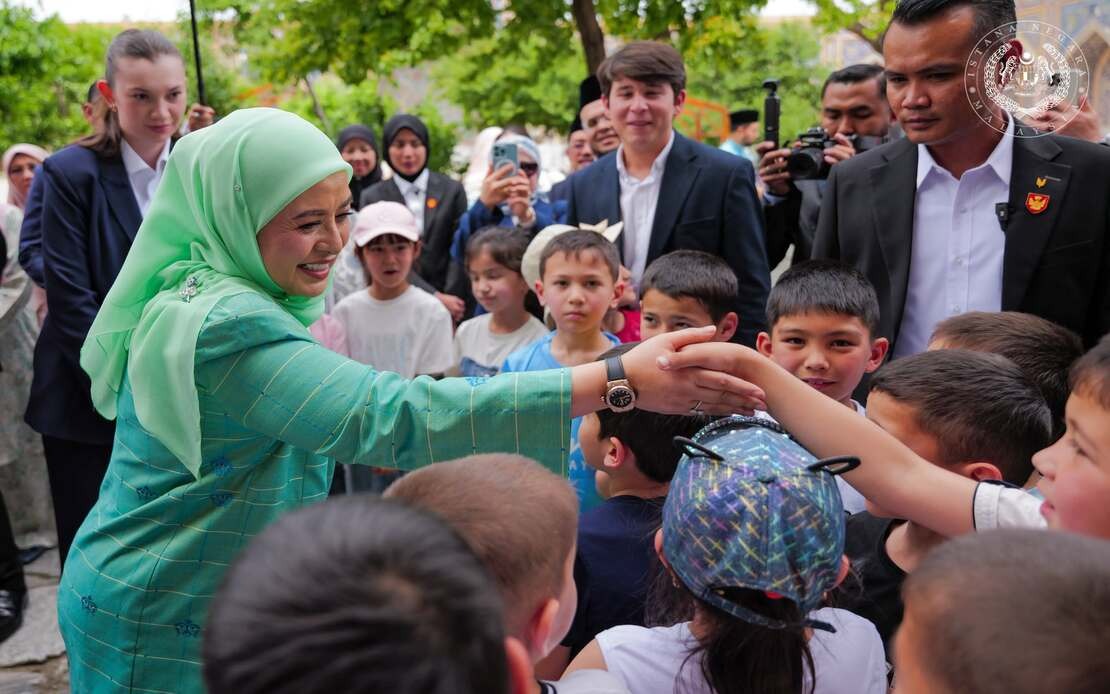
Malaysia's commitment to social harmony rests fundamentally on mutual respect among its diverse population, according to Her Majesty Raja Zarith Sofiah, Queen of Malaysia. In remarks shared through the official Facebook page of Sultan Ibrahim Sultan Iskandar, the Queen articulated how this principle has consistently anchored the nation's stability and collective well-being across generations. Her emphasis comes at a time when societies throughout Southeast Asia grapple with deepening polarization and fracturing social cohesion, making her intervention timely and locally resonant.
The Queen's message carries particular weight because it frames harmony not as a top-down imposition but as a mutual obligation embedded in Malaysian culture and values. By rooting her statement in both secular and religious foundations, she acknowledges the multi-ethnic, multi-faith character of the nation while avoiding divisive language. This measured approach reflects how Malaysia's constitutional framework has traditionally navigated difference—through recognition of shared citizenship alongside respect for distinct identities. For a country managing the tensions inherent in plural societies, such articulate reminders from constitutional figures serve an essential stabilizing function.
Crucially, Her Majesty drew upon Islamic teachings to reinforce her message about courtesy and respect. She referenced a hadith narrated by Abu Hurairah RA, in which Prophet Muhammad instructed believers on their duties toward neighbours and guests. The specific hadith—"Whoever believes in Allah and the Last Day should not harm his neighbour. Whoever believes in Allah and the Last Day should honour his guest. And whoever believes in Allah and the Last Day must either speak good or remain silent"—anchors respect within Islamic moral teaching rather than presenting it as merely pragmatic policy. This theological grounding is significant because it helps Muslim Malaysians understand communal harmony as a religious obligation, thereby strengthening compliance and legitimacy beyond secular arguments alone.
The choice to address Muslim Malaysians specifically underscores an understanding that social cohesion requires deliberate engagement with each community's moral and spiritual resources. Rather than expecting universal acceptance of abstract principles, the Queen's approach invokes Islamic authority and tradition to convince believers that honouring respect, restraint, and generosity toward others aligns with their deepest religious commitments. This methodology has proven effective throughout Malaysian history, where appeals to Islamic values often achieve broader acceptance than secular framings when directed at Muslim audiences.
Her Majesty's remarks also drew upon a concrete recent example of her personal conduct. In February, the Queen engaged warmly with more than one hundred international tourists at the main entrance of Istana Negara, Malaysia's national palace. This interaction serves multiple purposes in her message: it demonstrates that courtesy and respect operate at all social levels, regardless of nationality or background; it illustrates that such conduct enhances Malaysia's international standing and reputation; and it provides a visible, human example of the values she advocates rather than merely preaching them abstractly. The official characterization of this moment as reflecting "Her Majesty's graciousness and concern for the people and visitors to the country" elevates a simple social interaction into a statement about national identity and values.
The emphasis on treating visitors with honour carries implications beyond domestic harmony. In an era when nations compete for regional influence and soft power, Malaysia's consistent hospitality toward international guests contributes to its diplomatic standing and economic interests, particularly in tourism and business sectors. When the Queen models warm engagement with foreigners, she reinforces a national brand identity that attracts investment, talent, and goodwill. For a middle-income nation like Malaysia seeking to position itself as a bridge between civilizations and a stable Southeast Asian anchor, such symbolic leadership matters considerably.
The timing of this message also warrants consideration within Malaysia's broader political context. The nation has experienced significant institutional transitions in recent years, including changes in executive leadership and recalibrations of constitutional roles. When the Queen articulates foundational values like mutual respect and harmony, she fulfills the constitutional monarchy's stabilizing function—speaking to enduring principles that transcend partisan politics and temporary governmental changes. This provides crucial continuity and reminds Malaysians of shared commitments that supersede individual political disputes.
For Southeast Asia more broadly, Malaysia's royal family's commitment to articulating inclusive values offers instructive contrast to more confrontational leadership styles prevalent elsewhere in the region. The Queen's appeal to courtesy, good speech, and silence when unable to speak constructively provides an implicit critique of inflammatory rhetoric and polarizing discourse without directly attacking specific political actors. Such dignified, principle-based communication models an alternative to the divisive politics that increasingly characterizes Asian democracies and semi-democracies.
Furthermore, the Queen's invocation of neighbour relations takes on heightened significance in Malaysia's multicommunal context. With major Malay Muslim, Chinese, and Indian populations living in close proximity, literal neighbourly relations often cross ethnic and religious lines. Principles of non-harm, honouring guests, and speaking only good or remaining silent become practical ethics for daily coexistence rather than abstract ideals. The hadith's emphasis on refraining from harmful speech addresses a persistent challenge in plural societies where inflammatory remarks, whether online or offline, can rapidly escalate intercommunal tensions.
The Queen's message ultimately reinforces that Malaysia's stability depends less on legal mechanisms alone than on the voluntary adoption of restraint, courtesy, and mutual recognition by its citizens. This cultural-spiritual foundation, she suggests, has historically been the true mortar holding the nation together through inevitable disputes and differences. Her Majesty's articulation of this principle through a combination of religious authority, recent personal example, and gentle reminder represents effective constitutional leadership—guidance that respects citizen autonomy while clarifying national values.

