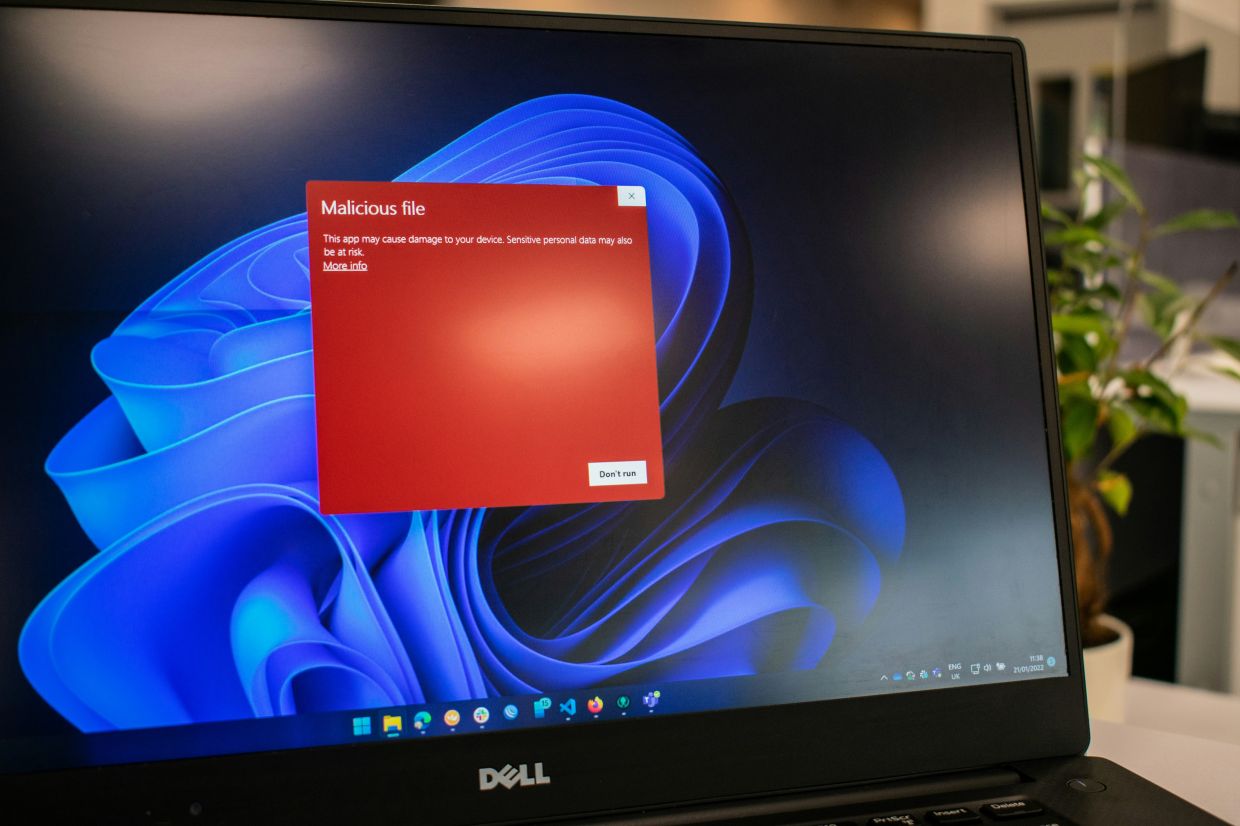
Malaysia's Computer Emergency Response Team (MyCert) has issued a critical warning regarding an active malware distribution campaign leveraging WhatsApp Web and Desktop platforms to compromise Windows computers across the country. The sophisticated threat employs social engineering techniques to deceive users into executing malicious code, with attackers specifically targeting individuals by sending deceptive messages containing harmful attachments disguised as routine financial or legal correspondence.
The attack vector relies on psychological manipulation, with perpetrators crafting file names that appear innocuous and trustworthy to unsuspecting recipients. Commonly observed file names include "Acknowledgment of Debt.vbs", "Sila semak bil anda.vbs", "December statement of account.vbs", and "Reconciliation.vbs". The strategic naming convention leverages familiarity with standard business documentation, exploiting users' natural tendency to open seemingly legitimate financial or legal files. This represents a deliberate obfuscation technique designed to lower victims' guard when interacting with potentially suspicious attachments.
Crucially, these files are not the PDF documents their names suggest, but rather Visual Basic Script (.vbs) files that execute automatically upon opening. This execution triggers a malware installation sequence that infiltrates the victim's system with sophisticated payload components. The automation aspect removes a critical barrier to infection, as users need not take additional steps beyond opening the file—the malicious process initiates immediately without requiring explicit permission or further user interaction.
Once activated, the script deploys a Remote Access Trojan (RAT) that grants attackers comprehensive remote control capabilities over the compromised device. This represents a particularly severe threat vector, as RATs enable criminals to maintain persistent access to systems even after reboots, establishing a foothold that persists across system restarts. The attacker effectively gains the ability to manipulate the device as if physically present, conducting illicit activities from a remote location without geographical constraints.
The malware's sophistication extends beyond basic remote access functionality. The RAT deliberately disables security alerts and antivirus notifications, effectively silencing the device's defensive mechanisms and preventing legitimate security software from alerting users to ongoing malicious activities. Operating under this protective cover, the malware silently captures sensitive data entered or displayed on the infected system, including passwords, banking credentials, and one-time authentication codes. This capability transforms infected computers into surveillance platforms, enabling cybercriminals to harvest authentication credentials and financial information with minimal risk of detection.
For Malaysian users and organisations, the implications are particularly acute given the prevalence of WhatsApp for both personal and business communication, and the widespread use of banking PINs and OTPs for transaction authentication. The combination of financial data harvesting capabilities and persistent remote access could facilitate subsequent fraud, unauthorised fund transfers, and account takeovers. Businesses relying on corporate devices for financial operations face particularly elevated risk should employees fall victim to this campaign.
MyCert's advisory strongly recommends that users exercise extreme caution with unsolicited file attachments, particularly those claiming financial or legal provenance from unknown senders. Critically, users should avoid opening, executing, or forwarding suspicious files, as any interaction with the malicious attachment initiates infection. Replying to senders should also be avoided, as responses confirm that a telephone number is active and monitored—information that cybercriminals catalogue for targeted campaigns and subsequent exploitation attempts.
Individuals who have already interacted with suspicious files should immediately assume their devices are compromised and take preventive action. The recommended response involves disconnecting the affected device from the internet to sever remote access capabilities, then using a separate clean device to change all passwords associated with accounts accessed on the compromised system. This two-device approach prevents attackers from capturing new credentials as users modify authentication details. Users should treat any password, PIN, credential, or sensitive information entered on the infected computer as exposed and potentially captured by malware.
MyCert emphasises that standard antivirus scans frequently fail to detect or eliminate the sophisticated RAT installed by these attackers, necessitating professional remediation services. Users should engage cybersecurity specialists experienced in removing advanced persistent threats rather than relying solely on consumer-grade security software. Corporate users should immediately notify their organisation's information technology department, enabling coordinated incident response and preventing lateral movement to networked systems or shared resources.
Users are encouraged to report suspected malware messages to WhatsApp directly through the platform's reporting mechanism, while simultaneously submitting detailed information to MyCert via [email protected]. Reports should include screenshots of suspicious messages, precise timestamps, and sender identification numbers, enabling authorities to track distribution patterns and correlate incidents across affected populations. Documentation of infection timeframes and any observed malicious activities provides valuable intelligence for threat analysis and public alert systems.
This campaign underscores the evolving sophistication of Malaysian cybercriminal operations and their targeting of personal financial security. The exploitation of trusted communication platforms like WhatsApp reflects attackers' understanding of user behaviour and platform ubiquity in Southeast Asian markets. The widespread deployment of social engineering combined with advanced technical payloads represents a comprehensive threat that requires both individual user vigilance and institutional awareness, particularly among banking and finance sector employees frequently targeted by credential-harvesting operations seeking to facilitate institutional fraud.

