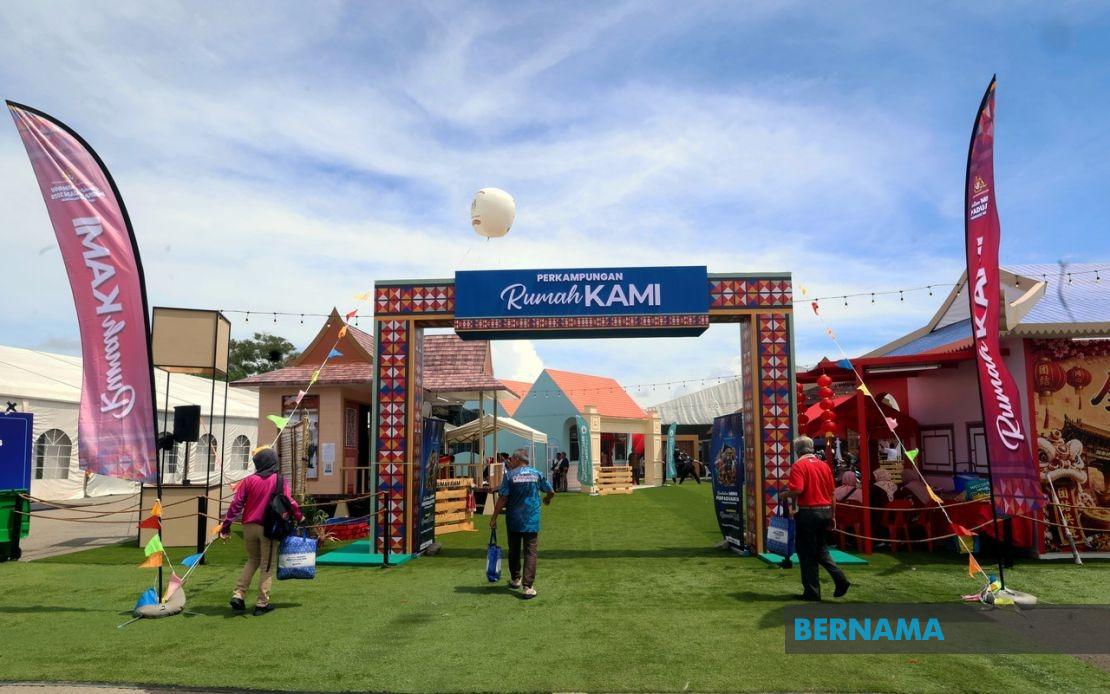
Malaysia's National Unity Week 2026 has established a new attendance milestone, drawing 284,448 visitors to Kota Kinabalu during its four-day run from June 11 to 14. The figure represents the highest turnout since the national programme's inception in 2023, signalling deepening public engagement with initiatives designed to reinforce the nation's multicultural fabric and historical consciousness.
National Unity Minister Datuk Aaron Ago Dagang attributed the surge in attendance to Malaysians' expanding recognition of the country's rich cultural traditions and the strength that emerges from embracing diverse identities. The minister's remarks underscore a broader narrative about national resilience—one premised on the idea that cultural pride and social integration are mutually reinforcing rather than contradictory forces. This messaging carries particular significance for Malaysia, where navigating questions of identity and belonging remains an ongoing national conversation.
Three attractions emerged as centrepieces of visitor engagement throughout the event. The Ethnic Village functioned as an immersive space where attendees encountered the daily rhythms and practices of Malaysia's principal communities, moving beyond textbook representations to showcase lived experience and contemporary cultural expression. This approach differs fundamentally from static heritage presentations, instead positioning culture as dynamic and evolving—a distinction that resonates with younger demographics increasingly sceptical of museumified traditions.
The Ethnic Houses exhibition provided detailed architectural and cultural documentation of heritage associated with communities including the Bajau, Melanau, Banjar, Kedayan, and Portuguese populations. By highlighting these specific groups, the exhibition acknowledged Malaysia's deep historical layering and the contributions of communities whose narratives occasionally remain marginalised in dominant national discourse. For Malaysian readers, particularly those from these backgrounds, such visibility carries symbolic weight beyond tourism metrics.
The Negara Bangsa and Raja Kita Exhibition proved especially effective at capturing younger visitors' imagination with historical narratives, suggesting that contemporary approaches to presenting national history can compete successfully with digital entertainment for attention. This finding has implications for how heritage institutions and educational bodies might reimagine programming to deepen historical consciousness among Gen Z and Gen Alpha cohorts.
Datuk Aaron's statements emphasise that durable national unity cannot emerge from episodic events alone but requires sustained institutional commitment and intergenerational knowledge transmission. This reflection demonstrates official recognition that one-off celebrations, regardless of scale, function primarily as punctuation marks rather than substantive interventions in the complex work of building cohesive societies. The minister's acknowledgment suggests the Ministry of National Unity understands the limitations of event-based programming and is contemplating deeper structural approaches.
The ministry's stated intention to continue organising National Unity Week annually responds to both the event's demonstrated popularity and the ministry's conviction that regular platforms for cross-community interaction generate cumulative benefits. For regional observers watching Malaysia navigate multiculturalism, such programming can serve as a counterweight to polarising narratives and provide empirical evidence that diverse populations find value in shared celebration.
The government has committed to expanding opportunities for inter-community engagement beyond the annual week-long event. These additional platforms would ideally extend the visibility and accessibility of unity-building initiatives to regions beyond Sabah and potentially to year-round programming that maintains momentum between annual celebrations. How the ministry operationalises this expansion will significantly influence the initiative's long-term effectiveness.
Official framing situates the National Unity Week within the broader MADANI government agenda, which positions national cohesion as flowing from a shared vision transcending conventional ethnic, religious, and geographic divisions. This aspirational framing, while politically significant, faces the persistent challenge of translating rhetoric into measurable shifts in social relations and institutional practices across Malaysian society.
The ministry's emphasis on collective responsibility—invoking government, private sector, civil society organisations, and individual Malaysians as necessary partners—reflects an understanding that unity cannot be mandated top-down but requires voluntary participation and cultural buy-in. The record attendance suggests Malaysians respond positively when presented with structured opportunities to encounter one another across difference, though sustained behaviour change and attitude shifts demand reinforcement beyond festival contexts.
For Southeast Asian nations grappling with diversity management and social polarisation, Malaysia's National Unity Week offers both insights and cautionary lessons. The event demonstrates that visible investment in celebrating cultural plurality can mobilise public participation, yet the sustainability of such initiatives depends on embedding unity-building into everyday institutional life rather than concentrating it in episodic celebrations.
The data indicating strong youth engagement with historical exhibitions carries particular relevance for Malaysia's long-term stability, as research consistently correlates historical awareness with civic engagement and reduced susceptibility to divisive ideologies. If the ministry can harness this demonstrated youth interest and channel it toward ongoing educational and community programming, the National Unity Week's impact could extend considerably beyond visitor statistics.
Moving forward, the ministry faces the opportunity to leverage the 2026 event's success toward scaling unity-building efforts throughout Malaysia's diverse geography and into institutional settings including schools, workplaces, and local government structures. The challenge lies in translating momentary affective experiences generated by the festival into sustained behavioural and policy changes that substantively alter how Malaysians navigate their multifaceted identity as citizens of a multicultural nation.