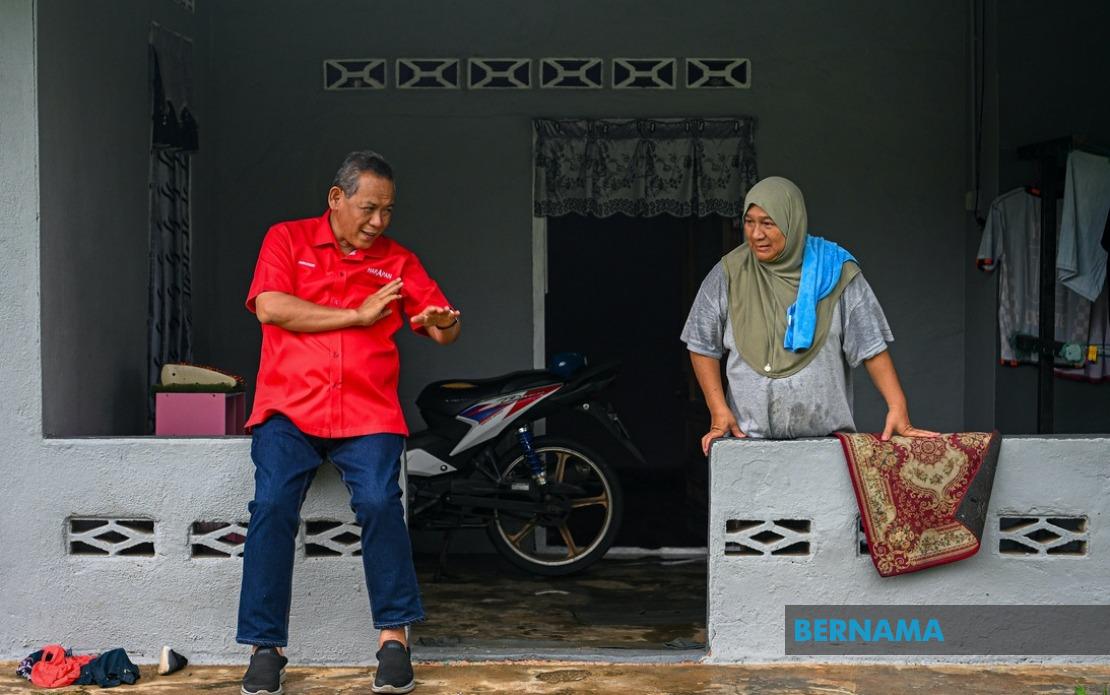
Pakatan Harapan's strategy for defending its majority in the Negeri Sembilan state assembly hinges on the political sustainability and administrative credentials that Menteri Besar Datuk Seri Aminuddin Harun has built during nearly two full terms in office. The coalition, having secured 17 of 36 seats in the previous 2023 election, is banking heavily on communicating Aminuddin's absence of major scandals and his reputation for service-oriented administration as the focal point of its campaign messaging to persuade voters to grant another mandate.
Datuk Seri Amirudin Shari, who heads PH's election machinery while simultaneously holding the Selangor menteri besar position, expressed considerable optimism about the coalition's prospects during the opening weeks of campaigning. He highlighted that feedback from party activists across Negeri Sembilan pointed to sustained voter confidence in Aminuddin's leadership, despite the incumbent administration now entering its seventh year of governance since PH's 2018 federal victory fundamentally reshaped Malaysia's political landscape. This message of continuity and clean governance represents a deliberate contrast strategy, implicitly positioning PH as the stability candidate against potential alternatives.
The emphasis on avoiding major corruption scandals or administrative failures carries particular weight in Negeri Sembilan, a state where voter memory of political scandals and leadership crises remains relatively fresh. Amirudin stressed that the absence of major controversy surrounding the PH administration since it assumed control represented a distinguishing factor that resonated during ground-level interactions with constituents. This messaging approach reflects a broader PH calculation that in an era of voter skepticism toward political elites, demonstrating clean governance over an extended period may prove more persuasive than ambitious promises of new initiatives.
Beyond Aminuddin's personal standing, PH is relying on its organisational machinery at the grassroots level to translate positive sentiment into actual electoral victories. Amirudin indicated that while large public gatherings might not always capture the full extent of public support, the feedback channeled through party networks and community engagement suggested strong positioning across traditional PH strongholds. This distinction between rally attendance and ground sentiment reflects lessons that Malaysian political operatives have absorbed from recent elections, where apparent momentum at campaign events did not always translate proportionally into ballot box performance.
The coalition is also leveraging Prime Minister Datuk Seri Anwar Ibrahim's national leadership as an indirect asset in the state campaign. Amirudin drew explicit parallels to the 2023 Johor state election, where PH's strong federal showing under Anwar's premiership provided tangible benefit to state-level candidates. This suggests that PH strategists view the stability of the current federal government and public perception of economic management at the national level as having spillover effects on voter confidence in state administrations under the same coalition's stewardship. The decision to position Anwar as providing campaign support reflects confidence that his leadership remains a net positive for PH candidates rather than a potential liability.
The electoral mathematics in Negeri Sembilan reveal a competitive contest that could determine whether PH consolidates its 2018-2023 gains or faces pressure from resurgent opposition forces. Barisan Nasional holds 14 seats while Perikatan Nasional captured five in the most recent election, meaning PH's 17-seat advantage provides a cushion against modest vote swings but offers no guarantee of retaining control if voter sentiment shifts meaningfully. The coalition's campaign strategy of emphasizing incumbent competence rather than transformative new promises suggests confidence in its base but also recognition that the political environment has stabilized somewhat since the dramatic swings of the 2018 watershed election.
The demographic composition of eligible voters illustrates the size of the electoral exercise. Nearly 890,000 registered voters, comprising predominantly ordinary citizens but also significant contingents of military and police personnel with early voting privileges, will participate in what amounts to a meaningful test of PH's political strength in a state that geographically and culturally occupies a middle position between the Selangor-centric politics of the greater Klang Valley and the more rural, Malay-majority dynamics of Pahang and Johor.
PH's forthcoming manifesto, to be unveiled during the campaign's opening week, will apparently blend ongoing initiatives with new proposals, suggesting the coalition intends to marry a message of proven competence with incremental policy evolution. This approach contrasts with more radical campaign platforms and indicates PH strategists believe Negeri Sembilan voters at this particular electoral moment are more persuaded by demonstrated administrative continuity than by revolutionary policy shifts. The focus on sustaining development and strengthening the people's economy reflects sensitivity to economic anxieties while avoiding commitments to transformative spending that might invite skepticism.
The timing of the election, with early voting on July 28 and main polling on August 1, structures a compressed campaign period that advantages incumbents with established machinery and administrative platforms from which to communicate. PH's capacity to mobilize through state government channels, combined with its organisational presence built over five years of state-level governance, provides operational advantages that opposition parties must overcome through superior messaging or organizational innovation. The dissolution of the state assembly on June 5 triggered this election cycle, setting constitutional parameters that both PH and opposition camps must navigate.
For Malaysia's broader political narrative, the Negeri Sembilan election functions as an early indicator of whether the post-2023 federal election stabilization continues or whether voter sentiment is shifting. A decisive PH victory would reinforce perceptions of federal government strength trickling down to state-level benefits, while opposition gains would signal cracks in PH's political coalescence. The Aminuddin-centered campaign strategy essentially bets that voters in Negeri Sembilan value proven administrative competence and absence of major scandals sufficiently to reward continuation of the incumbent administration despite broader economic pressures and political dynamics that might otherwise create voter restlessness.

