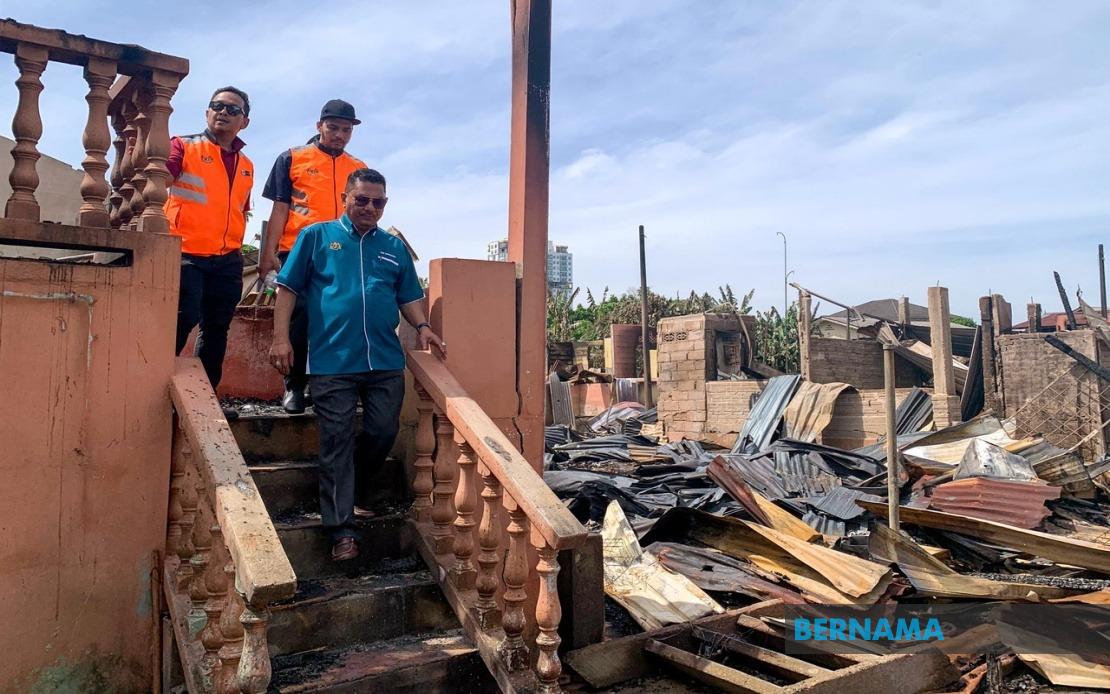
The devastating fire that consumed 27 homes in Kampung Gok Kapur, Kota Bharu on June 8 has been definitively traced to a single act of carelessness: the use of an open flame to burn a pile of papers in a residential kitchen. This finding by the Fire and Rescue Department's (JBPM) investigative forensic unit underscores how rapidly household negligence can spiral into community-scale disaster, particularly in densely populated residential clusters where wooden structures sit in close proximity.
Kelantan's JBPM director, Farhan Sufyan Borhan, disclosed that the investigation had pinpointed a gas lighter as the ignition source applied directly to combustible papers within the kitchen space of one dwelling. The subsequent chain reaction moved with alarming speed: flames from the initial paper ignition consumed nearby flammable substances within that same kitchen, then breached the structure's confines to engulf adjacent residences before consuming the entire neighbourhood block.
The investigation methodology combined physical evidence examination with witness testimony to establish both the mechanics and the human element behind the incident. Forensic specialists reconstructed the fire's origin point and trajectory, while recorded statements from residents filled gaps in understanding precisely how the burning activity transpired and why standard fire safety precautions were absent. The conclusion was unambiguous: negligence during the burning operation itself was the primary culprit.
What emerges from this incident is a stark illustration of how open-flame burning practices remain deeply embedded in household routines across Malaysian communities, despite their well-documented risks. The kitchen—a space already dense with cooking equipment, stored foodstuffs, and textiles—proved the worst conceivable location for such an activity. In many rural and semi-urban settings, burning refuse or documents represents an ingrained disposal method, yet the practice remains fundamentally incompatible with modern residential density.
The human toll extended far beyond property loss. A total of 110 villagers were rendered homeless by the blaze, their lives upended in moments. Authorities established an emergency evacuation centre at the nearby Mukim Banggol Mosque, where displaced residents sought temporary refuge while grappling with the immediate aftermath. Though no fatalities were recorded—a mercy in circumstances where outcomes could have proven far grimmer—the psychological and material disruption to these 110 individuals and their families cannot be understated.
The JBPM has signalled that its investigation findings will be transmitted to police and other relevant authorities for potential further action. This procedural step suggests possible criminal negligence charges, though such determinations rest with law enforcement and prosecutorial bodies rather than the fire service itself. The severity of consequences—the scale of displacement and property destruction—may influence whether authorities pursue formal charges or other accountability measures.
The department's public advisory following the investigation carries particular weight for Malaysian households, especially in states like Kelantan where traditional practices intersect with modern residential arrangements. The explicit warning against using open flame sources and conducting burning activities inside or near residential zones addresses the specific vulnerability exposed by this incident. Yet translating such guidance into behavioural change remains a persistent challenge in public safety communications.
For Malaysian insurers and property stakeholders, incidents like Kampung Gok Kapur underscore the inadequacy of relying solely on individual household responsibility. The domino-effect spread from a single kitchen fire to 27 homes illustrates how concentrated settlement patterns and shared building materials create systemic fire risk amplification. One person's negligence becomes an entire community's catastrophe, a reality that demands both stricter individual accountability and infrastructure-level fire prevention measures.
The incident also highlights gaps in fire safety education and enforcement at the grassroots level. While JBPM conducts investigations and issues warnings, resources for proactive community education—particularly in rural areas—remain constrained. Kampung Gok Kapur's experience suggests that hazard awareness campaigns must go beyond generic advisories to address specific cultural practices and their intersection with modern residential layouts. Without such targeted interventions, similar incidents will likely recur across Malaysia's diverse communities.
Looking ahead, the case presents an opportunity for local authorities in Kelantan and nationwide to reassess fire safety infrastructure in vulnerable residential clusters. Questions about adequate spacing between dwellings, mandatory fire-suppression equipment availability, and emergency access for fire vehicles deserve examination. A single negligent act can serve as a catalyst for systemic review and improvement—if authorities choose to capitalize on the incident's lessons rather than treat it as an isolated anomaly.
For the 110 residents of Kampung Gok Kapur, recovery involves not merely reconstruction of physical structures but rebuilding community infrastructure, support networks, and confidence in residential safety. Their displacement underscores why fire prevention cannot remain a peripheral concern within Malaysia's development agenda, particularly as urbanization continues fragmenting traditional community spaces while concentrating residential density in ways that amplify collective vulnerability to individual mistakes.

