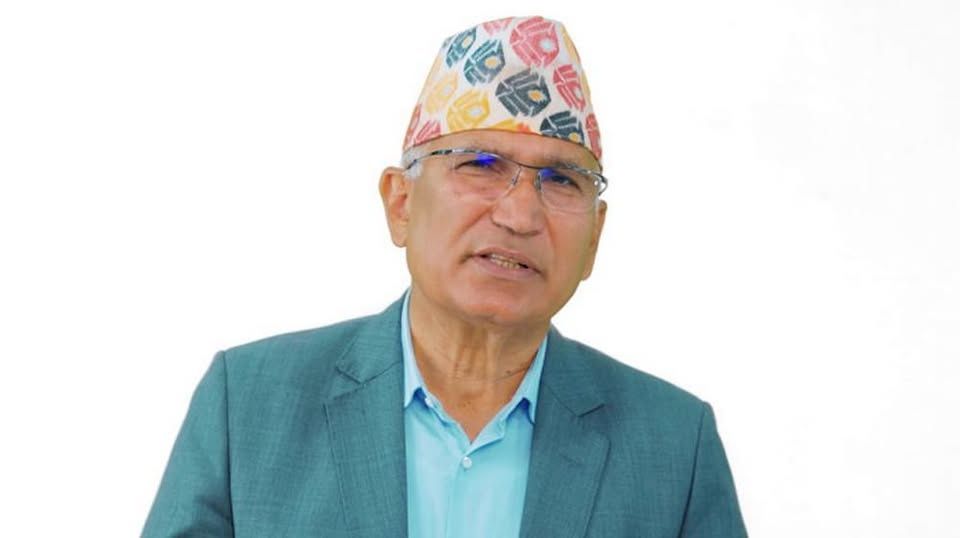
Nepal's police arrested Bishnu Paudel, a former finance minister, on money-laundering allegations in what constitutes the latest in a string of graft-related cases targeting high-ranking officials from the previous administration. The detention of Paudel, which occurred on Monday and was announced publicly on Tuesday by police officials, comes as part of a broader anti-corruption campaign that has intensified since March, when Prime Minister Balendra Shah assumed office following a turbulent political transition rooted in public fury over economic stagnation and alleged official misconduct.
Paudel holds the position of vice-chair within the Communist CPN-UML party, which was previously led by KP Sharma Oli, whose government fell amid September 2025 protests that saw demonstrators take to the streets initially over a social media ban but rapidly expanded into a wider expression of public discontent with systemic corruption. Nepal Police spokesman Abhi Narayan Kafle confirmed that investigators would pursue enquiries into Paudel's alleged involvement in transferring illicit funds, though specific details regarding the scale or origin of the suspected money-laundering have not yet been disclosed by authorities.
The arrest has reignited tensions between the governing coalition and the opposition CPN-UML, which has characterised the prosecution as politically motivated. Oli, who formerly served as prime minister before his party's electoral loss to Shah, dismissed the charges as a "political stunt," contending that the current administration is employing selective enforcement of anti-corruption laws to eliminate political rivals rather than pursuing a comprehensive cleansing of official misconduct. This narrative reflects deeper anxieties within opposition circles that the anti-graft campaign has become a vehicle for consolidating power rather than addressing systemic institutional failures.
In response, CPN-UML's publicity chief Niraj Acharya stated that the party would respect legal proceedings but alleged that the government had demonstrated "discriminatory behaviour" in its prosecutorial choices. Acharya pledged that the party leadership would subject itself to whatever scrutiny the justice system imposed, though he simultaneously signalled that the opposition would mount vigorous resistance to what it perceives as judicial weaponisation against political opponents. This defensive posture underscores the fragile nature of post-protest reconciliation in Nepal, where deep institutional distrust continues to complicate efforts to rebuild governance legitimacy.
Prime Minister Shah, a musician-turned-political figure who campaigned explicitly on an anti-corruption platform, has overseen an accelerated prosecution of former officials since taking office. Within days of his swearing-in during March, authorities apprehended Oli and his former interior minister Ramesh Lekhak in connection with alleged responsibility for the deadly crackdown on protesters during the September uprising. Though both men were detained for approximately two weeks and subjected to questioning regarding their roles in the violence that left at least 76 people dead and injured more than 2,500 others, neither was formally charged, and both have consistently denied accountability for the bloodshed.
The 2025 uprising that precipitated governmental collapse represented a watershed moment in Nepali politics, revealing the extent of popular disaffection with institutional performance and official accountability. Initially sparked by resentment over internet restrictions, the demonstrations evolved into a comprehensive indictment of economic mismanagement and pervasive corruption that had eroded public confidence in state institutions. The two-day period of violence that accompanied the crackdown exposed the severity of the security apparatus's detachment from civilian welfare concerns and highlighted the government's apparent reliance on force rather than dialogue to manage dissent.
Beyond Paudel's arrest, Nepal's anti-corruption commission has expanded its investigative scope to encompass broader patterns of official malfeasance. The Commission for Investigation of Abuse of Authority recently filed charges against sixteen individuals, including the head of the passport department, in connection with an alleged procurement fraud involving approximately $66 million. Suresh Neupane, a spokesman for the investigative body, characterised the case as concerning "embezzlement in e-passport procurement," suggesting that corruption has penetrated even routine administrative functions responsible for essential identity documentation services.
The scale and scope of these prosecutions reflect systemic institutional rot that extends across multiple governmental departments and hierarchical levels. Rather than representing isolated instances of individual misconduct, these cases suggest that corruption has become embedded within bureaucratic operations, with officials at various administrative tiers participating in schemes that divert public resources. The e-passport procurement scandal particularly illustrates how graft can compromise foundational state functions and potentially compromise national security by creating vulnerabilities in identity verification systems.
For Malaysian observers, Nepal's ongoing anti-corruption struggle offers instructive parallels and contrasts with regional governance challenges. Both countries have grappled with balancing accountability for past official misconduct against the imperative of building institutional legitimacy and democratic legitimacy moving forward. The Nepali experience demonstrates the difficulty of pursuing high-profile prosecutions whilst maintaining perceptions of judicial impartiality, a challenge that resonates across Southeast Asia where governments frequently navigate tensions between accountability and accusations of political selectivity. The question of whether anti-corruption initiatives genuinely serve public interest or function as tools for political consolidation remains contested in Nepal, complicating the government's efforts to rebuild official credibility.
The coming months will prove crucial in determining whether Shah's administration can establish a prosecutorial framework perceived as impartial and comprehensive rather than vindictive and partial. Sustaining credibility will require extending investigations beyond the previous administration's officials to encompass current governmental actors, demonstrating that anti-corruption efforts reflect principled commitment to institutional reform rather than factional advantage. For Nepal's regional standing and economic prospects, the success or failure of this endeavour will significantly influence investor confidence and international perception of institutional reliability, factors increasingly central to economic competitiveness in the contemporary global environment.

