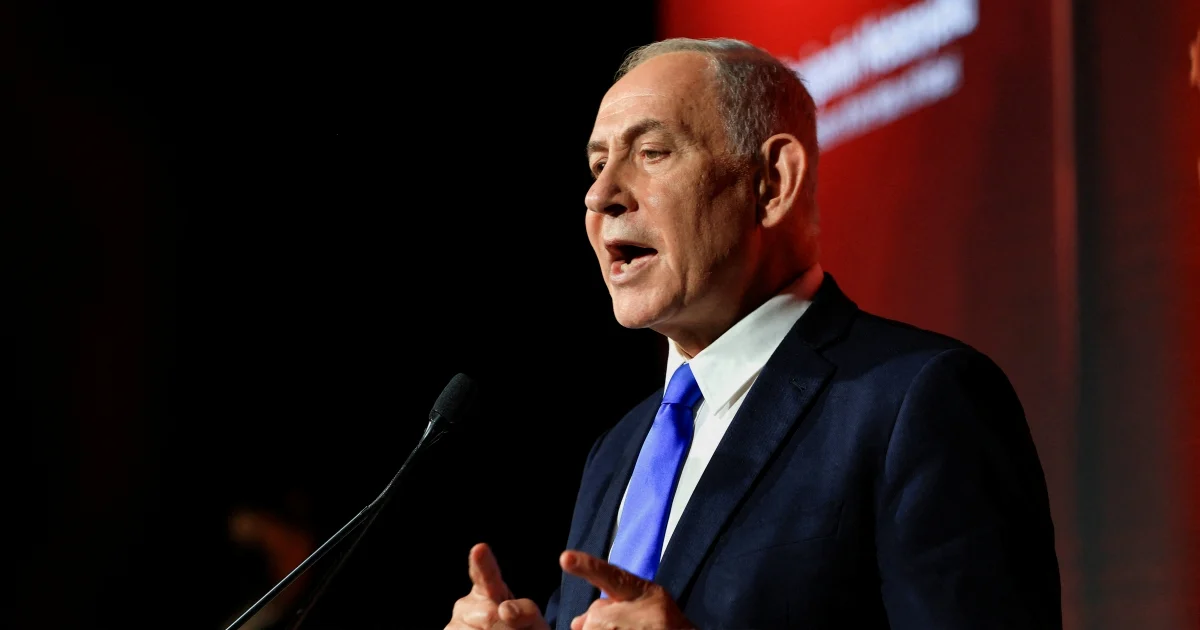
Israeli Prime Minister Benjamin Netanyahu declared on Sunday that military forces under his command would maintain their presence in southern Lebanon for an indefinite duration, contingent on operational requirements. The statement underscores Israel's strategy of sustaining a prolonged military footprint across its northern neighbour, a move with significant implications for regional stability and the broader Middle Eastern security landscape that affects Southeast Asian interests through energy markets and maritime trade routes.
Netanyahu's remarks mark a critical juncture in the Israel-Lebanon military situation, as the Israeli government appears committed to a long-term strategic positioning rather than a quick withdrawal. This contrasts with earlier international expectations that Israeli operations would be temporary in nature. The ambiguity surrounding the timeline for troop withdrawal creates uncertainty for Lebanese authorities, regional stakeholders, and international observers attempting to forecast when normalcy might return to border communities devastated by conflict.
The Prime Minister simultaneously reinforced Israel's unwavering stance against Iranian nuclear advancement, positioning this objective as a central pillar of Israeli security doctrine. This dual emphasis—maintaining military presence in Lebanon while confronting Tehran's nuclear programme—reveals the interconnected nature of Middle Eastern geopolitical challenges. For Malaysia and the broader Association of Southeast Asian Nations, Iran's nuclear trajectory carries implications for global security, oil markets, and the delicate balance of power in strategic waterways through which regional trade flows.
The open-ended nature of Netanyahu's commitment raises questions about the sustainability and exit criteria for Israeli operations. Without clearly defined conditions for withdrawal, the situation risks becoming entrenched, potentially destabilizing Lebanon further and complicating efforts by international mediators to broker a lasting settlement. Lebanese civilians and infrastructure have borne the brunt of recent hostilities, and prolonged Israeli military operations threaten to deepen humanitarian crises and regional divisions.
Israeli military strategy in southern Lebanon reflects broader concerns about security threats emanating from non-state actors and neighbouring states. The government's apparent determination to establish lasting security guarantees suggests deep scepticism about the effectiveness of existing agreements and mechanisms for ensuring border stability. This calculus influences how regional powers view military solutions versus diplomatic engagement as means of resolving conflicts.
The relationship between Israeli operations in Lebanon and the Iranian nuclear question demonstrates how localized military conflicts intersect with broader regional power competitions. Iran's alleged support for various armed groups operating across the Levant complicates the security environment and creates cascading effects throughout the Middle East. Southeast Asian nations, dependent on stable energy supplies and secure maritime passages, have vested interests in how these regional tensions ultimately resolve.
International responses to Netanyahu's statement will likely vary considerably. Some Western allies may view sustained Israeli military presence as a necessary security measure against hostile forces. Conversely, Arab nations and their supporters may interpret indefinite troop deployments as occupation and a barrier to political resolution. This divergence in perspectives reflects the fundamental disagreements that have characterized Middle Eastern conflicts for decades, with little consensus on what constitutes legitimate security operations versus aggressive expansion.
The Lebanese government faces an extraordinarily complex situation. Weak state institutions struggle to exert control over southern territories and prevent non-state armed groups from conducting operations that provoke Israeli responses. Netanyahu's statement essentially signals that Israel will not rely on Lebanese state capacity to neutralize perceived threats, instead maintaining unilateral military control. This dynamic undermines Lebanese sovereignty and complicates efforts to strengthen state institutions capable of maintaining order.
For regional observers, Netanyahu's remarks highlight the absence of clear diplomatic off-ramps from the current military situation. Without visible progress toward negotiations or internationally-mediated settlements, military operations risk indefinite continuation. The humanitarian toll of prolonged conflict on Lebanese civilians, combined with the destabilizing effects of Israeli military operations, creates fertile ground for further escalation and deepens regional mistrust.
The strategic calculus underlying Israel's approach reflects historical patterns of security concerns that have influenced Israeli policy for decades. Previous military interventions in Lebanon, including extended occupations, shaped Israeli threat perceptions and strategic thinking. However, history also demonstrates that military solutions alone prove insufficient for resolving fundamental political disputes without complementary diplomatic efforts.
Netanyahu's simultaneous focus on Iranian nuclear capabilities alongside Lebanon operations reveals how Israeli strategists view multiple security fronts as interconnected challenges requiring sustained attention and resources. The allocation of military assets between different operational theaters reflects competing priorities within Israeli strategic planning. As tensions persist across multiple domains, the cumulative strain on Israeli resources and regional stability intensifies.
Moving forward, the international community faces pressure to facilitate diplomatic solutions before military situations calcify into long-term occupations. Southeast Asian nations, whilst geographically distant, maintain interests in Middle Eastern stability through economic, energy, and security channels. The trajectory of Israeli-Lebanese dynamics consequently warrants regional attention, particularly given how Middle Eastern conflicts can reverberate through global markets and security arrangements affecting Southeast Asia.

