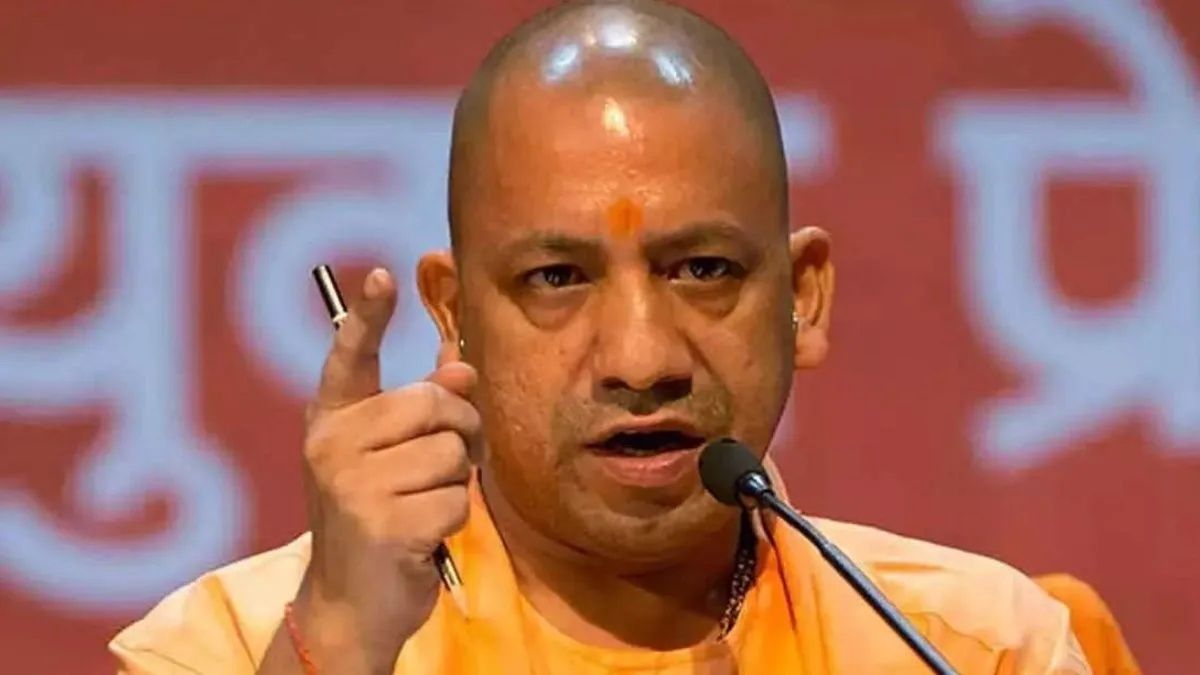
Uttar Pradesh Chief Minister Yogi Adityanath has responded firmly to the donation theft scandal at Shri Ram Janmabhoomi Teerth Kshetra in Ayodhya, declaring that any interference with public faith will face serious consequences. Speaking at a public event in Deoria on Friday, he underscored the government's commitment to separating fact from fiction in the case, following the filing of the first FIR and submission of a Special Investigation Team report.
The Chief Minister's strong statement reflects the sensitivity surrounding Ayodhya, which remains at the centre of Hindu nationalism and devotional politics in India. During his address at the foundation stone-laying ceremony for development projects, Adityanath emphasised that Ayodhya represents both a spiritual symbol and the civilisational heritage of India. His remarks came weeks after he visited the temple city on June 19, when he had warned that allegations against the sacred site would not be tolerated and that investigations would commence upon receipt of the SIT report.
The donation theft case has become increasingly contentious, with Adityanath directly targeting opposition parties, particularly Congress and Samajwadi Party, whom he accused of harbouring hostile intentions towards Hindu faith and traditions. He recalled Congress's historical scepticism about Ram's historical existence and the protracted legal battles the party pursued against the temple's construction. By framing the opposition's current criticism as inauthentic given their alleged past opposition to Hindu religious observances, Adityanath sought to delegitimise their concerns about the scandal.
In an escalating rhetoric, the Chief Minister drew parallels between what he characterised as the opposition's darkest chapter of governance and their current allegations. He referenced instances he claimed showed the previous administrations had restricted Hindu festivities, including orders to fire on those chanting Ram's name, bans on Krishna Janmotsav celebrations, restrictions on the Kanwar Yatra pilgrimage, and communal incidents during religious festivals such as Ram Navami and Durga Puja. The mention of the Lar riot—a specific historical reference—served to reinforce his narrative of past administrative hostility towards Hindu religious expression.
The Chief Minister's characterisation of the political opposition as corrupt and motivated by malice rather than genuine concern about the temple administration suggests a strategy to insulate the temple institution from criticism through partisan framing. By linking current opposition statements to historical grievances, Adityanath attempted to create a narrative in which only the ruling Bharatiya Janata Party government could be trusted as a custodian of Hindu faith and religious sites. He also credited the "double engine government"—referring to both state and federal administrations—with ending what he termed as plunder and corruption under previous administrations.
The donation theft case itself carries significant implications for temple management and public accountability. The fact that the first FIR was registered suggests that preliminary investigations had uncovered actionable evidence of misappropriation of funds donated by pilgrims to the newly consecrated temple. For the millions of devotees who contributed to the Ram Mandir construction and subsequent operations, questions about the safeguarding of their offerings strike at the heart of institutional trust. The Chief Minister's emphasis on swift action based on the SIT report reflects recognition that public confidence in the temple's administration requires visible accountability measures.
Adityanath's appeal to Ram devotees to refrain from testing the "patience" of the faithful appears designed to pre-empt potential public anger or further scandal revelations. By framing opposition criticism as provocation against believers rather than legitimate scrutiny, he sought to shift the discourse from institutional accountability to communal sentiment. His request that political parties cease making allegations without concrete evidence, whilst simultaneously demanding they cooperate with the SIT investigation, attempted to establish a high evidentiary threshold for criticism whilst positioning the government as the sole arbiter of truth through the official investigation.
The political context surrounding this case extends beyond Uttar Pradesh. The Ram Janmabhoomi temple represents the culmination of a decades-long political and legal struggle that reshaped Hindu nationalist politics in India. For the ruling government, any scandal involving the temple threatens to undermine the symbolism it has invested in the institution. The aggressive defence mounted by Adityanath reflects broader concerns within the BJP about protecting the narrative of the temple as a triumph of Hindu assertion and governmental competence. Meanwhile, for opposition parties, the donation theft case offers an opportunity to question the management of a religiously significant institution, though any such scrutiny risks being portrayed as anti-Hindu in the highly polarised political environment.
The constitutional implications of the Chief Minister's remarks also merit consideration. By appealing to emotional attachment to faith rather than institutional oversight mechanisms, and by suggesting that criticism stems from bad faith rather than legitimate governance concerns, Adityanath's approach potentially raises questions about the relationship between religious sentiment and public accountability. In democracies, institutions handling public or donated resources—particularly those of religious significance—require transparent audit mechanisms and independent oversight, independent of the political colour of those raising such questions.
The SIT investigation will ultimately determine whether the donation theft represents isolated wrongdoing or systemic failures in temple administration. As the investigation proceeds, the challenge will be ensuring that institutional accountability mechanisms function independently of political considerations, whilst respecting the religious significance of the temple to millions of devotees. The Chief Minister's assertion that truth will be separated from falsehood provides an opportunity for the government to demonstrate commitment to transparent governance, though the highly partisan framing of the case thus far suggests that maintaining such independence may prove challenging.

