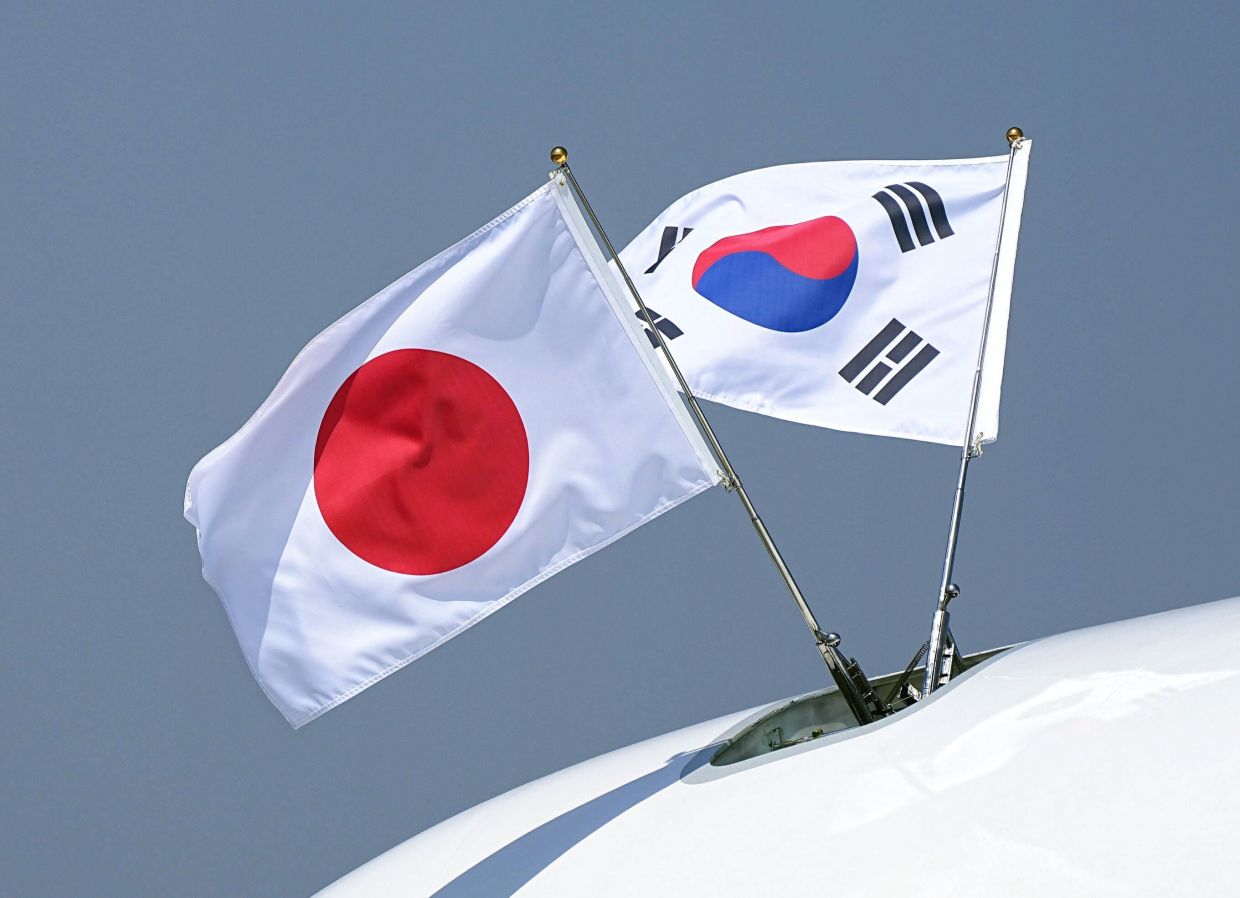
Strategic planners across northeast Asia face a troubling paradox: the leadership classes in Japan and South Korea overwhelmingly reject nuclear weapons for their own nations, yet both countries could rapidly pivot toward acquiring them if their neighbour moves first. This paradox, revealed in a comprehensive survey by the Centre for Strategic and International Studies (CSIS) published this week, exposes a fragile equilibrium in one of the world's most consequential regions, where decades of relative stability could unravel within years if security calculations shift.
The survey findings paint a picture of reluctance among regional elites that contrasts sharply with the rhetoric heard from some defence hawks. Approximately 75 per cent of South Korean strategic decision-makers and nearly 80 per cent of their Japanese counterparts expressed opposition to or uncertainty about nuclear weapons acquisition by their own countries. These figures encompass current and former government officials, parliamentarians, academics, think tank researchers and business leaders—the networks that genuinely influence policy in Seoul and Tokyo. The research was directed by Victor Cha, who heads the geopolitics and foreign policy department and serves as Korea chair at CSIS, alongside Kristi Govella, the institution's Japan chair and senior adviser.
Yet this elite consensus masks a volatile political reality. South Korean public opinion diverges sharply from the strategic establishment. A 2024 Gallup poll commissioned by the Chey Institute for Advanced Studies found that over 72 per cent of ordinary South Koreans favour their country possessing nuclear weapons—a stunning 20-point gap between public and elite preferences. This split reflects deep anxiety about North Korea's advancing arsenal and questions about America's long-term commitment to the peninsula's defence. Japan presents a markedly different picture. Govella notes that Japanese public opinion aligns closely with elite views, with approximately 80 per cent of the general population opposing nuclear weapons. Media reports suggesting growing momentum within Japanese defence circles toward nuclear armament have distorted the actual state of debate, she argues, though the figure remains politically sensitive for a nation that endured atomic bombing.
The survey's most alarming finding concerns what strategists call the "security dilemma cascade." The research discovered that elite opposition to nuclear weapons could erode rapidly if either country chose to acquire them. Such a move by one nation would likely trigger a dramatic reversal in neighbouring public and elite opinion, creating pressure for matching development. The impact of this proliferation cascade could dwarf the destabilising effects of reduced United States troop deployments in the region, according to CSIS experts who presented the findings at a Thursday seminar. This potential shift would fundamentally alter the security architecture underpinning northeast Asia and could ripple across global non-proliferation efforts.
Underlying motivations for nuclear weapons support diverge between the two countries in revealing ways. South Korean advocates focus on countering the direct threat posed by North Korea's growing nuclear capability and conventional military superiority. Japanese supporters, by contrast, harbour deeper concerns about the reliability of American extended deterrence—the question of whether Washington would truly risk its cities defending Tokyo against a nuclear-armed adversary. These different threat perceptions suggest that diplomatic solutions cannot follow a single template; Seoul and Tokyo would require distinct reassurances to maintain nuclear restraint.
The United States has responded to these security anxieties through intensive bilateral engagement. Earlier this month, Washington held consultations in Seoul focused on nuclear cooperation initiatives with South Korea, followed by an extended deterrence dialogue in Tokyo with Japan. These discussions attempt to reinforce allied confidence in American protection, a critical variable if public enthusiasm for nuclear weapons is to be dampened. The timing reflects acute American awareness that northeast Asian nuclear proliferation would undermine decades of non-proliferation strategy and create unpredictable new military dynamics on China's doorstep.
Meanwhile, American nuclear posture itself is undergoing dramatic reassessment. Brandon Williams, under secretary for nuclear security at the Department of Energy and administrator of the National Nuclear Security Administration, declared on Thursday that the United States must accelerate nuclear weapons production to counter perceived threats. His agency plans to invest US$600 million in artificial intelligence this year to revolutionise nuclear weapons design and manufacturing, aiming to compress the current 10- to 15-year development cycle for new weapons systems. This acceleration, intended to project American strength, risks signalling to Tokyo and Seoul that Washington views nuclear weapons as increasingly essential tools—potentially undermining messages about extended deterrence sufficiency.
Even more provocative is the renewed debate within American strategic circles about nuclear hypersonic weapons. Heather Williams, director of CSIS's project on nuclear issues, argued that nuclear-armed hypersonic missiles "should absolutely be in the mix" to enhance American strike diversity and complicate adversary response calculations. She contended that a more robust and varied American nuclear arsenal would reassure allies and discourage proliferation by demonstrating overwhelming American capability. Yet this logic contains a dangerous circularity: by emphasising nuclear weapons' centrality to American strategy, such arguments could paradoxically convince Japanese and South Korean planners that nuclear weapons are indispensable for their own security.
Regional tensions have sharpened as China intensifies accusations against Japan. Beijing has repeatedly condemned Tokyo for pursuing "remilitarisation," including alleged nuclear weapons ambitions, language that itself contributes to the security dilemma by raising Japanese threat perceptions. Washington simultaneously pressures Beijing to join arms control negotiations, which China consistently refuses, citing the existing US-Russia nuclear imbalance and the involvement of allied nuclear arsenals in Asian deterrence arrangements. This diplomatic impasse means that regional nuclear stability rests increasingly on the fragile consensus among Japanese and South Korean elites—a consensus the CSIS survey suggests could shatter under the weight of security crises.
For Malaysian policymakers and Southeast Asian observers, these developments carry profound implications. A nuclear-armed Japan or South Korea would transform the geostrategic environment affecting the entire region's security architecture. Indonesia, Vietnam and other ASEAN nations maintain careful balances in great-power relations; northeast Asian nuclear proliferation would inevitably shift these calculations. The region's complex web of trade dependencies, sea lanes and strategic partnerships would face unprecedented strain. Malaysia's own security interests depend partly on regional stability and predictable American strategic commitments—exactly the factors destabilised by northeast Asian nuclear proliferation. The CSIS survey suggests this outcome remains avoidable, provided that American reassurance diplomacy succeeds and no external shock triggers the security cascade the research identifies as plausible. Yet the fragility of elite consensus, combined with volatile public opinion and accelerating American nuclear production, suggests that the window for preventing this outcome may be narrowing.

