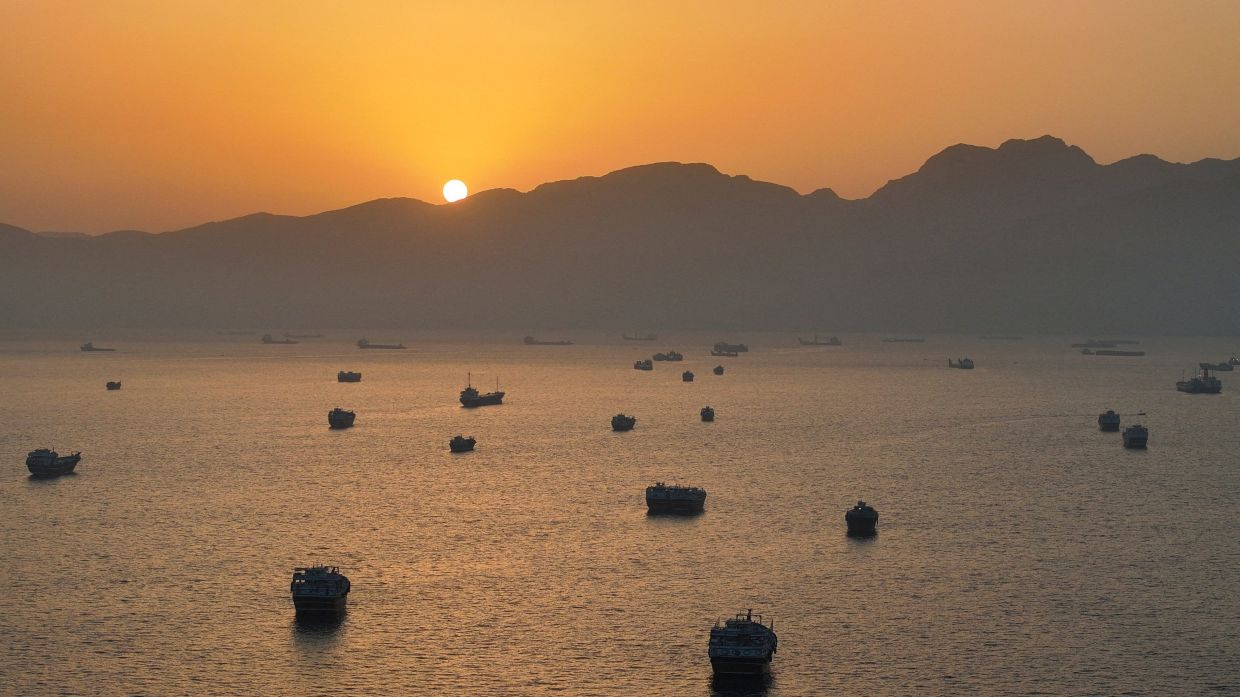
A gradual reopening of one of the world's most critical energy chokepoints is gaining momentum as three large crude carriers departed the Strait of Hormuz on Wednesday, carrying a combined 5 million barrels of oil destined for refineries across Asia and the Middle East. The movement signals a tangible easing of the supply constraints that have gripped the Persian Gulf since conflict erupted in the region, with shipping data indicating that the interim understanding between Tehran and Washington is beginning to unlock substantial quantities of stranded petroleum that accumulated during months of heightened tensions and shipping disruptions.
The South Korean-flagged VL Breeze, a Very Large Crude Carrier with capacity for 2 million barrels of blended Qatari condensate and Abu Dhabi crude, transited the strait bound for the refining hub of Daesan in South Korea, according to tracking information from LSEG and Kpler. Operating under a charter from Hyundai Oilbank, the supertanker represents one of the first vessels in weeks to resume the traditional northbound transit that supplies Asian refineries, which depend heavily on Persian Gulf crude for their production requirements. Simultaneously, the Liberian-flagged VLCC Plata Carrier, chartered by India's state-owned Oil Corporation, cleared the waterway carrying 2 million barrels of Saudi crude sourced from upstream fields, while the smaller Suezmax-class Prudent Warrior exited with 1 million barrels of Iraqi Basrah crude destined for the discharge terminal in Sohar, Oman.
The evacuation of stranded tonnage from the Gulf represents a significant development for global energy security and pricing dynamics. Market analysts at Kpler and Vortexa had estimated last week that approximately 90 million barrels of crude remained trapped within the confines of the Persian Gulf, unable to reach their intended destinations due to the combination of geopolitical uncertainty, insurance complications, and shipping route closures that characterised the early phases of the regional conflict. The resumption of transits through the Strait of Hormuz, which handles roughly one-third of globally traded seaborne petroleum, carries outsized importance for downstream refiners worldwide who have been managing inventory constraints and adjusting procurement strategies in anticipation of eventual supply normalisation.
South Korea's maritime ministry confirmed that four vessels operated by South Korean shipping companies successfully transited the strait on Wednesday, with one vessel routing directly to South Korean ports whilst others proceeded to alternative destinations. However, the ministry's statement also underscored the scale of the ongoing bottleneck, noting that 18 of the 26 vessels initially stranded since the outbreak of Middle East hostilities remain anchored or drifting within Gulf waters, awaiting clearance to proceed. This implies that whilst the diplomatic opening has begun to facilitate passage, the accumulated backlog of shipping demand remains substantial, and several weeks of intensive transits may be required to fully clear the queue of waiting vessels.
The precise navigational routes being employed by departing tankers remain somewhat opaque, though the role of temporary maritime corridors established through Omani and International Maritime Organization coordination warrants attention. Oman, seeking to position itself as a neutral shipping facilitator and to demonstrate its strategic value to the international maritime community, has designated two alternative shipping lanes running north and south of the conventional Hormuz fairway. These provisional routes aim to provide enhanced safety margins and reduced collision risk by distributing traffic across wider sea areas, whilst Oman has explicitly committed to maintaining unrestricted passage through the Strait of Hormuz without imposing transit tolls—a posture that contrasts sharply with lingering regional uncertainties about potential Iranian toll regimes or further restrictions.
Liquefied natural gas shipping movements through the strait offer an independent indicator of supply normalisation momentum. Recent tracking data identifies nine empty LNG carriers that have either recently transited or are actively approaching the Strait of Hormuz with the explicit objective of loading Qatar-sourced cargo, representing the largest concentration of uncommitted LNG vessel capacity entering Qatari loading terminals since the conflict commenced. The appearance of this flotilla of empty LNG tonnage suggests that international buyers and traders are regaining confidence in the ability to source Qatari LNG without excessive delay or geopolitical encumbrance, encouraging them to position ballast vessels at loading facilities.
Quatar's own assessment of its production situation adds another dimension to the emerging supply picture. Sheikh Mohammed bin Abdulrahman al-Thani, Qatar's Prime Minister and Energy Minister, indicated to the Financial Times that the Gulf state anticipates restoring normal liquefied natural gas production within several weeks, a timeline that aligns with the broader trajectory of shipping normalization. Qatar, as one of the world's largest LNG exporters and a significant crude producer, occupies a pivotal position in regional energy architecture, and signals of operational recovery from Doha carry implications for global gas markets, particularly in markets such as Japan, South Korea, and Europe where LNG import dependency remains pronounced.
The broader geopolitical context underlying these shipping movements deserves careful examination. The interim arrangement between Iran and the United States appears to have created sufficient operational clarity to reduce the insurance and legal risks that previously deterred many shipping companies from routing vessels through or into the Persian Gulf. Shipping lines, insurers, and financial institutions had imposed informal restrictions and pricing premiums that made transiting Hormuz increasingly expensive and logistically complicated; the diplomatic development has evidently reduced these friction costs sufficiently to restore economic attractiveness of direct routing versus circuitous alternatives such as transiting around the Cape of Good Hope, which would add months to voyage times and substantially elevate fuel consumption and emissions.
For Malaysia and the broader Southeast Asian region, the normalization of Persian Gulf shipping carries multifaceted implications. Southeast Asian economies, particularly Singapore, are major maritime hubs and bunkering centres that benefit from elevated shipping activity and throughput. Additionally, Malaysia's own downstream energy sector, particularly the refining operations at Port Klang and Johor, depends substantially on regular supplies of crude feedstock; any disruptions or delays in Persian Gulf supply routes directly impact production schedules and operating economics for these critical installations. The release of trapped inventory and resumption of normal Persian Gulf flows should gradually moderate crude price pressures that have inflated regional refining costs.
The trajectory of supply liberation from the Gulf remains conditional on sustained diplomatic stability and the continued absence of additional escalatory incidents. Whilst the initial phase of tanker transits represents encouraging progress, market participants remain attentive to any signals of renewed tension that might trigger fresh supply disruptions or shipping avoidance. The presence of 18 remaining stranded vessels and the accumulated backlog of deferred cargo movements suggest that global energy markets have not yet achieved complete normalization, and several additional weeks of elevated shipping activity may be required to fully absorb the accumulated bottleneck and restore conventional inventory levels across refining centres.
The gradual reopening of the Strait of Hormuz through diplomatic accommodation rather than military intervention represents a significant achievement for regional stability and global energy security. However, the persistence of substantial tonnage still awaiting clearance, combined with Qatar's timeline for full production recovery, indicates that the supply relief process will unfold methodically rather than suddenly. For traders, refiners, and energy-dependent economies across Asia, the near-term outlook involves modestly improving availability against a backdrop of ongoing caution regarding geopolitical risks in one of the world's most strategically consequential maritime chokepoints.

