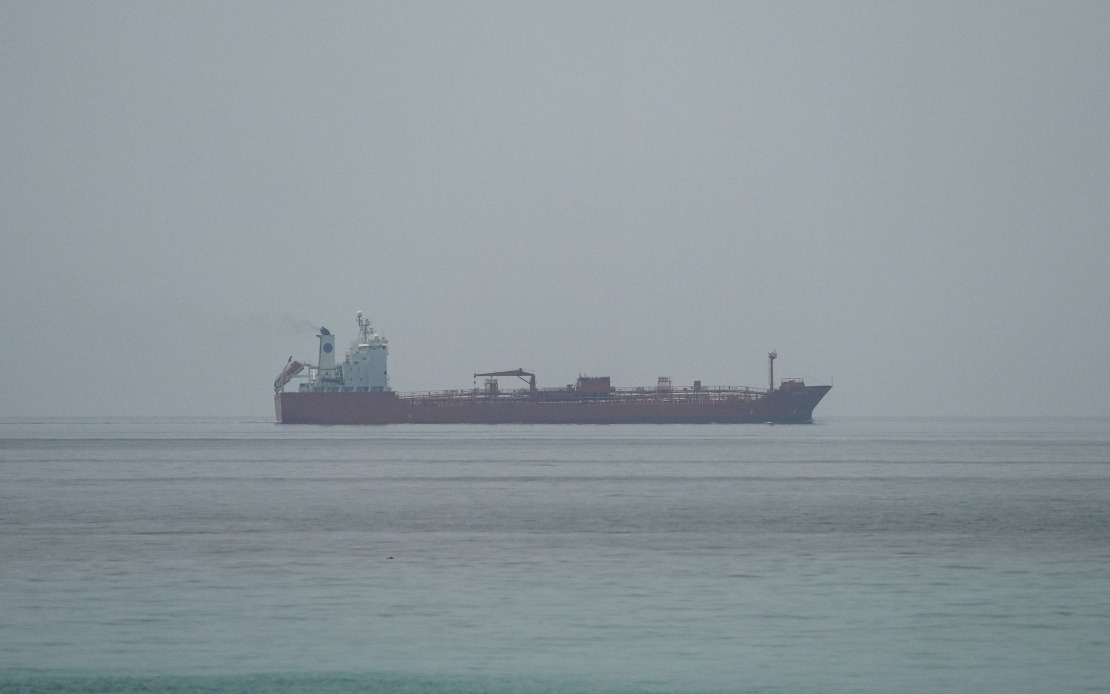
Oman has emerged as a strong advocate for the recently concluded memorandum of understanding between Iran and the United States, declaring its commitment to ensuring that the Strait of Hormuz remains open to free and secure navigation. Speaking during a joint ministerial session between the Gulf Cooperation Council and the United States in Bahrain on Thursday, Omani Foreign Minister Badr Albusaidi underscored his nation's backing for the agreement, emphasising that successful implementation would be instrumental in restoring regional stability and guaranteeing safe passage through one of the world's most strategically indispensable waterways.
As a nation with direct shoreline access to the Strait of Hormuz, Oman occupies a uniquely influential position in maritime affairs across the Persian Gulf. This geographic advantage carries with it considerable responsibility, and Albusaidi articulated Muscat's determination to champion international navigation rights in accordance with established maritime law and the UN Convention on the Law of the Sea. The minister's statement represents a deliberate assertion that Oman intends to be a stabilising force in regional waters, actively supporting initiatives that promote peaceful and unrestricted commercial shipping through the critical chokepoint.
The memorandum of understanding itself carries substantial significance for the broader Middle Eastern landscape. Iran and the United States finalised the 14-point agreement following intensive mediation efforts by Pakistan, with the accord becoming electronically binding on June 18 following formal signature by Iranian President Masoud Pezeshkian and US President Donald Trump. The comprehensive arrangement addresses multiple dimensions of regional conflict, including provisions to terminate hostilities across several theatres, the crucial reopening of the Strait of Hormuz for international traffic, and the lifting of the American naval blockade that has constrained Iranian maritime operations.
Oman's explicit assurance that future arrangements governing the strait will not incorporate transit levies carries particular weight given international concerns that any party might attempt to monetise control over this essential shipping corridor. With roughly one-third of seaborne petroleum traded globally passing through the Strait of Hormuz, any disruption or imposition of fees would send shockwaves through energy markets worldwide. Malaysia and other Southeast Asian nations dependent on reliable energy supplies have a direct stake in the waterway's continued unrestricted operation, making Oman's commitment consequential for the region's economic stability.
The backdrop to this agreement involves escalating tensions that nearly spiralled into wider conflict. In late February, the United States and Israel conducted military strikes against Iranian targets, prompting Iranian retaliation against both Israel and regional states hosting American military installations. These tit-for-tat operations generated considerable alarm across Asia-Pacific markets and among shipping interests globally. The successful negotiation of a framework to de-escalate demonstrated the value of quiet diplomatic engagement, particularly Pakistan's behind-the-scenes mediation work that ultimately brought the antagonists to the table.
The GCC-US ministerial dialogue, of which this meeting formed a part, reflects the enduring strategic partnership between Washington and the Gulf Arab states. These regular consultations address regional security architecture, political coordination, and economic integration initiatives. The format provides an institutionalised mechanism for coordinating responses to developments in West Asia, allowing the collective Gulf voice to be articulated alongside American strategic interests. However, the inclusion of Oman's affirmation regarding free transit demonstrates a degree of regional consensus around the importance of preserving the maritime status quo, irrespective of ongoing political divisions.
For Southeast Asian economies, particularly those dependent on energy imports and characterised by high reliance on the Suez Canal-to-Malacca Strait shipping corridor, developments in the Persian Gulf carry outsized significance. Disruptions to Hormuz transit would inevitably inflate fuel costs regionally and globally, undermining economic growth trajectories already strained by competing pressures. Malaysia's own petrochemical and energy sectors, along with its position as a major transshipment hub, benefit substantially from unobstructed global energy flows. Consequently, Oman's guarantee acquires relevance far beyond the immediate Middle Eastern context.
The agreement's architecture demonstrates sophisticated recognition of interconnected regional challenges. Rather than attempting to resolve all outstanding disputes comprehensively—an approach that has repeatedly foundered—the negotiators constructed a framework addressing specific, urgent issues: ending active hostilities, ensuring maritime access, and removing blockades. This pragmatic, compartmentalised approach sidesteps the impossibly complex task of resolving ideological and political antagonisms between Washington and Tehran, instead focusing on concrete operational arrangements that serve mutual interests.
Albusaidi's emphasis on Oman's special responsibility as a Hormuz coastal state signals the sultanate's intention to position itself as a guarantor of regional maritime stability rather than a partisan actor favouring either Iran or the United States. This balancing role reflects Oman's historical diplomatic approach, characterised by careful neutrality and engagement with diverse actors. Muscat's track record of maintaining channels of communication across regional divides made it a logical choice for mediating early-stage discussions that eventually drew in Pakistan's more formal diplomatic machinery.
The commitment to fee-free transit carries legal and practical implications. Under international maritime law, particularly the UN Convention on the Law of the Sea, transit passage through international straits cannot be subjected to discriminatory charges or unreasonable obstacles. However, distinguishing between legitimate coastal state authorities and prohibited impositions involves interpretive complexities. Oman's affirmative declaration that it will not impose transit fees effectively removes any ambiguity regarding Muscat's position, providing reassurance to shipping operators and maritime insurance underwriters who factor security assessments into commercial calculations.
Implementation challenges undoubtedly lie ahead. The agreement's success depends on sustained Iranian and American commitment, neither power deviating from the negotiated framework despite inevitable domestic political pressures. Any perception that either party is engaging in bad-faith compliance could rapidly unravel the arrangement. Regional actors, including Israel and militant proxy groups, possess capacity to disrupt maritime traffic regardless of the understanding between Washington and Tehran. Nevertheless, the fact that a framework exists providing mechanisms for de-escalation represents genuine progress from the brink-of-conflict positioning that characterised February.
For Malaysian policymakers and business leaders, Oman's endorsement of the agreement and its guarantee of free Hormuz transit offer grounds for cautious optimism regarding energy security. However, vigilance remains warranted. The resilience of the arrangement and the durability of regional stability mechanisms require continued diplomatic engagement and international support. Southeast Asian nations, while not direct participants in Gulf politics, possess interests sufficiently substantial to justify sustained diplomatic attention to developments in West Asia and active support for arrangements promoting peaceful, unobstructed maritime commerce.

