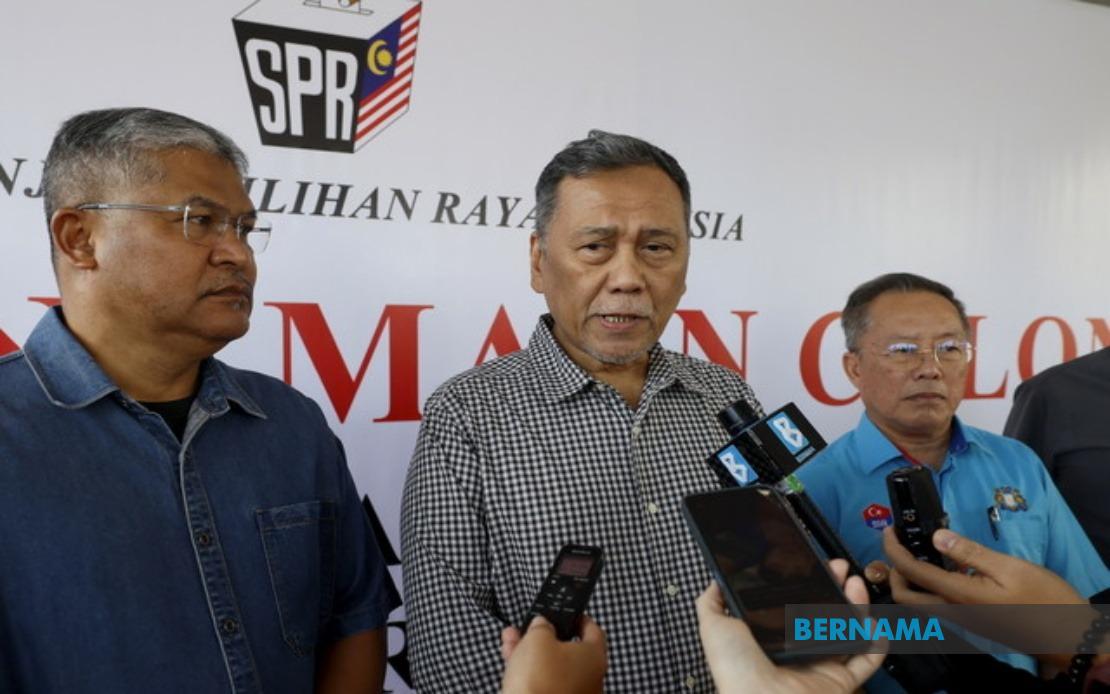
As Malaysia's Johor state prepares for its 16th legislative election, the Election Commission has released preliminary figures showing significant interest in candidacy, albeit with a notable gap between those purchasing nomination forms and those formally committing to the race. According to Election Commission chairman Datuk Seri Ramlan Harun, 593 nomination forms have been distributed across returning officer offices throughout the state, yet only 133 prospective candidates have completed the confirmation process by paying their required deposits. These numbers underscore the typical pattern in Malaysian elections, where many individuals explore candidacy options before making formal financial commitments.
The timing of these figures carries particular significance for political strategists and party machinery. With nomination day officially commencing tomorrow morning, the Election Commission anticipated that additional candidates would complete their registration in the final hours before the deadline. Ramlan's remarks to reporters reflected the Commission's experience managing electoral timelines, noting that the gap between form sales and deposit payments was neither unusual nor alarming at this stage. The extended filing window was deliberately designed to accommodate last-minute decisions from candidates who had not finalised their party's internal selection processes or personal circumstances until closer to the formal nomination period.
The Election Commission's operational readiness for the nomination process demonstrates the scale of logistical coordination required for state-level elections in Malaysia. Across the state, 56 nomination centres have been established and thoroughly tested through two consecutive days of trial runs. This preparation phase ensures that election officials and support staff can efficiently process candidate registrations without administrative bottlenecks that might frustrate candidates or create unnecessary delays. Ramlan's inspection of the Maharani constituency nomination centre in Muar reflected the Commission's hands-on approach to verifying that all centres meet operational standards before facing the surge of activity during the official nomination period.
Security considerations remain paramount in the minds of election administrators. The Election Commission has implemented spatial management strategies to maintain order during nomination day, recognising that intense partisan activity could potentially create flashpoints without proper crowd control measures. Only the candidate, their official proposer, and a single designated supporter will be permitted to enter each nomination centre. This restriction prevents overwhelming crowding and maintains focus on the administrative process. Simultaneously, other party supporters will be directed to designated field areas positioned in front of nomination centres, with physical barriers strategically erected to create separation between supporters of competing political parties. These precautions reflect lessons learned from previous Malaysian elections and aim to prevent the types of confrontational situations that occasionally arise when passionate partisan bases converge in confined spaces.
The political landscape for the Johor contest reveals clear coalition strategies. Pakatan Harapan has committed to fielding candidates in all 56 state seats, distributing the burden across its three component parties: PKR will field 20 candidates, Amanah 19, and DAP 17. This balanced approach reflects the coalition's effort to present a comprehensive alternative government while managing internal party interests. Barisan Nasional, despite facing electoral headwinds in recent years, has matched this ambition by announcing candidates for all 56 seats as well. The distribution emphasises UMNO's traditional dominance within the coalition, with 36 candidates, supplemented by 16 from MCA and four from the Indian-focused MIC. This composition mirrors longstanding power-sharing arrangements within the coalition.
Perikatan Nasional's candidate allocation reveals a different coalition dynamic. PAS, the Islamist party, will contest 11 seats, while Bersatu, the Mahathir-linked faction, will field 16 candidates. The Malaysian Indian People's Party contributes five candidates, and Pejuang, the vehicle for former prime minister Mahathir Mohamad, will contest a single seat. This arrangement suggests ongoing tensions within the Perikatan coalition regarding seat allocation and strategic positioning in Johor, a state that has traditionally been UMNO's strongest electoral bastion. The relatively modest number of seats assigned to PAS and Pejuang may reflect either deliberate strategic choices or unresolved internal coalition negotiations.
Beyond the two major coalitions, several smaller parties have filed ambitions for the Johor contest. The Malaysian United Democratic Alliance will field candidates in four constituencies, while the socialist-oriented Parti Sosialis Malaysia will contest a single seat. Most notably, Parti Bersama Malaysia is making its electoral debut in this state election by contesting 15 seats, suggesting a new political player is attempting to establish presence in Malaysian electoral politics. These smaller party formations often struggle to gain legislative seats but serve important functions in offering voter choice beyond the dominant coalitions and potentially creating coalition options in hung parliament scenarios.
The electoral calendar now moves toward critical junctures. Having dissolved the state assembly on June 1, the Election Commission has established a compressed timeline for the election cycle. Tomorrow marks nomination day, when all candidates will formally submit their papers and undertake the legal confirmation of their candidacy. Early voting has been scheduled for July 7, providing advance voting opportunities for essential service personnel, elderly voters, and others unable to vote on the main election day. The general polling day is set for July 11, giving voters approximately three weeks to deliberate among the competing coalitions and candidates. This compressed timeframe limits campaign periods compared to federal elections and may particularly advantage the better-resourced and more established coalitions.
For Malaysian observers and regional political analysts, the Johor election represents a significant test of coalition stability and voter sentiment in a strategically important state. As the electoral heartland of UMNO and traditionally Barisan Nasional's most secure state, any significant shifts in Johor could have ramifications extending beyond state politics into the broader Malaysian political landscape and potentially influence national coalition calculations. The nomination process beginning tomorrow will offer the first concrete indication of how serious various parties are about their electoral ambitions in Johor and which candidates have secured support from party machinery to represent their interests.
The Election Commission's assurance that all preparations are complete reflects confidence in managing the operational aspects of the election. However, the ultimate success of the nomination process will depend on the discipline of political parties, the restraint of supporters, and the compliance of candidates with established procedures. Ramlan's appeal for peaceful and orderly conduct during nomination demonstrates the Commission's awareness that well-managed administrative processes depend partly on the maturity and responsibility of political actors. As nomination day dawns, the 593 candidates and prospective candidates who have purchased forms will determine through their participation whether the expected increase in confirmed candidates materialises, providing a clearer picture of competitive intensity across Johor's 56 constituencies.

