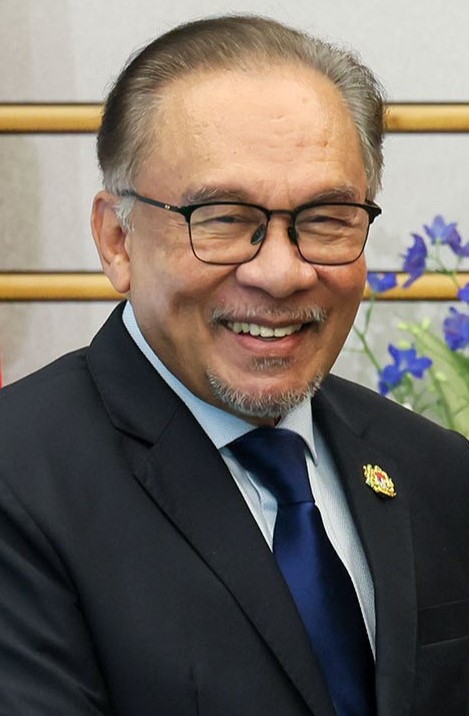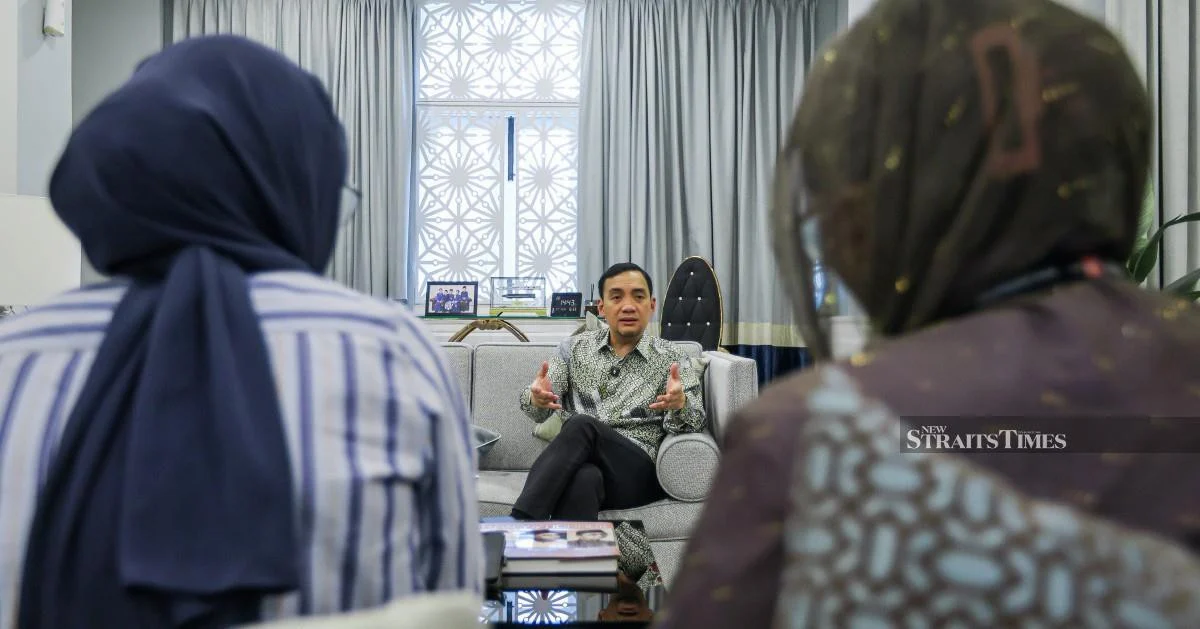
Caretaker Johor Menteri Besar Datuk Onn Hafiz Ghazi has mounted a pointed challenge to the opposition, questioning its ability to competently govern the state by drawing attention to what he characterises as a telling lack of preparedness ahead of the upcoming state election. His critique centres on the opposition's failure to publicly name a candidate for the chief minister position, a move he interprets as symptomatic of deeper organisational and strategic deficiencies within the coalition.
The timing of Onn Hafiz's remarks carries particular weight in the context of Johor's political cycle. As caretaker menteri besar, he remains the frontline representative of the ruling administration, and his comments serve as an opening salvo in what is shaping up to be a highly competitive electoral battle. By raising doubts about the opposition's readiness before campaigns have officially intensified, he is attempting to frame the election not merely as a contest between competing parties, but as a choice between an established, functioning government and an untested alternative struggling to demonstrate basic organisational competence.
The absence of an announced menteri besar candidate is, by opposition standards, an unusual position. In Malaysian electoral politics, the naming of a chief ministerial candidate traditionally occurs well in advance of polling day, allowing the public to familiarise themselves with a potential leader and enabling that candidate to build political momentum and articulate a clear vision for state governance. The opposition's apparent reluctance or inability to do so at this juncture suggests either internal disagreements within the coalition about who should lead or a strategic calculation that waiting longer serves their interests. Onn Hafiz's framing implies the first interpretation is more likely, suggesting weakness rather than tactical patience.
This line of attack reflects a broader strategy employed by incumbent parties across Southeast Asia: casting doubt on opposition capacity rather than focusing exclusively on the ruling coalition's accomplishments. It shifts the election narrative from "Have we done well?" to "Can they do the job?" For voters concerned with stability, continuity, and proven administrative ability, such framing can prove effective, particularly in a state like Johor which has experienced relatively stable governance under the current administration.
Johor's political significance extends beyond the state itself. As Malaysia's second-largest state by population and a crucial economic engine, the outcomes of Johor elections reverberate across the broader political landscape. The state has traditionally been a stronghold of Umno-led coalitions, though recent national political shifts have introduced new volatility into what was once considered a more predictable electoral contest. The opposition's struggles in articulating clear leadership and strategic vision in the state could have implications for its credibility at the national level, particularly as Malaysia approaches future federal elections.
The caretaker menteri besar's comments also illuminate the complex dance that opposition coalitions in Malaysia must perform. Unlike the ruling government, which operates from a position of established institutional power and access to state resources, opposition alliances must negotiate between competing parties with different ideological orientations, regional power bases, and leadership ambitions. Deciding who leads requires consensus-building that is often arduous and time-consuming. The apparent difficulty the opposition faces in reaching such consensus publicly undermines its message of readiness and unity.
Onn Hafiz's challenge implicitly raises questions about whether the opposition possesses the internal cohesion necessary to govern effectively. In Malaysia's political system, a menteri besar must command the confidence of the state assembly, and that position depends on maintaining a working coalition of allied parties and independents. If the opposition cannot even agree on who should be chief minister before the election, sceptics may reasonably question whether they could maintain government discipline and coherent policymaking once in office.
For Malaysian voters, particularly in Johor, this emerging exchange between the caretaker administration and opposition serves as a useful lens through which to evaluate both camps. Voters may ask whether they are choosing between a government with proven track record seeking renewal, or a coalition promising change but struggling to demonstrate the organisational maturity necessary to deliver it. Such calculations are not merely abstract; they have concrete implications for state spending, economic development, public service delivery, and the overall direction of governance.
The opposition's eventual response to Onn Hafiz's challenge will be instructive. Whether it moves rapidly to announce a menteri besar candidate, dismisses the critique as political theatre, or attempts to reframe the conversation around policy differences and governance philosophies will reveal much about its strategic confidence and political readiness. The extent to which the opposition can shift focus away from questions of internal readiness and toward substantive critiques of the current administration's record will largely determine whether Onn Hafiz's intervention proves politically damaging or merely a footnote in the campaign.
As the Johor election draws closer, the state has become a testing ground for which political narratives resonate most powerfully with Malaysian voters. Will they prioritise proven governance over promises of change, or will dissatisfaction with the status quo overcome concerns about the opposition's apparent lack of preparedness? The unfolding debate between caretaker leadership and an opposition struggling to present a unified front suggests the answer will not come easily, and the stakes extend well beyond Johor itself.