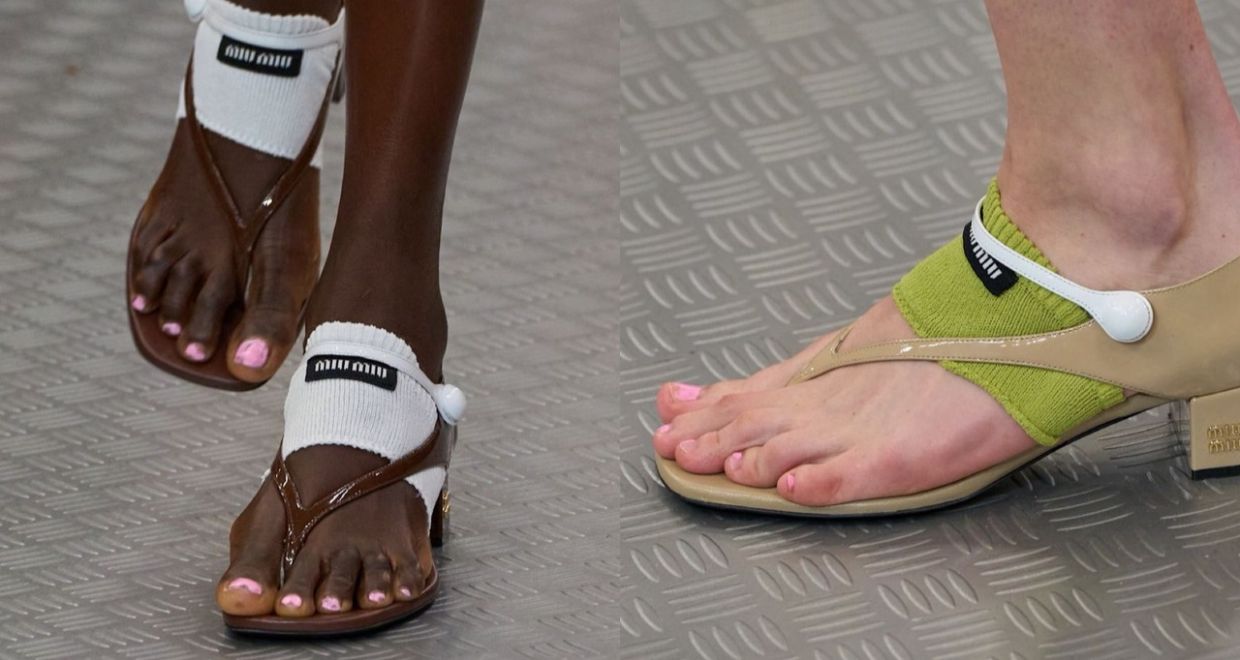
Fashion sometimes arrives through the most unexpected routes. This season, a modest hosiery innovation is challenging conventional wisdom about how we dress our feet during sweltering months. Open-toe socks, which leave the toes exposed while wrapping protectively around the upper foot and arch, are gaining momentum among style-conscious consumers across Asia, driven by practical necessity and high-profile endorsements from both luxury fashion houses and entertainment personalities.
The appeal stems from a genuine seasonal quandary that tropical and subtropical climates make particularly acute. Entirely bare feet paired with sandals or flip-flops can appear unfinished to many wearers, yet traditional full-length socks trap heat and feel suffocating in humidity. Open-toe socks occupy this paradoxical middle ground, offering a middle path that neither feels underdressed nor uncomfortably warm. For Southeast Asian consumers accustomed to monsoon seasons and sustained high temperatures, this innovation addresses a legitimate styling challenge that has persisted for years.
The trend's momentum accelerated following an unusually early heat wave in South Korea, which brought forward the transition to summer footwear. Major retailers reported striking sales increases during late May and early June, with summer shoe categories encompassing mules, slides, and flip-flops experiencing an 80 percent surge compared to the same period the previous year, according to online fashion platform W Concept. More remarkably, transaction values for socks specifically designed to pair with flip-flops increased 1,664 percent between mid-May and mid-June on the style commerce platform Ably, while search interest climbed even more steeply at 3,227 percent, indicating explosive consumer curiosity alongside actual purchasing behaviour.
Luxury fashion validation accelerated the trend's credibility. Miu Miu's 2025 Spring/Summer collection introduced an unconventional sock silhouette that departed radically from traditional designs, wrapping only around the arch rather than extending across the entire foot. This high-fashion endorsement transformed what might otherwise have remained a niche comfort solution into a legitimate style statement worthy of emulation. Celebrity engagement further amplified visibility, as when South Korean actor Cha Jung-won posted social media content pairing sky-blue flip-flops with beige knit leg warmers, demonstrating how the trend could be styled for maximum visual impact.
Critically, contemporary open-toe sock designs bear little resemblance to their winter ancestors. Rather than relying on thick, insulating materials designed to trap warmth, modern summer versions prioritise breathability through sheer, mesh, and loosely knitted fabrics that function primarily as styling accessories rather than thermal layers. This material innovation proves essential to the trend's viability in genuinely warm climates where heavy fabrics would prove genuinely uncomfortable. The aesthetic function predominates; these socks add textural and chromatic interest to otherwise minimalist summer wardrobes centred on sandals, flip-flops, and ballerina flats.
Beyond pure aesthetics, practical advantages justify the trend's adoption. The sock's coverage across the foot's upper surface meaningfully reduces friction and chafing that flip-flop straps commonly cause during extended wear, addressing a genuine physical discomfort that many regular sandal wearers experience. During monsoon seasons particularly common throughout Southeast Asia, open-toe socks offer protection when worn inside rain boots, preventing the skin irritation that bare feet develop through extended moisture exposure and repetitive rubbing. These functional benefits provide substantive justification beyond mere fashion caprice, positioning the trend as genuinely useful rather than purely whimsical.
Implementing the trend successfully requires understanding fundamental styling principles. For initial experimentation, neutral foundations work most reliably—charcoal grey, black, and white socks pair effortlessly with existing summer wardrobes without demanding significant wardrobe restructuring. Pairing grey socks with black flip-flops or ballerina flats complements casual classics including denim, Bermuda shorts, and satin skirts. However, the trend's creative potential emerges through bolder colour selections. Vivid yellows, hot pinks, and sky blues introduce unexpected visual pop, while deliberately mismatching sock and shoe colours creates a deliberately intentional aesthetic that reads as sophisticated rather than accidental.
Successful styling requires restraint in other wardrobe components. Because open-toe socks and accompanying footwear already command visual attention, the remainder of the outfit should remain relatively understated. Simple pairings of T-shirts and shorts, or shirts and skirts, allow the foot styling to function as the statement element without overwhelming the overall look. Interestingly, visible patterns including dots or floral prints pair particularly effectively with solid-coloured open-toe socks, suggesting that the trend functions within broader design logic regarding visual balance and compositional hierarchy.
The trend's emergence signals a broader reconceptualisation of socks' role within contemporary fashion. Historically treated as functional concealment—items deliberately hidden beneath trouser legs or covering feet in utilitarian fashion—socks are increasingly positioned as visible design elements worthy of independent styling consideration. This shift reflects broader fashion trends toward unconventional mixing, asymmetrical silhouettes, and the deliberate exposure of garment layers traditionally relegated to invisible infrastructure. For Malaysian and Southeast Asian consumers navigating genuinely tropical climates, open-toe socks represent not merely a passing trend but a practical adaptation to environmental realities combined with evolved aesthetic sensibilities that value intentional styling over conventional conformity.

