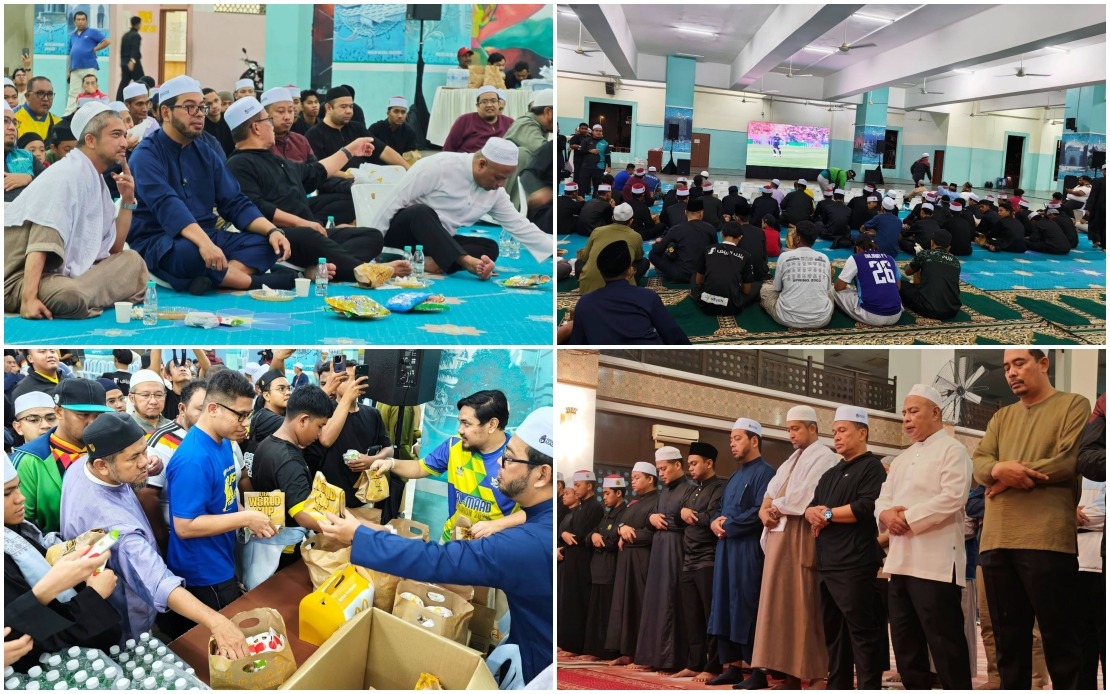
A gathering of more than 300 worshippers, predominantly young adults, assembled at Masjid Usamah bin Zaid in Wangsa Maju before dawn on June 21 to participate in a combined Qiyamullail programme and screening of a World Cup match. The initiative represents an experimental approach to contemporary religious engagement, positioning spiritual practice alongside activities that resonate with younger generations. Beginning at 4am, attendees observed night prayers before transitioning to watch the 2026 World Cup Group E fixture between Germany and Ivory Coast, which concluded with Germany securing a 2-1 victory.
The programme reflected a deliberate strategy to demonstrate that adolescents and young adults need not choose between their faith commitments and recreational interests such as football. Rather than viewing sports as incompatible with religious observance, organisers sought to create a platform where both dimensions of youth culture could coexist meaningfully. Minister in the Prime Minister's Department (Religious Affairs) Dr Zulkifli Hassan highlighted this philosophy, noting that the gathering illustrated how young people's enthusiasm for football could be channelled into activities that carry spiritual significance.
This approach aligns with evolving thinking among Malaysian Islamic institutions about how to maintain relevance and engagement with younger demographics. As traditional methods of dakwah, or Islamic outreach, sometimes struggle to capture youth attention, creative programming that intersects religious practice with contemporary entertainment provides an alternative pathway. The early morning timing, while challenging, underscored the commitment participants were willing to make, suggesting that when activities are designed with young people's interests in mind, participation levels can exceed expectations.
The match itself became a focal point for analysis and discussion beyond mere entertainment. National football legend Shahril Arsat and former Selangor FA President's Cup player Khushairi Aizad provided expert commentary during the half-time interval, dissecting the tactical approaches employed by both Germany and Ivory Coast. This element transformed the screening from passive viewing into an educational experience, allowing participants to develop deeper appreciation for the sport while enjoying professional-level analysis. The involvement of respected figures in Malaysian football lent credibility and gravitas to the event, signalling that athletic pursuit deserves serious intellectual engagement.
Logistical support for the programme demonstrated the breadth of institutional backing it received within Malaysia's Islamic establishment. Federal Territories Islamic Religious Council chief executive officer Datuk Nizam Yahya and Malaysian Islamic Development Department deputy director-general Datuk Ajib Ismail joined Dr Zulkifli and the Federal Territories Mufti in preparing traditional roti canai breakfast for attendees, a gesture that blended hospitality with hands-on leadership participation. Senior officials stepping into kitchen duties sent a message about the importance placed on this initiative and the values it represented.
The collaborative architecture underlying the event reflected coordination across multiple layers of Malaysia's Islamic institutional framework. The Federal Territories Mufti Department, JAKIM, MAIWP, JAWI, YADIM, YAPEIM, mosque management, ABIM, PMA, and various food sponsors all contributed to execution. This extensive network involvement indicates that experimentation with youth engagement strategies enjoys support from both governmental and civil society actors within the Islamic sector. Such coordination suggests this model may be replicated elsewhere, particularly in other federal territories and urban centres with significant youth populations.
The timing of the event, occurring during the 2026 World Cup tournament, capitalised on global sporting interest to attract participation. Football commands unprecedented viewership and emotional investment across Malaysia, particularly among youth demographics who represent a critical constituency for religious institutions seeking sustained engagement. By scheduling the Qiyamullail programme specifically around a major tournament match, organisers leveraged existing enthusiasm to draw attendees who might not otherwise attend overnight prayer sessions. This represents strategic thinking about how to use cultural moments as entry points for spiritual participation.
The nature of the Qiyamullail practice itself carries particular significance in Islamic tradition, representing voluntary night prayers undertaken during Ramadan and beyond. The decision to pair this spiritually intensive practice with World Cup viewing suggests confidence that both activities could coexist without diminishing the devotional quality of worship. For participants, the experience offered validation that their interests in contemporary global culture need not conflict with religious commitment—a message with broader implications for Muslim youth navigating globalised society.
From a Southeast Asian perspective, Malaysia's approach to youth-oriented religious programming carries relevance across the region, where Muslim-majority and Muslim-plurality nations grapple with similar questions about maintaining religious engagement as traditional structures face competition from digital entertainment and secular pursuits. The success of this initiative, measured by the substantial turnout and apparent enthusiasm, suggests that institutional creativity rather than rigid adherence to conventional formats may prove more effective in the coming decades.
The event ultimately illuminates a broader Malaysian conversation about how religious institutions can adapt to contemporary realities without compromising spiritual principles. Rather than resisting youth interests, the mosque and supporting organisations chose to create conditions where those interests could be pursued within a framework of faith commitment. Whether this represents a temporary novelty or the beginning of a sustained shift in Malaysian Islamic engagement strategies will become clearer as similar programmes proliferate or fade. The 300 young worshippers who gathered in the pre-dawn darkness suggest there is appetite for such integrated approaches among at least one segment of Malaysia's religiously observant youth.

