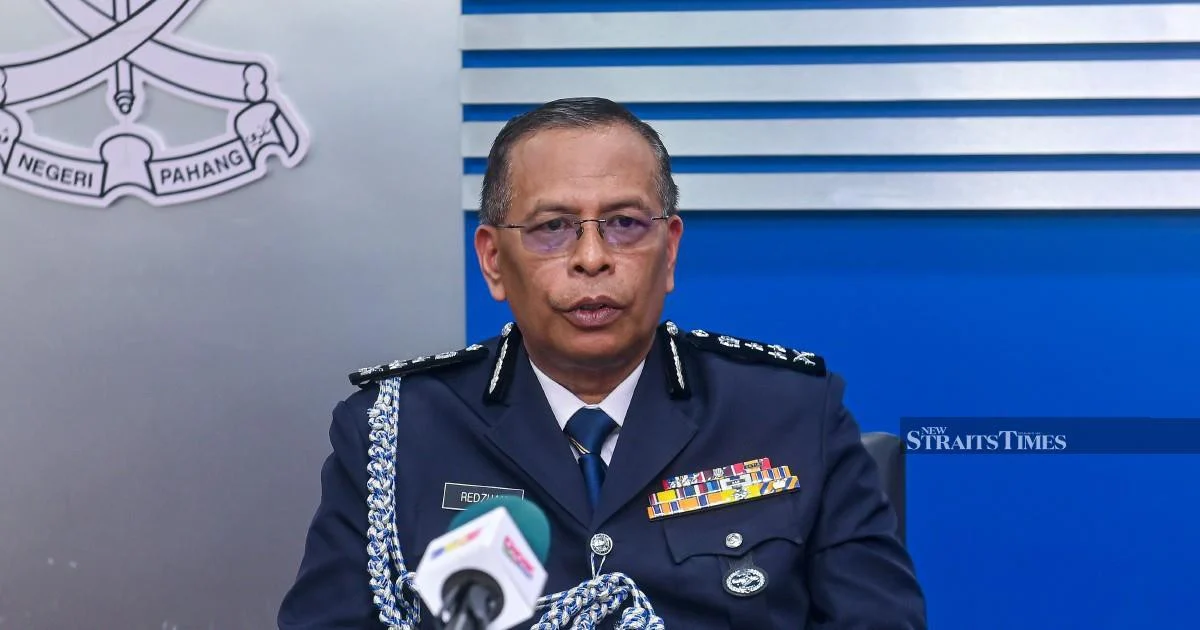
The construction of Pahang's new police contingent headquarters at the Sultan Ahmad Shah Administrative Centre (KotaSAS) in Kuantan has overcome significant administrative obstacles and is poised to resume operations after a period of suspension caused by unresolved land disputes. The clearance of these contentious land issues represents a major breakthrough for a project that has faced multiple delays since its initial conception, and signals the state government's renewed commitment to modernising the Royal Malaysia Police's regional infrastructure.
The headquarters facility forms part of the broader KotaSAS development initiative, which aims to consolidate various government agencies and departments under a single administrative hub in Kuantan. This integrated approach to government facilities has become increasingly common across Malaysia, as state administrations seek to improve operational efficiency and reduce the overhead costs associated with managing dispersed office locations. The police headquarters relocation is particularly significant for Pahang given the contingent's current accommodation constraints and the growing demands on the force's capacity.
The resolution of land complications has cleared the path for contractors and project managers to proceed with full-scale construction activities. Such delays are not uncommon in Malaysian property development, where overlapping claims, unclear historical ownership records, or disputes between private landholders and government entities can substantially impede project timelines. The successful navigation of these complexities demonstrates effective coordination between multiple stakeholders, including the Pahang state government, local authorities in Kuantan, and the Royal Malaysia Police hierarchy.
From a regional perspective, the Pahang police headquarters project carries importance beyond Kuantan's borders. As the largest state in Peninsular Malaysia by area, Pahang spans a vast geographic expanse that includes diverse urban, industrial, and rural zones. A modernised police headquarters with improved facilities and technology systems will enhance the contingent's capacity to coordinate operations across this sprawling territory and respond more effectively to security challenges ranging from conventional crime to organised activities in the state's frontier regions bordering Thailand.
The KotaSAS development paradigm reflects contemporary approaches to public sector modernisation pursued across Southeast Asia. By concentrating administrative functions, the project promises to streamline inter-agency coordination and enable resource sharing across different government departments operating in Pahang. For the police contingent specifically, a purpose-built headquarters with contemporary facilities should improve officer welfare, enable better training infrastructure, and create a more attractive working environment for personnel seeking to advance their careers within the force.
The land issue resolution also carries implications for Pahang's broader development trajectory. Uncertainty surrounding property titles and land use rights can deter both public and private investment in a state, potentially limiting economic growth and infrastructure development. By demonstrating the capacity to resolve such disputes efficiently, the state government sends a positive signal to investors regarding the certainty of their property rights and the predictability of the regulatory environment—factors that influence decisions about where to locate new businesses or undertake capital-intensive projects.
The timing of the project's resumption is significant given Malaysia's ongoing modernisation of its security sector. Police forces across the country are increasingly adopting digital technologies, analytics-driven policing strategies, and community engagement platforms that require upgraded physical infrastructure. The Pahang headquarters, once completed, should incorporate such contemporary operational systems and provide appropriate working spaces for specialised units that rely on technology.
Expectations for the completed facility likely include enhanced capacity for the contingent's various divisions—ranging from criminal investigation and traffic enforcement to community policing and administrative functions. A consolidated headquarters can improve communication flows, reduce inter-divisional friction that sometimes arises from geographically separated operations, and create opportunities for cross-functional collaboration on complex cases requiring input from multiple specialties.
The project also reflects the broader pattern of investment in Malaysia's east coast region, where states like Pahang play crucial roles in the national economy. Beyond police operations, the KotaSAS initiative signals continued government commitment to developing Kuantan as a significant administrative and commercial node, which could stimulate broader economic activity in supporting sectors such as construction, professional services, and hospitality.
Local residents and business communities in Kuantan have likely awaited this development announcement, as the project's completion should ultimately translate into improved policing services and public safety outcomes. The proximity of a modernised police headquarters to commercial and residential areas typically correlates with enhanced police responsiveness and visibility, factors that communities generally view as positive for security and property values.
With the land issues now resolved, stakeholders will likely turn their attention to ensuring the project progresses to completion within budgeted timelines and cost parameters. Pahang's ability to successfully deliver this infrastructure project will provide valuable lessons for other state-level initiatives and demonstrate the state's capacity to overcome administrative hurdles in delivering development outcomes.

