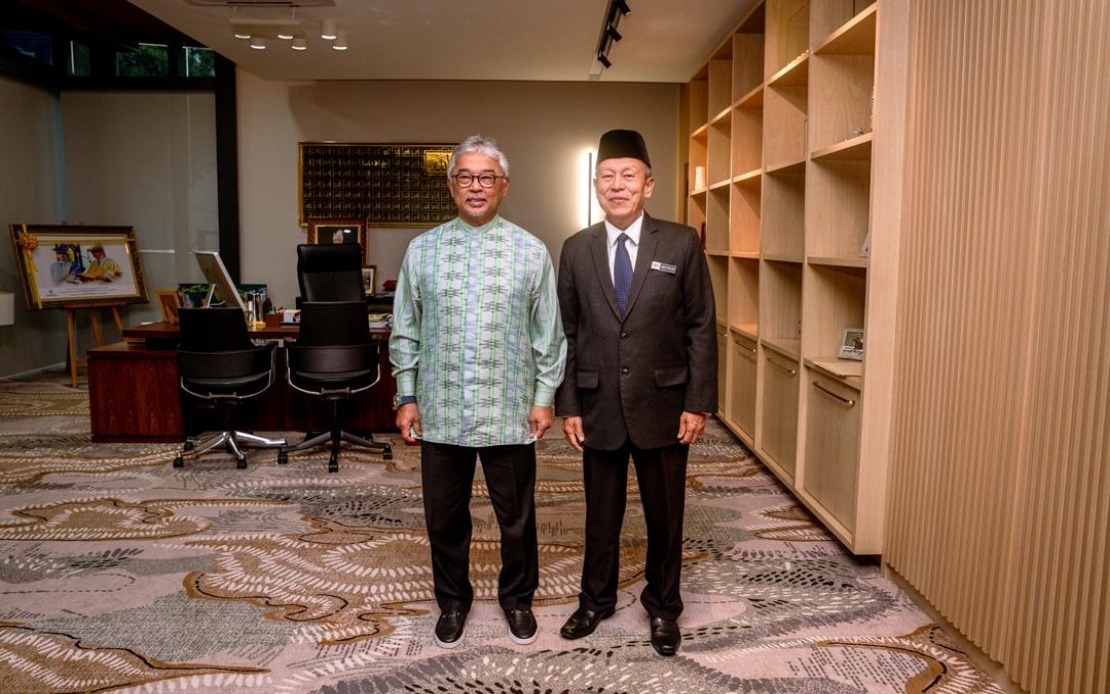
Al-Sultan Abdullah Ri'ayatuddin Al-Mustafa Billah Shah, the Sultan of Pahang, met with Malaysian Anti-Corruption Commission chief commissioner Datuk Seri Abd Halim Aman on June 19 at Shahzan House in Ampang, Kuala Lumpur. The private audience, which lasted approximately one hour, centred on the MACC's latest operational developments and strategic initiatives aimed at strengthening the nation's anti-corruption framework.
During the meeting, the MACC leadership provided His Royal Highness with a comprehensive briefing on the commission's current portfolio and future direction. The discussion encompassed the commission's role in addressing systemic corruption and the measures being implemented to restore public trust in Malaysia's anti-corruption enforcement machinery. As an institution answerable to the nation's rulers, the MACC regularly updates the royal institution on developments affecting governance standards and institutional integrity across the country.
The Sultan was also apprised of various governance-related matters and the commission's preventive strategies designed to root out corrupt practices before they take hold. This aspect of the discussion likely touched on how the MACC works with government agencies and the private sector to embed ethical standards and accountability mechanisms into institutional operations. The focus on prevention rather than purely punitive measures reflects a broader shift in anti-corruption strategy, where institutional culture and oversight systems are strengthened proactively.
The meeting provided an opportunity for the MACC to outline its public engagement efforts and the steps being taken to enhance public confidence in its work. This is particularly significant in Malaysia's current context, where perceptions of institutional independence and effectiveness directly influence citizen engagement with governance processes. The commission faces the ongoing challenge of demonstrating that corruption investigations are conducted impartially and that enforcement actions reflect genuine wrongdoing rather than political considerations.
Abd Halim's expression of gratitude to the Sultan underscores the importance of royal patronage and institutional support for anti-corruption work. In the Malaysian constitutional framework, the Sultan holds symbolic and substantive authority, and royal acknowledgement of the MACC's mission carries weight both institutionally and symbolically. The chief commissioner's emphasis on the Sultan's support and concern reflects an effort to position the MACC as operating with the backing of the constitutional monarchy.
The chief commissioner specifically highlighted the MACC's commitment to advancing transparent, accountable, and integrity-based governance across all levels of the public service. This framing positions the anti-corruption body not merely as an investigative agency but as a catalyst for systemic governance improvement. It speaks to a recognised need across Southeast Asia to move beyond reactive investigations toward preventive governance frameworks that make corruption more difficult and risky to perpetrate.
For Malaysian readers and observers, this audience represents routine institutional engagement rather than a dramatic development. However, such high-level meetings between constitutional authorities and enforcement agencies carry subtle significance. They reinforce the principle that anti-corruption work operates within a framework of institutional checks and that law enforcement agencies remain accountable to the constitutional authorities, not autonomous bodies operating without oversight.
The timing of such briefings also matters in Malaysia's political context. Regular updates to the Sultan on MACC activities demonstrate institutional coordination and ensure that the highest levels of government remain informed about enforcement priorities and significant investigations. This institutional reporting mechanism is part of Malaysia's broader system of governance, where power is distributed across multiple institutions that theoretically provide mutual checks and balances.
The MACC, established under the Malaysian Anti-Corruption Commission Act 2009, has undergone significant scrutiny and debate regarding its independence and effectiveness. Observers have raised concerns about the agency's susceptibility to political direction, particularly given Malaysia's history of alternating governments with competing agendas. Meetings like this one with the Sultan serve to reinforce the institution's standing and its connection to constitutional authority that transcends partisan politics.
Looking forward, the MACC's emphasis on strengthening public confidence is crucial for its institutional legitimacy. Without citizen belief that the commission operates fairly and impartially, compliance with anti-corruption standards weakens, and the agency's investigative work loses force. The briefing to the Sultan likely included discussion of high-profile cases, institutional reforms, and metrics demonstrating the commission's active engagement across government and business sectors.
The audience also reflects broader regional trends in anti-corruption governance. Throughout Southeast Asia, anti-corruption commissions have become increasingly prominent, and their relationships with constitutional authorities shape how effectively they operate. Malaysia's MACC, despite criticisms, remains relatively visible and active compared to some regional counterparts, though sustained questions persist about its true independence and whether it serves genuine public interest or political objectives.

