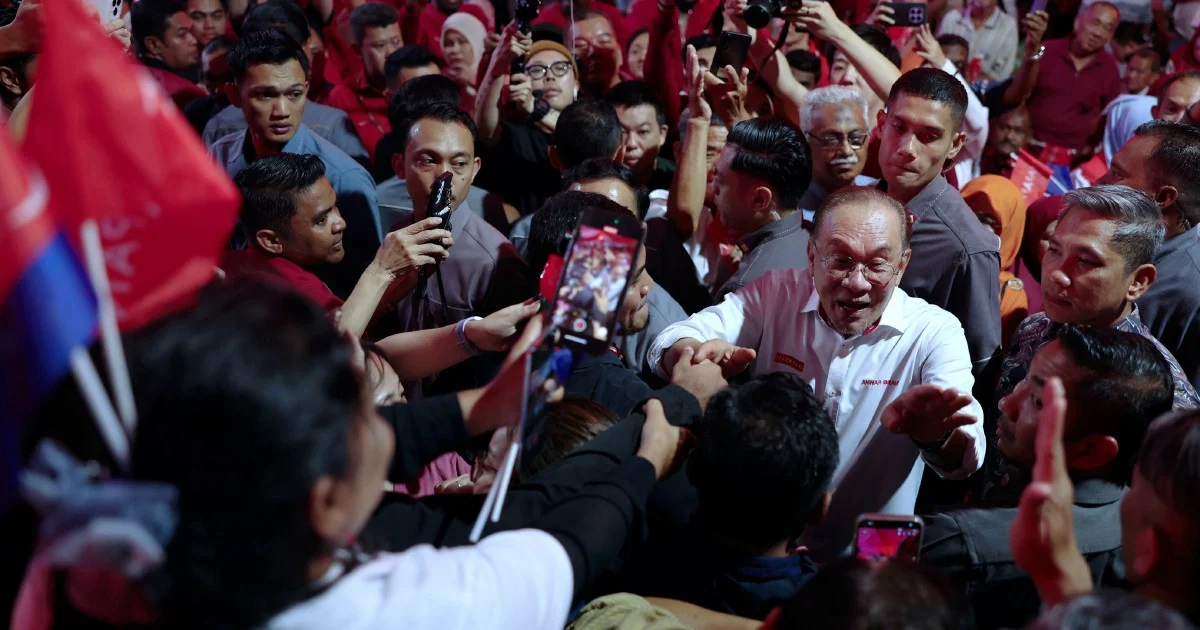
Pakatan Harapan took a decisive step towards reclaiming one of Malaysia's most politically significant states when coalition chairman Datuk Seri Anwar Ibrahim unveiled the complete roster of 56 candidates for Johor's state election scheduled for July 11. The announcement in Tangkak signalled a comprehensive mobilisation of PH resources across all state seats, representing the opposition alliance's most serious challenge to incumbent control of a state that has profound implications for both regional and federal political calculations.
The decision to field a candidate in every constituency marks a substantial commitment by the opposition coalition to contest the Johor election comprehensively, rather than concentrating resources selectively. This approach reflects PH's confidence in its ability to mount a credible campaign across diverse electoral landscapes within the state, from urban centres in Johor Bahru to more rural and traditionally mixed constituencies. The full slate submission also demonstrates organisational maturity within the coalition, signalling that PH has resolved internal disputes over seat allocations among its constituent parties—a perennial source of tension that has historically weakened opposition unity.
Johor's political significance extends beyond its status as a major population centre. As the largest state on the peninsula by landmass and home to over 4 million people, control of Johor's 56 state seats carries substantial weight in national coalition dynamics. The state has traditionally served as a political bellwether, with electoral shifts in Johor often prefiguring broader movements in peninsular politics. Loss of Johor to the opposition would represent a watershed moment, particularly given the state's historical alignment with ruling coalitions and its representation of relatively mixed urban-rural demographics that mirror national patterns.
Anwar Ibrahim's personal involvement in announcing the candidate slate underscores the centrality of this election to PH's broader political agenda. As the coalition's chairman and current Prime Minister, his presence at the campaign launch signals that the party is treating the Johor contest as a defining moment rather than a routine state election. This calculated visibility also positions him as the public face of the opposition's ambitions, allowing him to frame the election as a referendum on PH's federal governance and its ability to deliver progress at the state level.
The timing of the announcement and the election itself occur within a complex political context for Malaysia. The country has experienced significant volatility in its coalition arrangements over recent years, with both PH and its rivals navigating fractious internal politics and shifting voter expectations. For PH, demonstrating strength in state elections becomes increasingly important in stabilising its federal position and validating the party's claim to be the preferred alternative to rival coalitions. A strong showing—or conversely, a disappointing result—in Johor would send clear signals to both party members and the electorate about the coalition's trajectory.
The mechanics of fielding candidates across 56 seats required PH to navigate multiple layers of negotiation. The coalition comprises several distinct political parties with different ideological orientations, regional strengths, and expectations regarding electoral representation. Reaching consensus on candidate selections involves balancing claims of various component parties, accommodating demands from local divisions, and ensuring that nominated individuals possess sufficient community standing to mount viable campaigns. The completion of this process and announcement of the full list indicates that coalition leadership has managed these complexities, at least for the moment.
For Johor voters, the presence of a complete opposition slate offers a genuine choice across the full spectrum of constituencies. In previous elections, voters in certain areas faced limited competitive options if the opposition failed to nominate candidates. A comprehensive candidate roster transforms the election from a potential exercise in ratification of incumbent dominance into a genuine contest where voters in every seat can evaluate alternative platforms and leadership. This structural change to the electoral landscape potentially influences both voter motivation and ultimate outcomes.
The campaign ahead will test PH's capacity to convert candidate availability into electoral support. Having candidates in place represents a necessary but insufficient condition for electoral success. The coalition will need to execute an effective ground campaign, articulate compelling policy platforms relevant to Johor's specific economic and social concerns, and overcome any structural advantages enjoyed by incumbents. The state's diverse composition—ranging from the cosmopolitan centre of Johor Bahru to outlying agricultural and industrial zones—requires messaging and campaign strategies calibrated to local concerns while maintaining coalition coherence.
Regionally, the Johor election holds implications extending beyond state boundaries. The outcome will be closely monitored across Southeast Asia's political circles, as it provides a test case of opposition viability in a Southeast Asian democracy and may influence calculations in neighbouring states regarding their own electoral prospects. Neighbouring Singapore, while politically distinct, also watches Malaysian political developments given historical and ongoing cross-border connections and shared business interests. A successful opposition showing in Johor would suggest broader capacity for meaningful democratic competition in the region.
The announcement also represents a moment where PH seeks to demonstrate unity and forward momentum after what had been a tumultuous period of coalition management at the federal level. By presenting a unified, comprehensive slate for Johor, the coalition aims to project an image of organisational competence and shared political vision. Whether this projected unity extends to actual campaign coordination and message discipline will become apparent as the election campaign intensifies over the coming weeks.

