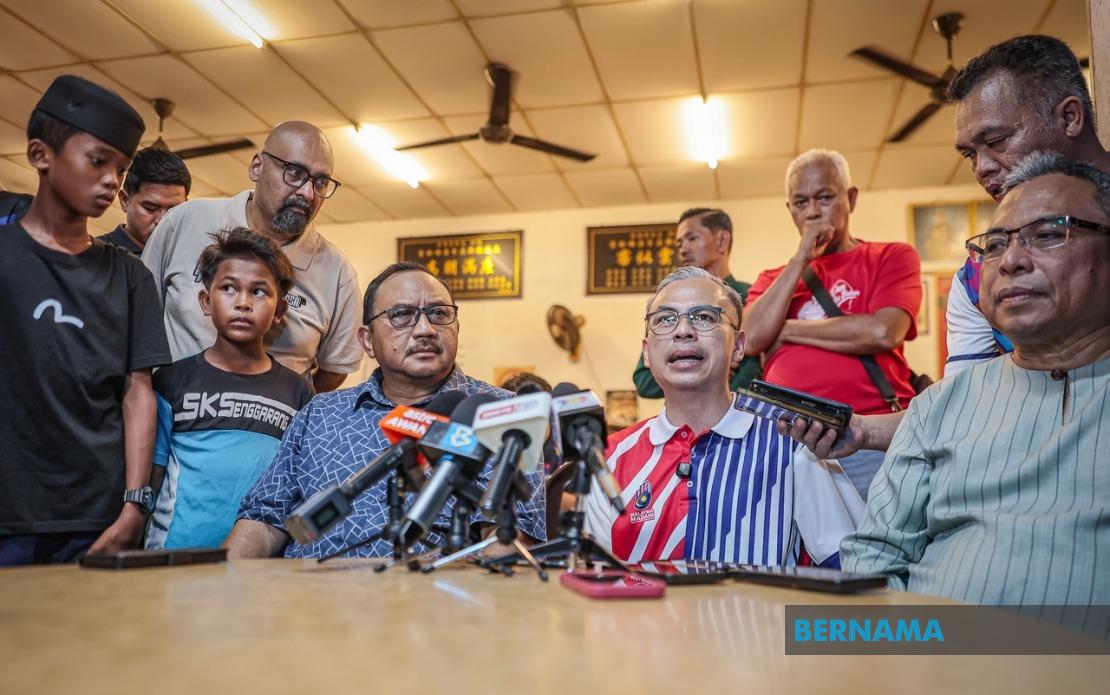
Pakatan Harapan is preparing a multifaceted campaign strategy for the 16th Johor State Election that deliberately weaves together face-to-face community mobilization with the reach and speed of digital platforms. The coalition's approach reflects a recognition that modern electoral contests demand simultaneous presence across both physical and virtual spaces, with senior party figures committing to immediate ground operations as the official campaign period opens.
Communications director Datuk Fahmi Fadzil articulated the strategic rationale during a press briefing in Batu Pahat, emphasizing that this hybrid model is essential for penetrating all demographic layers of society with PH's agenda and policy platforms. The approach signals PH's assessment that different voter segments respond to distinct communication channels, and that neglecting either avenue could leave the coalition vulnerable to opposition messaging. This dual-track methodology has become increasingly standard among major Malaysian political organizations, yet its explicit articulation underscores the coalition's determination to prevent any communication gaps.
PKR, contesting 20 seats under the PH banner, will immediately activate campaign machinery following the conclusion of nomination proceedings on June 27. The party has assigned senior leadership to key constituencies, with Fahmi personally overseeing activities in Semerah while PKR deputy president Nurul Izzah Anwar coordinates outreach efforts in Senggarang alongside candidate Onn Abu Bakar. This hierarchical deployment signals the PH coalition's prioritization of specific battleground seats, concentrating organizational firepower where competitive margins appear narrowest. The establishment of a dedicated official media group represents an institutional response to the information ecosystem, enabling rapid dissemination of candidate-related content and campaign announcements before opposition narratives gain traction.
The emphasis on fact-based communication represents a deliberate positioning against what PH implicitly characterizes as distortion and misinformation within the electoral sphere. By anchoring its messaging strategy around accuracy and evidence, the coalition seeks to differentiate itself from potential competitors while simultaneously building voter confidence in the reliability of PH information sources. This framing also provides justification for the coalition's digital infrastructure investments, positioning them as bulwarks against false information rather than merely campaign tools.
At the developmental level, Fahmi highlighted federal-state cooperation as a tangible catalyst for major infrastructure projects benefiting Johor residents. The Rapid Transit System Link and the Johor-Singapore Special Economic Zone exemplify this collaborative approach, with potential to stimulate regional economic expansion and narrow development gaps between districts. For Malaysian voters, the invocation of specific projects offers concrete reference points for evaluating campaign promises, moving beyond abstract pledges to discussable infrastructure realities. The special economic zone particularly resonates within Johor's economic context, positioning the state as a cross-border growth engine rather than a peripheral peripheral economy.
PH's governance track record in three states—Selangor, Negeri Sembilan, and Penang—functions as the coalition's empirical foundation for electoral appeals in Johor. Rather than limiting claims to Johor-specific promises, the coalition leverages multi-state administrative experience to suggest institutional competence and delivery capacity. Fahmi cited specific candidates including Dr Maszlee Malik in Puteri Wangsa and Onn Abu Bakar in Senggarang as embodiments of this broader capability framework, connecting individual candidates to the coalition's broader governance narrative. This strategy implicitly argues that PH brings proven administrators rather than first-time aspirants to the Johor contest.
The commitment to release a dedicated Johor state election manifesto signals PH's intent to tailor messaging beyond generic coalition positioning. State-specific platforms allow the coalition to address localized concerns—from infrastructure priorities to sectoral development—while maintaining coherence with broader PH principles. This differentiation from a generic national platform suggests recognition that Johor voters respond to state-focused agendas and that apparent customization enhances campaign authenticity.
Integrally, a special task force comprising the Malaysian Communications and Multimedia Commission, the Election Commission, the Royal Malaysia Police, and the Malaysian Media Council has been mobilized to monitor and suppress misinformation throughout the election period. This multi-agency infrastructure reflects governmental concern about false information's electoral impact while distributing responsibility across institutional actors. For voters and observers, the existence of such monitoring mechanisms theoretically creates accountability mechanisms, though effectiveness depends substantially on implementation rigor and political neutrality.
Fahmi's participation in community engagement—including attending a wayang pacak screening of Blood Brothers in Senggarang—demonstrates the physical ground component of PH's strategy. Such cultural programming serves dual purposes: providing entertainment while creating informal spaces for political messaging and community connection. The juxtaposition of traditional cultural activities with modern campaign infrastructure illustrates how contemporary Malaysian political organizations attempt to bridge generational and media preferences within unified campaign frameworks.
For Malaysian observers, the Johor state election represents a significant test of coalition cohesion and campaign effectiveness under competitive conditions. The integration of grassroots and digital strategies, combined with emphasis on governance track records and specific development projects, establishes the template PH intends to deploy. The outcome will offer insights into whether hybrid campaign approaches sufficiently overcome structural or messaging disadvantages, and whether voters in competitive Malaysian states respond primarily to demonstrated administrative competence or to alternative political narratives.

