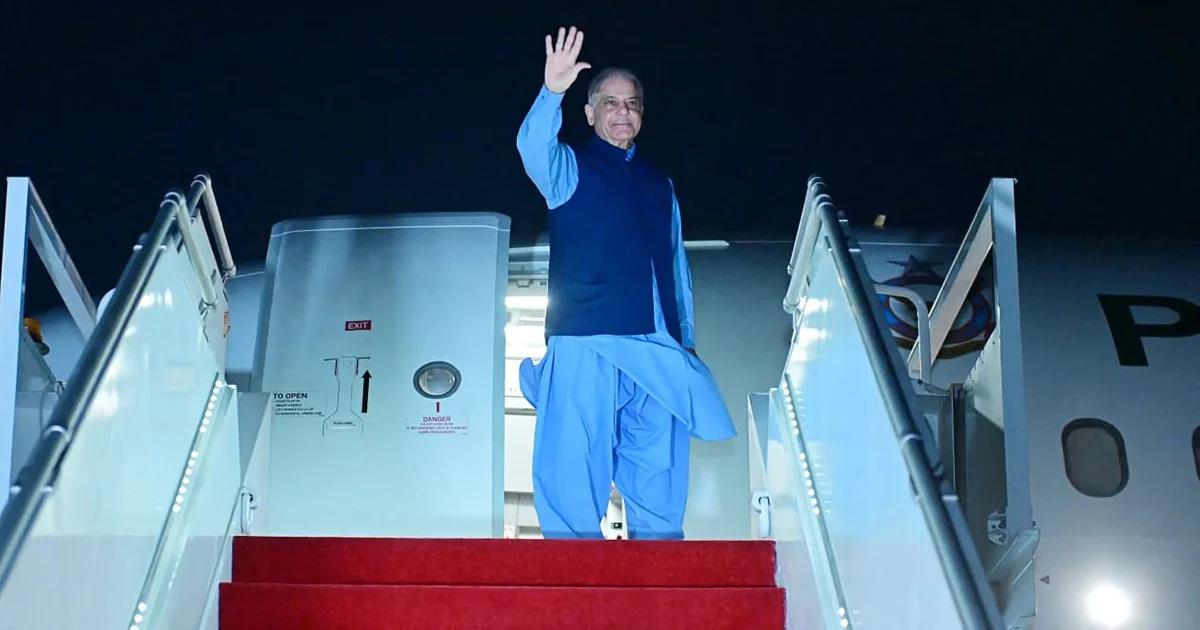
Pakistan's Prime Minister Shehbaz Sharif touched down in Switzerland on Sunday morning to take part in technical-level discussions aimed at defusing hostilities between the United States and Iran. The engagement represents an important moment in regional diplomacy as the two adversaries seek pathways toward de-escalation through direct engagement, with Pakistan positioning itself as a constructive participant in efforts to stabilize one of the world's most volatile regions.
The talks represent a significant diplomatic overture at a time when tensions between Washington and Tehran have reached critical levels. Pakistan's involvement underscores Islamabad's traditional role as a bridge builder in regional geopolitics, leveraging its strategic position between South Asia and the Middle East. By participating in these negotiations, Pakistan signals its commitment to preventing further escalation that could draw neighbouring countries into wider conflict.
For Malaysian and Southeast Asian observers, Pakistan's engagement in these discussions carries broader implications. The region's stability directly affects global energy markets, trade routes, and security dynamics that reverberate across Asia. Any sustained military confrontation involving the United States and Iran could disrupt oil supplies, elevate commodity prices, and destabilize global financial markets—consequences that would inevitably impact Southeast Asian economies heavily dependent on energy imports and international commerce.
Pakistan's participation also reflects the expanding diplomatic networks in which regional powers now operate. As a nuclear-armed nation with significant influence in Islamic circles and historical connections to both Iran and Western powers, Pakistan brings considerable credibility to peace negotiations. The country has repeatedly positioned itself as an intermediary during past crises, leveraging cultural, religious, and political ties across the Muslim world while maintaining pragmatic relationships with Western nations.
Technical-level talks differ fundamentally from high-level diplomatic summits. These discussions focus on specific, implementable measures rather than broad political declarations. They typically address concrete issues such as military de-escalation timelines, verification mechanisms, confidence-building measures, and procedural frameworks for sustained dialogue. The presence of Pakistan suggests that negotiators are moving beyond rhetorical positions toward identifying workable solutions.
The Middle East conflict landscape has intensified considerably in recent years, with proxy wars, drone strikes, and naval confrontations creating numerous flashpoints. Any armed conflict between the United States and Iran would dramatically reshape regional alignments, affecting not only neighbouring countries but also distant partners like Malaysia with whom Iran maintains diplomatic and economic relationships. The telecommunications, oil and gas, and financial sectors across Southeast Asia remain sensitive to Middle Eastern instability.
Pakistan's diplomatic role carries particular weight given its history of managing complex regional relationships. The country maintains substantial ties with Saudi Arabia and other Gulf Cooperation Council members while also sharing a long border with Iran. This balancing act positions Islamabad uniquely to understand perspectives from multiple sides and potentially broker compromises that outsiders might overlook.
The technical discussions also suggest that both the United States and Iran recognize the necessity of dialogue, even amid profound disagreements on nuclear programs, regional influence, and ideological rivalry. Technical negotiations can proceed even when political relationships remain strained, allowing both sides to explore possibilities without immediately conceding larger strategic positions. This approach has successfully resolved crises in other contexts and may prove equally valuable here.
For Pakistan specifically, successful mediation carries tangible benefits. Enhanced diplomatic standing strengthens Islamabad's international position and demonstrates productive leadership at the regional level. Moreover, stability in the Middle East directly benefits Pakistan's economy, as many Pakistani expatriates work in Gulf countries and remit substantial portions of their earnings home. Conflict in the region threatens these livelihoods and Pakistan's crucial foreign exchange earnings.
The timing of these talks also reflects broader geopolitical recalibration. Multiple regional actors, from Turkey to Saudi Arabia to smaller Gulf states, have recently pursued rapprochement with traditional adversaries. This shift toward dialogue and away from confrontation suggests that regional powers recognize the unsustainability of endless military competition and the mutual benefits of negotiated settlements.
Southeast Asian governments will closely monitor developments from these Switzerland discussions. Beyond the obvious security concerns, the outcome affects regional partners' relationships with both the United States and Iran. Malaysia, Indonesia, and other nations must navigate between their strategic partnerships with Western allies and their commercial and cultural connections with Iran and the broader Islamic world. Any major escalation forces difficult choices upon these nations.
The presence of a Pakistani premier at these talks signals confidence among negotiators that productive dialogue remains possible. While technical-level discussions rarely produce immediate breakthroughs, they establish frameworks within which future progress becomes achievable. Success would demonstrate that even deeply divided adversaries can find common ground when motivated by mutual interest in avoiding catastrophic conflict.

