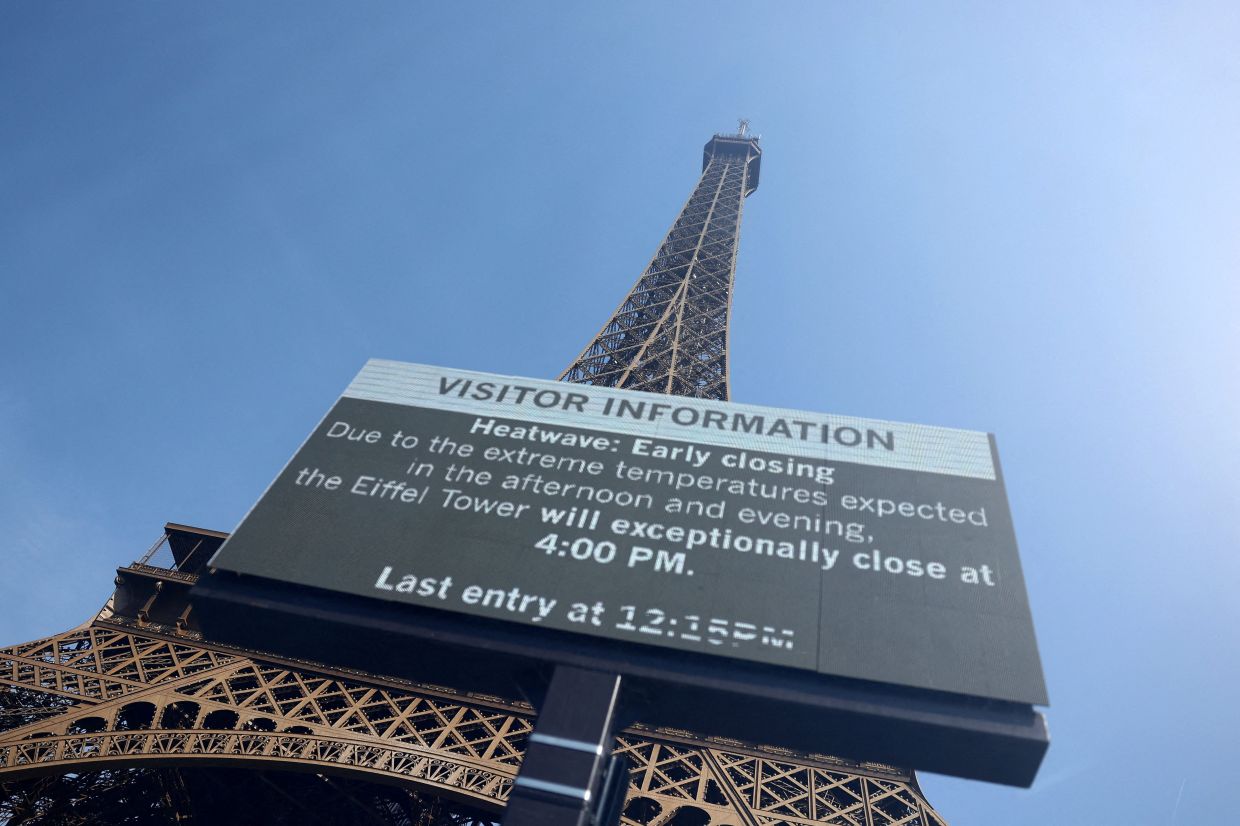
France's most destructive heatwave in decades has transformed the tourist experience in Paris and beyond, with world-famous attractions shuttering their doors early as authorities struggle to protect both visitors and cultural heritage from record-breaking temperatures. The situation reached crisis point on June 23, when the country recorded its hottest day since temperature measurements began in 1947, forcing the Eiffel Tower and Louvre to implement unprecedented closures that left disappointed travellers scrambling to salvage their holidays.
The Eiffel Tower, which ordinarily welcomes seven million visitors annually and remains open past midnight during the summer season, closed exceptionally early at 4pm on June 23. Management warned that shortened operating hours would likely persist, fundamentally altering the visitor experience for those who had planned their Paris itineraries around exploring this 324-metre iron lattice monument at sunset. The disruption echoes a broader pattern affecting Paris's tourism infrastructure, as numerous attractions opted to limit or suspend operations rather than risk visitor safety in the brutal conditions.
Spanish nurse Maite Blazques, 35, from Madrid, embodied the frustration felt by countless holidaymakers. She had spent months saving to take her six-year-old son to Paris, a milestone family trip carefully planned and anticipated. The heatwave forced her to completely restructure the itinerary, eliminating guided tours through the historic Marais district, cancelling a planned river cruise along the Seine, and abandoning hopes of ascending the Eiffel Tower. Walking through Paris with a young child in 47-degree heat became untenable, transforming what should have been a magical holiday into a battle against environmental conditions.
The Louvre, which attracts approximately nine million visitors annually and stands as the world's most-visited museum, also implemented operational changes due to the extreme temperatures. Museum management acknowledged a fundamental problem: the vast palace, constructed over centuries by successive French monarchs and presidents, remains "not sufficiently adapted to climate change". This candid admission reflects how legacy infrastructure across Europe now confronts the realities of shifting climate patterns. The Louvre has faced compounding difficulties throughout the past year, including a brazen US$100 million jewellery heist, water damage from leaks, and numerous maintenance crises that further strained its capacity to serve visitors during extreme weather events.
American tourist Tamara Dancer experienced firsthand the operational chaos triggered by the heat. Her scheduled guided tour was cancelled on Tuesday afternoon, leaving her with a significantly diminished vacation experience. Unlike Maite's family situation, which allowed for some replanning, Dancer's cancellation occurred mid-trip, offering limited flexibility to reorganise her sightseeing schedule. These sudden closures reveal how tourism businesses across Paris operate on razor-thin margins, unable to accommodate visitors when conditions exceed safety parameters.
Streets across the capital transformed into inhospitable environments where temperatures radiating from pavements created hazardous conditions. American engineer John Beeler, 45, and his wife attempted to explore Paris on foot but found the experience intolerable. Equipped with hats, umbrellas, and portable fans, they still described "suffocating" conditions not only in the streets but also in the Paris Metro, where underground tunnels trapped heat and hundreds of commuters and tourists. Even their rented accommodation became unbearable, forcing them to relocate to hotels with functional air conditioning, an unexpected expense for travellers already stretched by holiday costs.
London retiree Drake Winners, 66, articulated what many visitors felt: that truly discovering Paris requires walking its neighbourhoods, observing street life, and absorbing the city's character through ambient experience. The extreme heat rendered this fundamental tourist activity virtually impossible. Instead, Winners redirected his time toward air-conditioned museums and churches, converting his holiday into an indoor cultural marathon rather than the outdoor exploration he had envisioned. This adaptation, while preserving some tourist value, fundamentally altered the Paris experience millions of visitors expect.
The crisis extends far beyond the capital. More than half of mainland France remained under the weather service's highest alert level, a rare designation indicating dangerous conditions. Regional attractions increasingly joined Paris landmarks in implementing protective measures. Mont Saint-Michel, the spectacular island monastery in Normandy that ranks among France's most-visited attractions outside Paris, issued urgent appeals for visitors to "put off your visit during the red alert". Such warnings, virtually unprecedented at major tourist sites, signal how comprehensively this heatwave disrupted normal operations across the country's tourism economy.
For Southeast Asian travellers planning European holidays, particularly Malaysians who constitute a significant portion of Asian visitors to France, the situation carries important planning implications. The predictability of Paris as a summer destination can no longer be assumed, with climate-driven disruptions potentially affecting mid-range holiday bookings. Travel insurance and flexible cancellation policies become increasingly valuable as extreme weather events, once considered exceptional, become recurring features of peak tourist seasons. Tour operators and accommodation providers may need to rebuild contingencies into packages, potentially raising costs for budget-conscious travellers from the region.
The heatwave also highlights infrastructure vulnerabilities across Europe's cultural sector. Museums, monuments, and heritage sites designed centuries ago now struggle against environmental pressures their architects never anticipated. Climate adaptation investments—from enhanced cooling systems to structural modifications—will require substantial capital, likely affecting operating budgets, ticket prices, and visitor access policies. France's candid acknowledgement that iconic institutions remain inadequately adapted to climate change reflects broader European realities that tourism industries and governments must urgently address.
Looming questions about Paris's future viability as a summer destination emerge from this crisis. If extreme heat becomes a recurring summer feature rather than a cyclical anomaly, tourists may increasingly shift their travel patterns toward spring or autumn months, fundamentally reshaping France's tourism calendar. Conversely, attractions might implement expensive infrastructure upgrades to maintain year-round operations, costs potentially passed to visitors through higher admission fees. Either scenario presents economic and cultural trade-offs that France and other European destinations will confront repeatedly as climate change accelerates.

