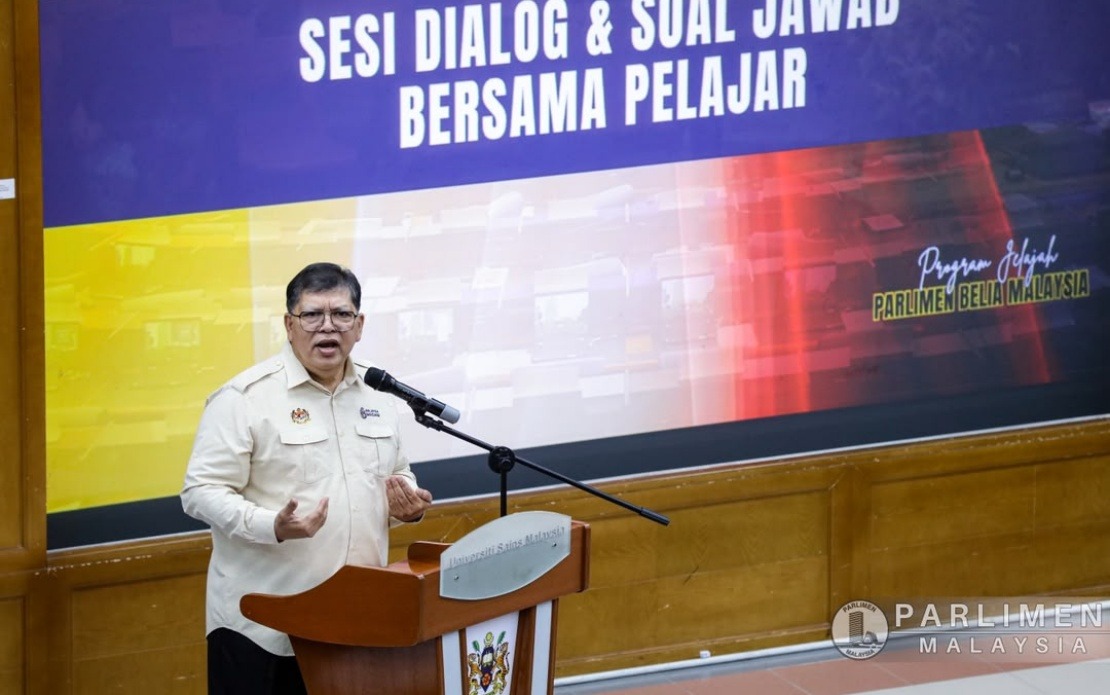
Dewan Rakyat Speaker Tan Sri Johari Abdul has issued a direct call for Members of Parliament to elevate their conduct and set the highest standards of democratic practice, recognising that the nation's legislative chamber serves as a living classroom for the country's emerging generation of leaders. His statement arrives at a critical moment, just months before the Malaysian Youth Parliament is scheduled to convene on September 11, an initiative designed to nurture democratic values among Malaysians aged 18 to 30. Johari's message underscores a fundamental truth often overlooked in parliamentary democracies: the behaviour of elected representatives shapes public perception of democratic institutions and influences how young citizens will eventually engage with democratic processes themselves.
The Speaker emphasised that Parliament transcends its traditional function as a debating forum for lawmakers. Instead, it operates as the nation's paramount legislative body and serves as a critical reference point for society broadly, particularly for younger generations who will inherit responsibility for the country's future governance. This perspective reflects growing international concern that democratic institutions risk losing legitimacy when their proceedings deteriorate into partisan theatrics divorced from substantive engagement with policy issues. In the Malaysian context, where social media amplifies parliamentary activity and live broadcasts reach millions, the visibility of parliamentary behaviour has intensified dramatically. Johari recognised this reality explicitly, noting that every speech and action now reaches the public instantaneously through digital channels, making self-regulation and conscious demonstration of democratic values more essential than ever.
For participants in the Malaysian Youth Parliament, exposure to dignified parliamentary conduct becomes formative. Young leaders engaged with PBMy will observe how mature democracy functions—or does not function—through their observation of the actual Dewan Rakyat. Johari stressed that these future leaders require not merely lectures about democratic principles but authentic exemplars of how such principles operate in practice. This includes witnessing fact-based debates that prioritise the public interest, exchanges conducted with courtesy despite disagreement, and problem-solving approaches grounded in evidence rather than rhetoric. The implicit message is that Parliament members who engage in personal attacks, make unsupported claims, or prioritise partisan advantage over national interest undermine the educational value of the very institution training tomorrow's democratic leaders.
The Malaysian Youth Parliament itself represents an ambitious institutional experiment. Operating on a structure that mirrors the actual Parliament, PBMy comprises 222 seats corresponding to parliamentary constituencies throughout Malaysia. More than ten parties have already been established within this platform, though these function as non-partisan youth organisations rather than actual political entities. This design allows young people to experience parliamentary processes—including party formation, campaigning, and legislative debate—without replicating the divisive partisanship of actual electoral politics. As patron of the programme, Johari has overseen its expansion since Parliament Malaysia assumed full management responsibility in October 2023, following eight years of operation under the Ministry of Youth and Sports.
The logistical scope of the youth parliament initiative remains substantial. Parliament Malaysia is currently conducting nationwide outreach specifically targeting 300,000 young citizens within the eligible age range, encouraging registration for elections scheduled in August. The timeline reflects careful planning: nomination day falls on July 8, with official candidate announcements on July 11, followed by a 27-day campaign period extending from July 12 through August 7. Online voting through the e-PBMy system will occur over a concentrated 24-hour window from 10 am on August 8 until 10 am on August 9. This condensed voting schedule contrasts with actual parliamentary elections but ensures rapid transition to the September 11 opening ceremony, when newly elected youth parliamentarians will be formally appointed and commence their two-year terms.
The operational structure of PBMy differs meaningfully from actual Parliament in duration and frequency. Rather than continuous sittings, the youth assembly will convene three times annually, with each session lasting two days. This rhythm balances the need for meaningful legislative experience with the reality that participants are typically students or early-career professionals with competing commitments. The two-year term length provides sufficient continuity for participants to develop expertise in parliamentary procedures and substantive policy issues while allowing regular renewal of membership and fresh participation from successive cohorts of young citizens. This design creates a pipeline for democratic experience, with successive generations of youth leaders progressing through the institution.
For Malaysia's broader democratic project, the Youth Parliament initiative carries particular significance. As Southeast Asia navigates complex questions about democratic resilience, youth engagement, and institutional legitimacy, creating structured pathways for young people to participate in democratic processes addresses multiple objectives simultaneously. The programme provides practical education in how legislatures function, builds networks among young leaders from diverse political and social backgrounds, and creates investment in democratic institutions among a generation whose political attitudes remain forming. Furthermore, the programme's growth under Parliament Malaysia's stewardship suggests institutional confidence and commitment to democratic deepening.
Yet Johari's emphasis on parliamentary conduct standards reflects awareness that the initiative's success depends critically on what young participants actually witness. If the Dewan Rakyat they observe operates according to the standards Johari articulated—factual, courteous, solution-oriented debate conducted with integrity—then PBMy participants will internalise those norms as democratic practice. Conversely, if actual parliamentary proceedings feature personal attacks, deliberate misinformation, or behaviour that prioritises partisan theatre over substantive governance, young participants will absorb those as well. The Speaker's call for exemplary conduct thus functions as both inspiration and accountability mechanism, challenging MPs to recognise that their daily behaviour constitutes a form of civic instruction.
Registration and further details for the Malaysian Youth Parliament remain accessible through the official portal at https://pbmy.parlimen.gov.my/my/. For Malaysian youth interested in experiencing democratic participation, the initiative represents a distinctive opportunity to engage with legislative processes and connect with peers across the country. As the September launch approaches, Johari's message to Parliament members serves as both reminder and challenge: that democratic institutions depend fundamentally on the daily choices of those who inhabit them, and that these choices carry consequences extending far beyond immediate parliamentary outcomes into the formation of democratic citizens for generations to come.

