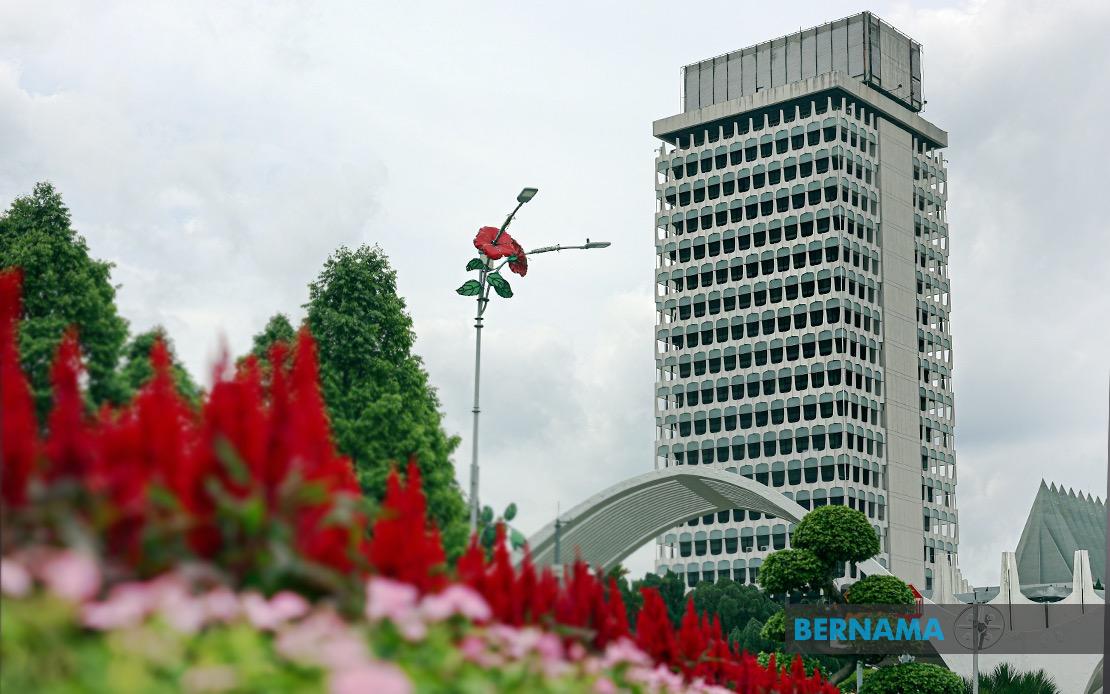
Malaysia's Dewan Rakyat will resume sitting on Monday for a 16-day session running until July 16, with legislators facing contentious constitutional amendments that previously fell short of the required two-thirds majority. The Second Meeting of the Fifth Session of the 15th Parliament will revisit the Constitution (Amendment) Bill 2026, which proposes to restrict prime ministerial tenure to 10 years, a measure that represents a significant shift in Malaysia's executive structures and reflects growing parliamentary consensus around term limits for the nation's chief executive.
The session's legislative agenda reveals sustained momentum on institutional reform initiatives. Alongside the prime ministerial tenure bill, Parliament will again consider the Constitution (Amendment) Bill (No. 2) 2026, designed to cleave the positions of Attorney General and Public Prosecutor into separate entities. This bifurcation aims to enhance independence within Malaysia's legal apparatus by preventing the concentration of prosecutorial and legal advisory functions in a single office. The first attempt to pass both measures during the earlier parliamentary session in the Fifth Session did not achieve the supermajority needed to amend the Constitution, prompting their re-tabling and signalling sustained political will despite previous setbacks.
The Public Prosecutor separation bill has since been examined by the Parliamentary Special Select Committee, which has provided technical scrutiny expected to inform revised language and potentially address concerns that stalled its passage previously. This deliberative approach reflects lessons learned from the first attempt, where opposition or abstentions from certain legislative blocs prevented the two-thirds threshold from being reached. The committee's work suggests efforts to build broader agreement across parliamentary lines before the measure faces renewed debate.
Beyond constitutional matters, the session will introduce the Cybercrime Bill 2026, marking Parliament's continued engagement with digital-age legislative challenges as Malaysia grapples with evolving online threats and the need to modernise criminal justice frameworks. This bill is expected to generate substantial discussion given Malaysia's role as a regional economic hub increasingly targeted by cybercriminals and the necessity to balance security imperatives with civil liberties protections.
Transport Minister Anthony Loke will table the Road Transport Act 1987 (Amendment) Bill on the opening day, with debate scheduled for Tuesday. The proposed amendments represent a comprehensive overhaul spanning 11 distinct areas and 42 clauses, concentrated primarily on curtailing illegal street racing—a persistent problem that claims lives and generates public alarm across Malaysian cities and highways. The ministry has identified racing syndicates as a critical road safety challenge requiring legislative teeth that current enforcement mechanisms lack, prompting this substantial modernisation of three-decade-old transport legislation.
Loke's amendments introduce enhanced penalties and enforcement apparatus specifically targeting 'tonto' racing syndicates, the organised networks that orchestrate illegal motorsport events and recruit participants. Beyond targeting these groups directly, the bill seeks to strengthen enforcement powers available to traffic and police authorities, ensuring mechanisms exist to apprehend participants and organisers and impose meaningful consequences. The legislative package reflects recognition that current laws contain gaps exploited by street racing networks, and that road user safety requires both deterrence and enhanced investigative capacity.
The 16-day sitting will also address broader economic and geopolitical concerns affecting Malaysia's energy sector and supply chains. Legislators are anticipated to examine the implications of the ongoing West Asian conflict for Malaysia's energy security and international trade dynamics, particularly given Malaysian interests in maintaining stable global energy markets and the nation's role in regional commerce. Discussions may encompass government preparedness for supply chain disruptions and energy price volatility stemming from Middle Eastern tensions, issues directly affecting domestic inflation and household budgets.
Dewan Rakyat Speaker Tan Sri Johari Abdul has called upon all members to discharge their duties as people's representatives with maturity and factual rigor, emphasising that parliamentary debate must transcend political posturing and contribute meaningfully to policy development. His message underscores the speaker's concern that legislative sessions maintain institutional integrity and substantive focus on matters affecting citizens' lives—cost of living pressures, educational outcomes, healthcare access, employment prospects, and community welfare. The speaker's reminder reflects awareness that parliamentary sessions can become platforms for factional manoeuvring rather than genuine deliberation, particularly during periods of heightened political activity.
Johari stressed that both government and opposition members bear responsibility for elevating parliamentary discourse above sentiment-driven rhetoric toward evidence-based analysis and constructive problem-solving. He positioned the Dewan Rakyat as the nation's premier legislative forum, where the quality of debate directly influences policy formulation and public trust in democratic institutions. This framing suggests concern that Malaysian citizens have grown cynical about parliamentary effectiveness when members prioritise partisan advantage over substantive examination of national challenges.
The speaker's remarks gain particular weight given the concurrent timing of the Johor State Election with this parliamentary session. Johari reminded MPs that their attendance and participation constitute non-negotiable responsibilities regardless of external political commitments, and cautioned against misusing parliamentary proceedings for state-level campaigning. This admonition reflects a longstanding tension in Malaysia's federal system whereby MPs simultaneously pursue state political interests while representing constituencies in Parliament, creating potential conflicts of interest and divided attention during legislative sittings.
The 16-day parliamentary session overlaps with intensive electioneering in Johor, requiring MPs from that state to balance competing demands. The speaker's insistence that parliamentary duties not be subordinated to campaign activities addresses practical concerns that electoral engagement might reduce attendance or generate legislative conduct driven by state-level factional interests rather than national policy considerations. His statement essentially reinforced that the constitutional and ceremonial primacy of Parliament must override other political schedules.
Parallel to the Dewan Rakyat's 16-day sitting, the Dewan Negara (Senate) will convene separately from July 20 through August 4 for its own 10-day session. This staggered schedule allows the upper house to undertake its legislative and scrutiny functions independently, though the overlapping nature of both chambers' sittings suggests coordination on matters requiring bicameral attention. The Senate's session will likely address bills referred from the Dewan Rakyat and provide a forum for appointed senators to engage on national issues, though the upper house lacks the lower chamber's democratic legitimacy and political intensity.
Alltogether, the parliamentary schedule reflects Malaysia's agenda of incremental constitutional modernisation, transport sector reforms responding to specific public safety crises, and engagement with international economic challenges. The session's constitutional amendments represent attempts to institutionalise restraints on executive power and enhance judicial independence, values increasingly prominent in Malaysian political discourse. Whether these measures ultimately succeed depends upon managing political dynamics across the legislative arithmetic, building sufficient consensus to exceed the two-thirds threshold that constitutional amendment requires, and sustaining parliamentary focus on substantive debate despite competing state and factional interests vying for legislators' attention.

