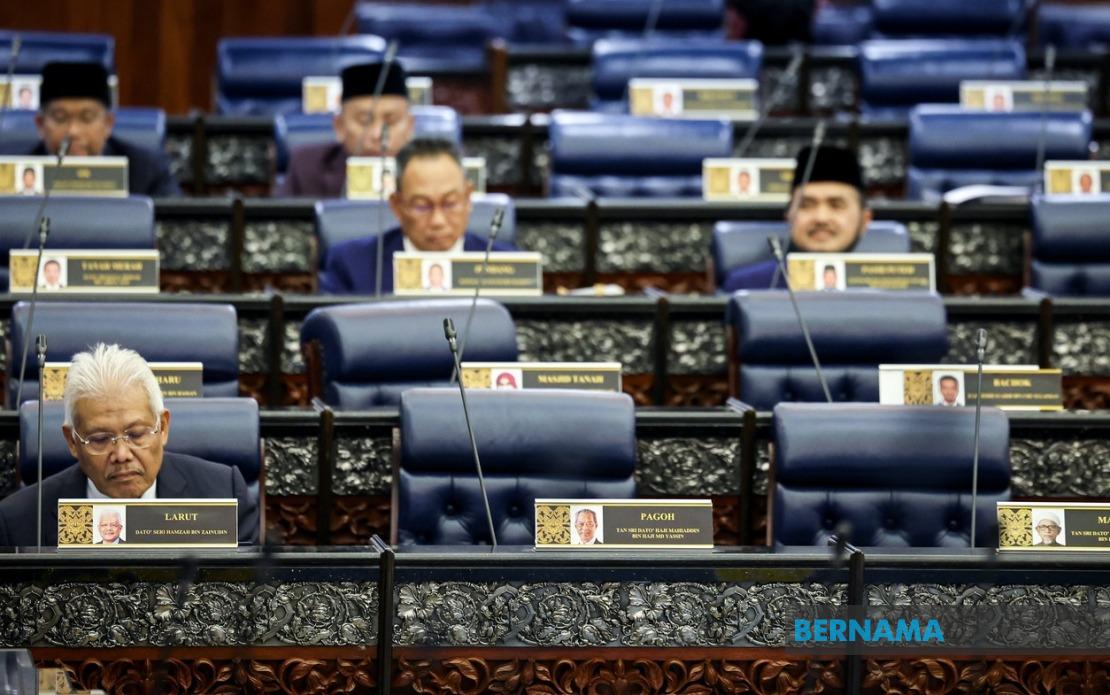
Dewan Rakyat Speaker Tan Sri Dr Johari Abdul has officially verified the opposition leadership credentials of Larut MP Datuk Seri Hamzah Zainudin, confirming receipt of formal documentation establishing his status within Parliament's formal opposition framework. The parliamentary confirmation represents an important administrative milestone in Malaysia's political landscape, bringing formal institutional recognition to a significant shift in the country's parliamentary dynamics.
Ahead of the parliamentary sitting commencing June 22, the Dewan Rakyat will implement a revised seating configuration affecting multiple members. These adjustments to the chamber's layout form part of routine administrative procedures that govern the operational functions of Parliament, reflecting evolving membership composition and parliamentary responsibilities. The changes underscore how Malaysia's legislature continuously adapts its physical infrastructure to accommodate shifting political arrangements and the formal roles assigned to different groupings within the chamber.
Notably, the seating position designated for Pagoh MP and Bersatu president Tan Sri Muhyiddin Yassin has been modified in accordance with a specific request submitted by the senior politician. According to the latest seating chart released through Parliament's official digital portal on June 19, Muhyiddin has been relocated to Block E of the Dewan Rakyat chamber. This repositioning carries particular significance given Muhyiddin's prominent standing within Malaysia's political establishment and his leadership of the Bersatu party, one of the major political organisations operating within the current parliamentary configuration.
For Hamzah, however, the seating arrangement reflects continuity rather than change. His position on the opposition front bench remains fixed in its current location, maintaining the physical proximity that characterizes his role as opposition leader. This consistency provides stability within the opposition bloc's internal organization and preserves the symbolic importance of the opposition front bench as the institutional home of the leading parliamentary opposition grouping. Hamzah continues to occupy space alongside Kemaman MP and Perikatan Nasional chairman Datuk Seri Dr Ahmad Samsuri Mokhtar, a configuration that underscores the alliance dynamics within Malaysia's current opposition framework.
The formal recognition of Hamzah's opposition leadership role builds upon recent developments within Malaysia's political sphere. During the Reset Malaysia Convention held in recent weeks, PAS president Tan Sri Abdul Hadi Awang made public announcements confirming that Hamzah had resumed his responsibilities as opposition leader. These statements from key figures within the coalition supporting the current government provided preliminary confirmation of the leadership transition, but the parliamentary speaker's formal verification adds another layer of institutional authority and procedural legitimacy to the arrangement.
The timing of these developments coincides with significant parliamentary activity ahead. The Second Meeting of the Fifth Session of the 15th Parliament will operate across an extended period running from June 22 through July 16, providing substantial opportunity for the opposition to function formally within Parliament's institutional framework. During this substantial parliamentary calendar, opposition business will proceed under Hamzah's formal leadership, with the structural changes to seating arrangements reflecting Parliament's administrative adjustment to these new leadership configurations.
For Malaysian parliamentary observers and political analysts, these developments illustrate the ongoing evolution of the country's coalition politics and the complex interplay between institutional procedure and political reality. The formal documentation and seating adjustments reveal how parliamentary administration translates political agreements into tangible institutional changes. The relocation of Muhyiddin represents a notable shift within the broader political formation, potentially signalling adjustments to coalition dynamics or organizational priorities within the political groupings currently represented in Parliament.
The significance of these changes extends beyond purely procedural matters. Opposition leadership roles carry substantial parliamentary responsibilities, including leading legislative business, coordinating response to government initiatives, and shaping the parliamentary agenda. Hamzah's formalized status as opposition leader, now carrying the institutional weight of the speaker's confirmation, provides him with enhanced authority to discharge these functions. The clarity regarding his official standing within Parliament's hierarchy removes potential ambiguity and establishes transparent lines of parliamentary authority.
For regional observers monitoring Malaysian politics, these developments underscore how Southeast Asia's largest parliamentary democracy manages complex coalition arrangements through formal institutional mechanisms. The procedures followed by the Dewan Rakyat in confirming leadership roles and adjusting parliamentary seating reflect broader democratic principles, even as Malaysia's political landscape continues to display the fluidity and coalition volatility that has characterized recent years. The stability that formal institutional confirmation provides may offer a counterweight to the shifting nature of Malaysian coalition politics at the executive level.

