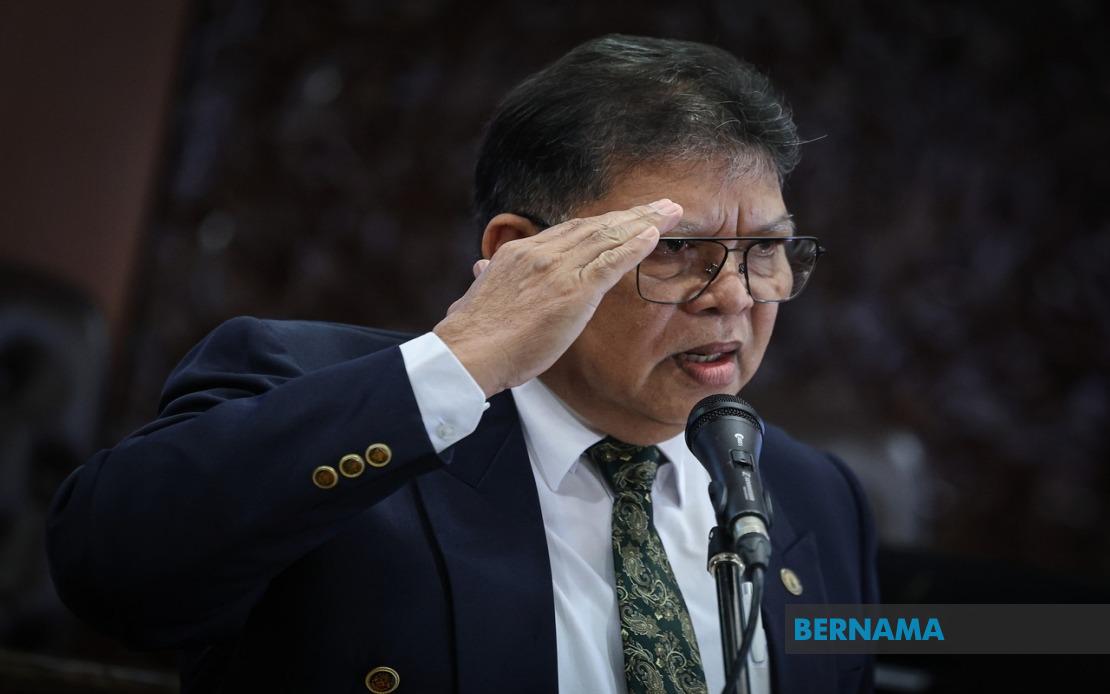
Dewan Rakyat Speaker Tan Sri Johari Abdul has emerged as an advocate for electoral reform, proposing that Malaysia adopt a proportional representation system as a means to ensure minority communities retain meaningful political influence in Parliament. Speaking at the Harmony Symposium held at the Parliament building on June 26, Johari outlined concerns about the sustainability of minority representation under the current first-past-the-post electoral framework, signalling a significant intervention from one of the nation's highest constitutional offices into a perennially contentious debate about electoral architecture.
Johari's proposal gains urgency from demographic projections he cited during his keynote address. According to the data he referenced, Bumiputera Malays are anticipated to account for 77 per cent of Malaysia's population by 2050—a substantial shift from current proportions. This trajectory raises fundamental questions about the political viability of minority communities under an electoral system designed primarily around territorial constituencies, where representation depends on achieving majority support within defined geographical boundaries.
The speaker's reasoning reflects a practical concern rooted in electoral mathematics. As the Bumiputera proportion of the population grows, the geographic distribution of minority communities becomes increasingly dispersed across constituencies where they constitute voting minorities rather than majorities. Within the existing single-member district system, this demographic reality translates directly into reduced likelihood of minority candidates winning seats, effectively marginalising their voices from parliamentary deliberation regardless of their aggregate national population share. Johari articulated this concern with directness, asking rhetorically where minorities would fit within a political landscape dominated by Bumiputera-majority constituencies, and questioning what consequences would flow from systematic silencing of their parliamentary representation.
Proportional representation systems operate on fundamentally different principles, allocating seats based on the percentage of votes each party or community receives nationally or regionally, rather than requiring outright victory in individual constituencies. Under such an arrangement, minority communities voting cohesively could translate their population share into corresponding parliamentary seats regardless of geographic concentration. This mechanism addresses the disconnect between national demographic composition and actual legislative representation that concerns Johari, offering a structural solution to what he frames as an impending democratic deficit.
Johari's intervention reflects a shift in emphasis toward long-term institutional design rather than immediate political management. He explicitly advocated for discussions transcending the present moment, urging consideration of Malaysia's trajectory across the next five to 100 years rather than focusing narrowly on contemporary controversies. This temporal reframing situates the representation question within broader civilisational challenges facing a nation comprising 77 distinct ethnic groups. By repositioning the debate from urgent daily grievances toward foundational questions of democratic inclusion, Johari attempts to elevate the discussion beyond zero-sum communal competition toward systemic sustainability.
The symposium hosting Johari's remarks was organised by the Malaysia Cross-Party Parliamentary Group on Racial and Religious Harmony, with Syahredzan Johan, the Bangi Member of Parliament and group chairman, emphasising the initiative's purpose to centralise harmony discussions within democratic institutions rather than confining them to civil society spaces. The cross-party framing signals consensus among parliamentary representatives from multiple political factions regarding the legitimacy of addressing representation questions through substantive institutional analysis rather than dismissing such discussions as inherently divisive.
Syahredzan articulated the group's broader agenda of advancing inclusive Malaysia through policy and legal reforms, explicitly linking parliamentary processes with government ministries, civil society organisations, and educational institutions. This ecosystemic approach recognises that electoral system change, were it to occur, would require coordination across multiple branches and sectors of governance rather than representing an isolated institutional modification. The emphasis on practical mechanisms for implementation suggests the group views proportional representation not as abstract principle but as concrete policy option warranting serious institutional development.
Malaysia's consideration of proportional representation occurs within a broader regional context where several democracies employ such systems. Singapore, despite its different governance structure, allocates certain parliamentary seats through group representation constituency mechanisms designed to ensure minority participation. Thailand's electoral code has oscillated between proportional and majoritarian systems, with advocates arguing proportional approaches better represent national diversity. Indonesia's experience demonstrates both the potential and challenges of proportional representation in deeply plural societies, offering both cautionary lessons and potential models for Malaysian implementation.
The proposal arrives amid international scholarship emphasising that demographic transitions in multi-ethnic democracies create particular vulnerability to institutional legitimacy crises. Countries where expanding majorities become increasingly concentrated geographically while minorities scatter face mounting tensions when political representation becomes severely misaligned with population composition. Scholars studying democratic stability in ethnically diverse contexts have documented that perception of systematic exclusion from meaningful political voice—whether founded or not—correlates with increased communal alienation and reduced investment in democratic institutional loyalty. From this perspective, Johari's intervention reflects concern about long-term democratic health rather than immediate power redistribution.
Implementing proportional representation would nonetheless require constitutional amendment in Malaysia, as the current first-past-the-post system is embedded in the Federal Constitution. Such changes demand two-thirds parliamentary majorities, creating significant thresholds for reform. Previous attempts to modify Malaysia's electoral architecture have foundered on questions of partisan advantage, with different political coalitions calculating how reforms would affect their respective fortunes. Were proportional representation seriously pursued, Malaysia would confront the technical questions that plague such transitions elsewhere: whether to employ pure proportional systems or mixed models, what threshold percentages would apply, and whether regional or national-level calculations would determine seat allocation.
The speaker's position also invites scrutiny regarding implementation timelines and transition mechanics. Proportional representation introduces substantial complexity for voters, electoral administrators, and political parties compared to familiar first-past-the-post arrangements. Countries transitioning between systems typically experience significant technical challenges and voter confusion during implementation phases. Malaysia's electoral commission and political party structures would require substantial capacity development to manage such a change effectively, raising questions about whether institutional readiness exists for such transformation.
Johari's intervention represents a significant normative statement from institutional leadership regarding electoral fairness and democratic inclusivity. Whether his proposal gains traction depends substantially on whether other political actors—particularly those controlling supermajorities in Parliament—perceive proportional representation as compatible with their strategic interests. The speaker's framing emphasises national stability and long-term democratic legitimacy rather than immediate communal advantage, potentially creating rhetorical space for cross-party discussion. However, the technical complexity of implementation, constitutional amendment requirements, and divergent political calculations regarding electoral outcomes suggest that transforming his proposal into reality would require sustained political consensus currently difficult to detect in Malaysian politics.

