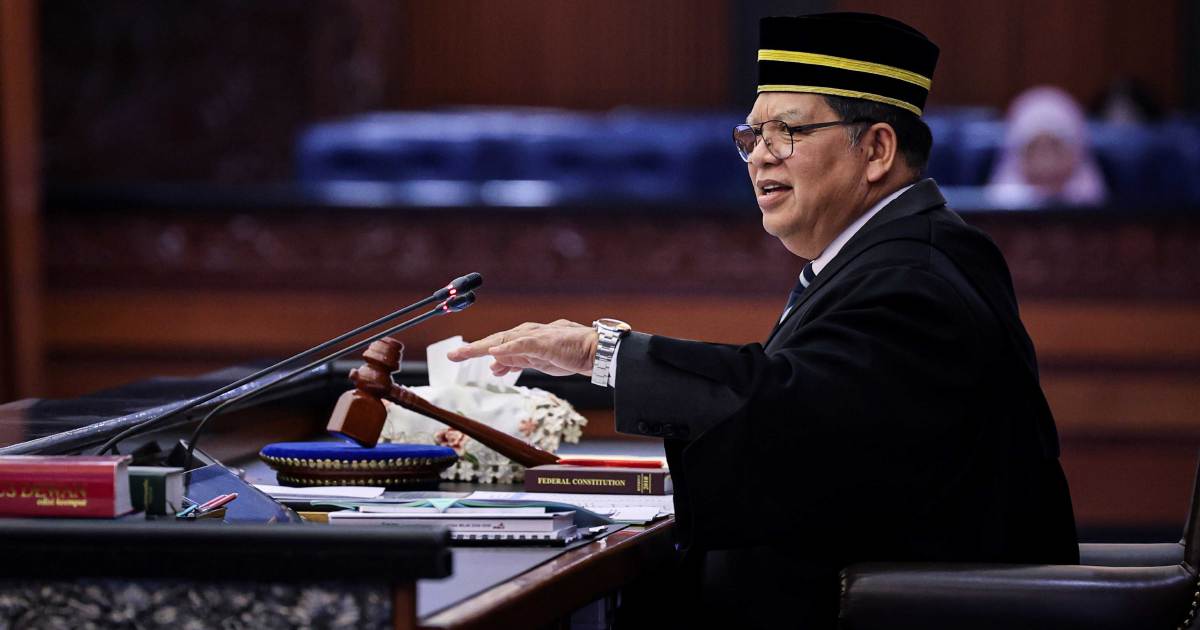
Tan Sri Johari Abdul, Speaker of the Dewan Rakyat, has issued a firm directive to members of parliament concerning their attendance obligations during parliamentary sessions in Kuala Lumpur. The warning underscores growing concerns about MPs failing to show up for crucial legislative business without acceptable grounds, a practice that has become increasingly problematic for the functioning of Malaysia's lower house.
The Speaker's admonition addresses a pattern where parliamentarians have absented themselves from sittings, disrupting the legislative calendar and reducing the quorum necessary for meaningful debate and decision-making. Such conduct raises questions about the commitment of elected representatives to their constitutional responsibilities and the public interest. In a functioning democracy, regular parliamentary attendance forms the cornerstone of accountability and representative governance, particularly in a bicameral system like Malaysia's where the Dewan Rakyat serves as the primary chamber for governmental scrutiny and lawmaking.
Effective parliamentary operations depend fundamentally on the presence of elected members who carry the mandate of their constituents. When MPs consistently miss sessions without valid justification, they effectively abandon their constituents' interests at a critical juncture where legislation is debated, budgets are scrutinised, and governmental policy is challenged or endorsed. The Speaker's warning reflects institutional concern that this pattern threatens the legitimacy and efficiency of parliamentary processes themselves.
The concept of "valid reason" is crucial here. Parliamentary standing orders typically recognise certain legitimate grounds for absence, including illness, bereavement, official parliamentary business elsewhere, and government duties. However, persistent or casual absences that fall outside these parameters erode the chamber's capacity to function effectively. The Speaker's reminder serves both as a caution to wayward members and as reinforcement of parliamentary rules that exist to maintain institutional integrity.
For Malaysian readers, this issue has direct relevance to the quality of governance and representation they receive. A parliament where members frequently absent themselves becomes less effective at holding the executive accountable, scrutinising legislation thoroughly, and representing diverse interests. The current political environment in Malaysia, marked by coalition dynamics and slim majorities in recent years, makes every member's presence particularly significant. Absences can shift voting outcomes on sensitive matters and diminish the representative character of decisions.
The Speaker's intervention also reflects broader frustrations within parliamentary leadership about maintaining discipline and standards. Other Commonwealth parliaments have grappled with similar challenges, though Malaysia's political volatility in recent years has created unique pressures on attendance. When government MPs are absent, it raises questions about party discipline and whether members are prioritising personal interests or alternative commitments over their parliamentary duties.
Regionally, Southeast Asian legislatures have encountered comparable difficulties. Maintaining robust parliamentary attendance standards has become increasingly challenging in democracies where political parties are fragmented, coalition governments are unstable, or where members face competing demands from state-level politics. The Dewan Rakyat's experience offers insights relevant to counterparts in Indonesia, the Philippines, and Thailand regarding how to enforce disciplinary measures while preserving parliamentary autonomy.
The implications extend to public trust in democratic institutions. Citizens who observe their elected representatives systematically absent from parliamentary sittings may develop cynicism about legislative effectiveness and whether their votes truly translate into accountable governance. Media scrutiny of parliamentary attendance has intensified precisely because the public increasingly expects transparency about whether elected members are fulfilling basic obligations.
The Speaker's authority to enforce attendance rules is constrained by parliamentary convention and individual member autonomy, creating inherent tensions. While party whips theoretically enforce attendance discipline within their own ranks, the Speaker serves the whole chamber and must navigate carefully between enforcement and appearing partisan. Tan Sri Johari's public reminder indicates frustration with relying solely on party mechanisms and suggests the institution itself must take stronger responsibility for standards.
Moving forward, the challenge for parliamentary leadership involves establishing clearer expectations about what constitutes valid absence, ensuring consistent application of any enforcement mechanisms, and perhaps modernising leave arrangements to accommodate legitimate parliamentary business beyond Kuala Lumpur. The Speaker's warning signals that tolerance for casual absences is diminishing and that members should anticipate greater scrutiny of their attendance records.
This issue also intersects with broader questions about legislative capacity. Whether Malaysia's parliamentary calendar, with its extended sessions and frequent legislative demands, adequately accounts for the reality that MPs must balance national duties with state-level responsibilities remains debated. However, the Speaker's clear position is that such practical considerations cannot excuse systemic non-attendance.
Ultimately, Tan Sri Johari's reminder represents an institutional defence of parliamentary standards at a moment when external pressures on legislative effectiveness have never been greater. For Malaysian democracy to function optimally, the message to MPs is unambiguous: their presence in the chamber is not optional but rather the foundation upon which all parliamentary legitimacy rests.

