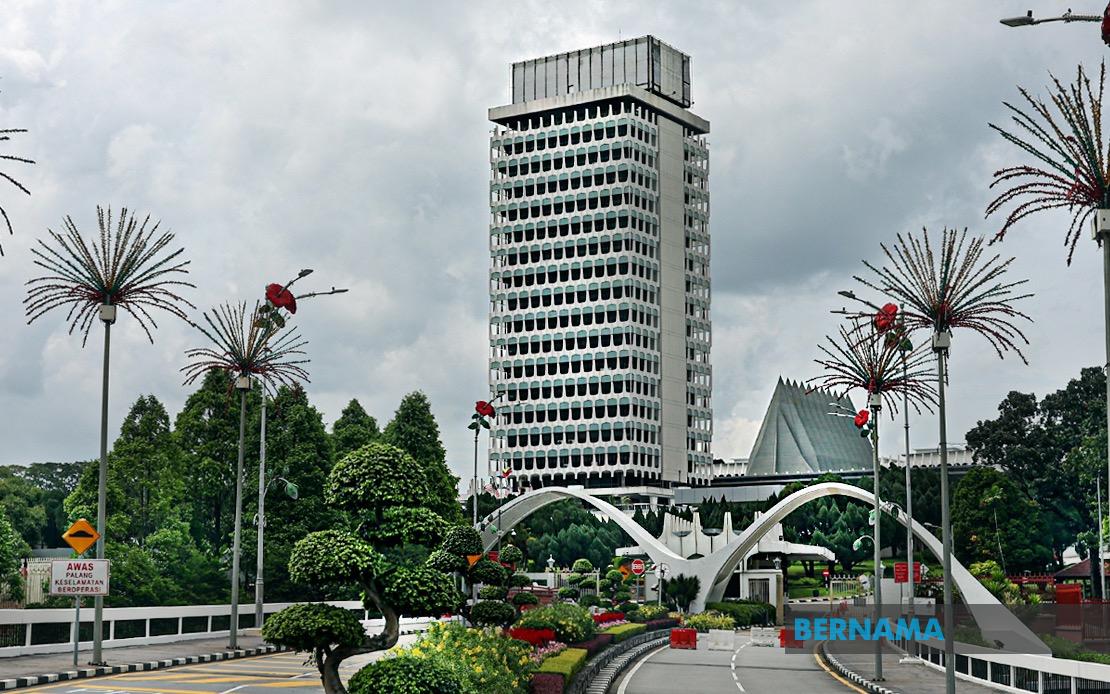
Parliament convenes today for a substantive session that reflects persistent anxieties about Malaysia's energy transition, economic resilience, and regional diplomatic positioning. The sitting brings into sharp focus three interconnected challenges: whether Malaysian industry can harness green energy schemes effectively, how government policies are cushioning citizens against economic shocks, and what leverage Malaysia maintains in shaping stability within Southeast Asia. These concerns, layered across questions from lawmakers representing different political coalitions, sketch a parliament grappling with immediate pressures whilst balancing longer-term structural transformation.
The Corporate Renewable Energy Supply Scheme (CRESS) takes centre stage through Rodziah Ismail's inquiry to the Minister of Energy Transition and Water Transformation. Her line of questioning extends beyond mere implementation metrics to probe the scheme's competitiveness within Southeast Asia's energy landscape. The System Access Charge (SAC) rate review and its bearing on Malaysia's ambition to anchor regional data centre operations signals recognition that energy costs directly translate into investment decisions. Data centres, increasingly central to global digital infrastructure, remain energy-intensive operations; if Malaysia's power tariffs climb relative to regional competitors, the country risks losing ground to Singapore, Thailand, and Indonesia in attracting technology firms seeking low-cost, stable operational bases.
The query on Battery Energy Storage Systems (BESS) and the Corporate Green Power Programme (CGPP) reveals parliamentary concern that renewable schemes remain fragmented. Without coordinated storage solutions, Malaysia's reliance on intermittent solar and wind generation could undermine the industrial predictability needed to anchor data centre investment. For Malaysian stakeholders, this resonates beyond energy policy: access to affordable, reliable power determines whether domestic firms can scale operations and export competitively. The discussion thus carries weight for small and medium enterprises wrestling with rising electricity bills across manufacturing, hospitality, and services sectors.
Mohd Syahir Che Sulaiman's questions to the Minister of Economy address the human cost of global turbulence. Job losses and business contractions have accelerated as energy prices spike and consumer demand weakens worldwide. The National Economic Action Council's mitigation response remains opaque to the public; today's exchange offers parliament a platform to demand accountability on whether relief measures are reaching distressed workers and entrepreneurs. Southeast Asian economies, more vulnerable to commodity shocks and external demand fluctuations than developed peers, cannot absorb prolonged crises without visible government action. Malaysian voters expect specificity on support timelines, eligibility criteria, and impact metrics rather than generic assurances.
The fuel subsidy standardisation query from Datuk Seri Hasni Mohammad addresses a politically sensitive terrain. Using MyKad for diesel targeting aims to prevent leakage to smugglers or unintended beneficiaries, yet raises questions about fairness and adequacy. A 200-litre entitlement across both petrol and diesel may prove insufficient for transport workers, rural residents, or small business operators whose livelihoods depend on vehicle use. The subsidy regime reflects broader fiscal stress: if government cannot afford universal support, targeting becomes essential yet contentious. The parliament's scrutiny signals that implementation details matter enormously for social stability and electoral sentiment.
William Leong Jee Keen's probe into Malaysia's Myanmar policy frames an urgent regional security question. The Five-Point Consensus (5PC)—ASEAN's diplomatic framework for addressing Myanmar's military coup and humanitarian crisis—has yielded limited tangible progress. Myanmar remains fractured between the junta and armed resistance groups; refugee flows into Thailand and Bangladesh persist; and humanitarian need intensifies. Malaysia's position remains nominally committed to ASEAN solidarity yet constrained by resource limitations and competing priorities. Today's question pushes the Foreign Minister to articulate whether Malaysia's policy reflects genuine leverage or rhetorical alignment with a consensus increasingly seen as impotent. For Southeast Asia, Myanmar's trajectory determines regional security architecture; Malaysia's willingness to invest diplomatic and material resources in 5PC implementation signals broader commitment to collective problem-solving.
Data sovereignty emerges as a second-order but strategically vital concern through Datuk Seri Amirudin Shari's questioning. Selangor's Dark Fiber Network represents state-level infrastructure ambition; yet without national coherence, Malaysia risks fragmented, vulnerable digital systems. Data sovereignty—ensuring information remains within Malaysian jurisdiction and protected from foreign interference—underpins both security and economic competitiveness. As governments worldwide tighten data governance in response to espionage and surveillance concerns, Malaysia cannot afford patchwork approaches. The question of whether data sovereignty aligns with Malaysia's 2030 artificial intelligence readiness target reveals potential tension: rapid AI deployment requires massive data flows and computing power, yet unconstrained data movement invites security risks. Parliament's engagement on this point signals sophisticated understanding that technology strategy cannot ignore governance architecture.
Datuk Idris Ahmad's enquiry on Islamic Education curriculum quality and coordination between federal and state authorities reflects federalism's practical challenges. Education standards vary across Malaysia's thirteen states; some Islamic Religious Councils possess stronger capacity and funding than others. Ensuring consistency in curriculum delivery, teacher training, and assessment requires sustained federal-state cooperation that may be hindered by partisan competition or resource constraints. The Prime Minister's response will indicate whether government treats Islamic Education as a cohesive national responsibility or permits fragmentation.
Isnaraissah Munirah Majilis raises Malaysia Agreement 1963 (MA63) implementation and parliamentary representation for Sabah and Sarawak. These territories negotiated constitutional protections regarding autonomy and federal resource allocation when joining Malaysia; yet implementation has lagged and frustration builds in Sabah and Sarawak over perceived underfunding and marginalisation. Raising parliamentary representation to 35 per cent of total seats nationwide would strengthen East Malaysian political weight, yet requires constitutional amendment and majority consent. The question's prominence in today's sitting underscores East Malaysian anxiety that federal government remains insufficiently responsive to regional concerns despite their strategic importance for stability and economic development.
A substantive Public Accounts Committee briefing on health insurance premiums, private hospital charges, and their public health impact follows the question-and-answer segment. Rising medical costs erode household purchasing power and discourage timely healthcare seeking, worsening health outcomes and productivity. The examination involves the Ministry of Finance, the Ministry of Health, and Bank Negara Malaysia, indicating cross-government responsibility. For Malaysian citizens, unchecked healthcare inflation poses existential financial risk; today's parliament briefing may catalyse policy responses ranging from insurance regulation to price controls or subsidies.
The subsequent debate on the Prisons (Amendment) Bill 2026 addresses criminal justice reform, signalling government commitment to penal system modernisation. This final agenda item receives less public attention than energy or economic policy, yet carries implications for rehabilitation, recidivism, and human rights compliance that affect social stability and international standing.
The second meeting of the fifth session of the 15th Parliament sits for sixteen days through July 16, providing sustained opportunity for parliamentary scrutiny. Today's agenda—spanning energy, economy, foreign policy, digital governance, Islamic education, and East Malaysian representation—reflects Malaysia's polyvalent challenges. Lawmakers from Pakatan Harapan, Perikatan Nasional, Barisan Nasional, and Warisan bring diverse constituencies' concerns to the chamber. The sitting thus becomes a barometer of whether parliament remains functional as a forum for deliberation and accountability, or devolves into partisan ritual. For Malaysian citizens and regional observers, the quality and honesty of today's exchanges matters: effective governance depends on parliament holding executive power accountable and forcing articulation of concrete, measurable policy responses to mounting pressures.

