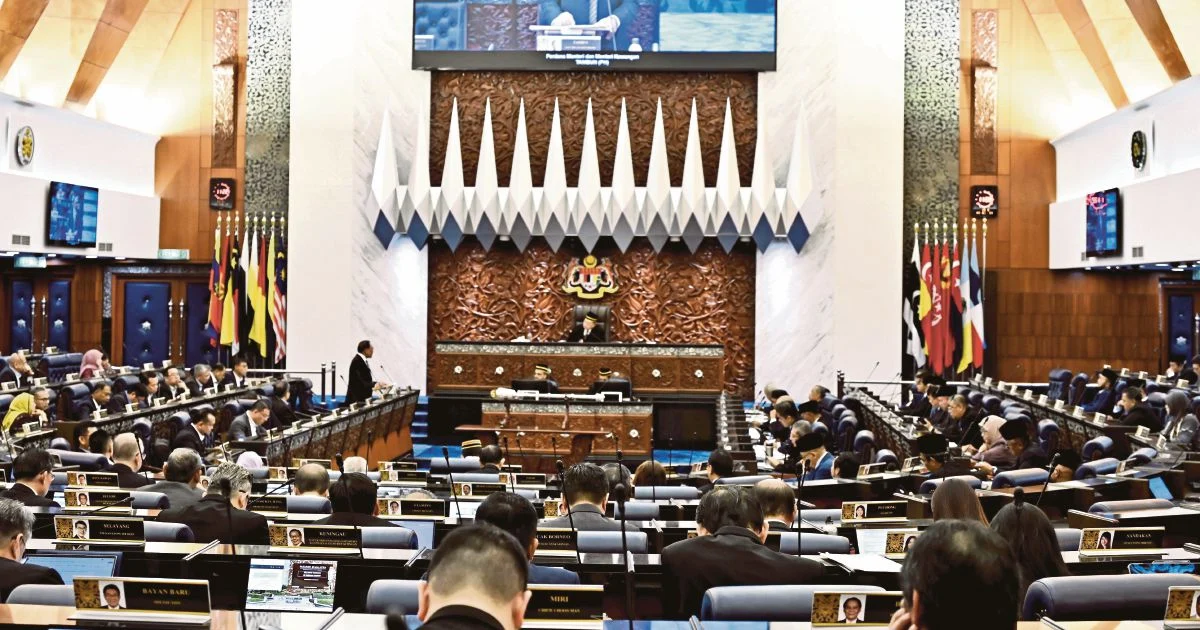
Malaysia's parliamentary chamber became a arena of partisan confrontation this afternoon, with sharp exchanges between an opposition lawmaker and a government backbencher exposing the strain simmering beneath the surface of the country's fragile political coalition. The altercation, which erupted less than an hour into the fresh parliamentary sitting, centred on the legitimacy and positioning of the opposition leader—a seemingly procedural matter that transformed into a broader battleground for airing grievances about intra-coalition friction.
The clash involved Takiyuddin Hassan, a prominent opposition figure, and a government-aligned MP whose intervention triggered a war of words that rippled through the chamber and dominated the opening hours of proceedings. What began as a focused dispute quickly broadened into accusations and counter-accusations reflecting the deeper anxieties now plaguing Malaysia's ruling partnership. The incident underscores how fragile political consensus has become, with even routine parliamentary matters capable of igniting confrontation that exposes underlying tensions.
The substance of the dispute revolved around allegations that PAS—the Islamist party central to the current government's majority—has been exerting bullying tactics against its coalition partner Bersatu. These claims, though raised obliquely through the opposition's procedural challenge, strike at the heart of a coalition that has proven increasingly vulnerable to internal bickering. Bersatu, the party of former prime minister Muhyiddin Yassin, has occupied an increasingly uncomfortable position within the governing arrangement, and public airing of such allegations suggests that behind-the-scenes negotiations may be breaking down.
The timing of this confrontation carries significance beyond the immediate parliamentary moment. Malaysia's ruling coalition has faced mounting criticism for internal instability, with questions persistently raised about whether the government commands sufficient unity and direction to govern effectively. The openness with which opposition lawmakers felt emboldened to raise such matters—and the willingness of government MPs to engage in heated rebuttal—suggests that the coalition's cohesion is being tested more openly and with less restraint than in previous sittings.
PAS, as the dominant Islamist force in Malaysia and a crucial electoral component of the government's base, wields considerable leverage within the coalition structure. The notion that it might be leveraging this influence to marginalise its smaller coalition partners speaks to a pattern of internal bargaining that has characterised Malaysian coalition politics, though public airing of such dynamics is relatively rare and reflects genuine friction. For Bersatu, a numerically weaker party that has already faced electoral setbacks, such pressure could prove destabilising to its continued participation in government.
The parliamentary disruption also highlights the role of procedure and parliamentary conventions as vehicles for political messaging. When substantive policy disagreements or coalition management disputes cannot be openly resolved through normal channels, they often surface through parliamentary procedural challenges and dramatic confrontations. Today's incident suggests that normal behind-the-scenes negotiation mechanisms may be struggling to contain these tensions, forcing them into public view.
For Malaysian democracy, the incident presents a double-edged reality. On one hand, the willingness of lawmakers to engage in spirited debate—even heated exchange—demonstrates that parliamentary traditions of robust discourse remain alive. Opposition members can raise uncomfortable questions about government dysfunction without fear of severe consequence. On the other hand, the visible fraying of coalition discipline raises legitimate questions about ministerial stability and the government's ability to prosecute its agenda without constant internal management crises.
The regional context adds another layer of significance to these domestic political convulsions. Malaysia's neighbours are watching for signs of governmental instability or distraction from regional cooperation priorities. Coalition governments across Southeast Asia face their own challenges managing multiple parties with divergent interests, and Malaysia's struggles may carry cautionary lessons for other regional democracies balancing representation with effective governance.
For ordinary Malaysians and businesses, the calculus is straightforward: a government consumed by internal power struggles and coalition management is a government less focused on bread-and-butter issues like economic growth, inflation control, and social service delivery. The repeated eruptions of coalition tension have already contributed to perceptions that the government is distracted by its own survival, rather than concentrated on deliverables that affect citizens' daily lives.
Looking forward, today's heated parliamentary exchange may be a warning sign that the coalition arrangement, already stretched by electoral losses and demographic shifts, is approaching critical stress levels. Political analysts and observers will be watching closely to determine whether this is an isolated incident—a momentary flare-up in otherwise manageable coalition friction—or an early indicator of more fundamental breakdown in the ruling arrangement's viability.
The incident also raises questions about whether new parliamentary sitting cycles will feature an escalation of such confrontations, particularly if underlying coalition tensions remain unresolved through private negotiation. Opposition parties appear increasingly willing to weaponise procedural challenges to expose government dysfunction, a strategy that could prove effective in shaping public perception of administrative competence heading toward any future electoral cycle.

